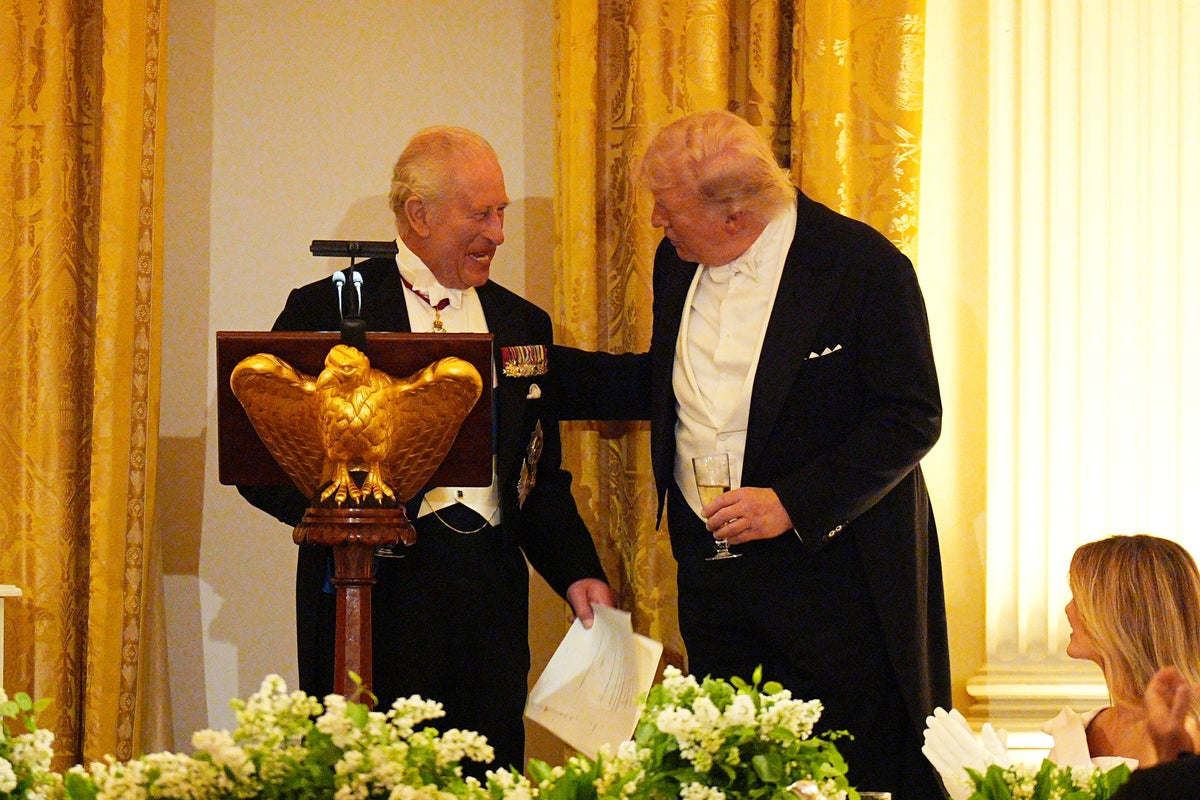
King Charles III stood before a joint meeting of the U.S. Congress this week, not as a mere figurehead of British tradition, but as the primary diplomatic shield for a crumbling European security architecture. His address, delivered with the practiced gravity of a man who served in the Royal Navy during the height of the Cold War, was a high-stakes attempt to anchor the United States to NATO at a moment when President Donald Trump’s "Fortress America" doctrine threatens to sever the tie for good.
The King’s visit comes as the "Special Relationship" hits a brutal floor. Relations have soured following Prime Minister Keir Starmer’s refusal to allow U.S. aircraft to use British bases for strikes against Iran in February, an act Trump labeled a betrayal. With the White House now eyeing 25% tariffs on European allies and floating the idea of withdrawing diplomatic support for British claims to the Falkland Islands, the monarchy has been deployed as the ultimate soft-power instrument to prevent a total strategic divorce.
The 5 Percent Reckoning
For decades, American presidents have complained about European "freeloading" on defense spending. Those complaints have now evolved into an ultimatum. Under the "Hague Summit Declaration" of 2025, NATO allies agreed to a staggering new benchmark: 5% of GDP allocated to defense by 2035.
This isn't just about buying more tanks. The mandate splits spending into two distinct buckets:
- 3.5% for Core Defense: Hard military power, ammunition stockpiles, and personnel.
- 1.5% for Dual-Use Infrastructure: Logistical hubs, 5G/6G security, and transport networks that can support rapid troop movements.
The U.S. National Defense Strategy (NDS) published in early 2026 makes the hierarchy clear. Deterring China and defending the U.S. homeland are the only top-tier priorities. Europe has been downgraded to a secondary theater. Washington is shifting from the role of "Leader" to "Enabler," signaling that while the nuclear umbrella remains, the boots on the ground must increasingly be European.
The Greenland Friction Point
Nothing illustrates the new transactional nature of the alliance better than the surreal standoff over Greenland. President Trump’s renewed push for the U.S. to acquire the territory—framed as a national security necessity against Russian and Chinese Arctic expansion—has created a rift with Denmark and the UK.
In January 2026, the administration applied a 10% tariff on several European nations, accusing them of "mysterious" maneuvers in the Arctic. While these tariffs were temporarily paused after a meeting with NATO Secretary General Mark Rutte, the underlying threat remains. The White House has explicitly linked trade favors and military protection to territorial concessions and mineral rights. This "Donroe Doctrine"—a modern, aggressive spin on the Monroe Doctrine—views the entire Western Hemisphere and the Arctic as a private U.S. preserve where European influence is tolerated only if it serves American industrial interests.
Royal Diplomacy vs. Transactional Realism
King Charles used his speech to remind Congress that the only time NATO’s Article 5 was ever invoked was in defense of the United States after 9/11. It was a pointed rebuttal to the narrative that the alliance is a one-way street. By highlighting the thousands of U.S. personnel stationed in the UK and the joint production of F-35 fighter jets, he attempted to frame the alliance as a business partnership that is simply too profitable to quit.
However, the mood in London is pivoting from sentimentality to survival. A recent House of Lords report concludes that the UK must abandon the "romantic" notion of the Special Relationship. The strategy moving forward is one of "hedging"—collaborating with Washington where interests align, but building the capacity to act independently when they do not.
The Industrial Mobilization
The real story isn't just the rhetoric; it’s the money. The UK has committed to the largest sustained increase in defense spending since the 1950s. This isn't merely a gesture of goodwill. It is a desperate effort to maintain "access and influence" in a Washington that now measures the value of an ally by deliverable military output rather than shared values.
European nations are finally hitting the old 2% targets, but the goalposts have moved to 5%. The continent is in a race to build a defense industrial base that can function without a constant supply of American parts and logistics. If they fail, they remain vulnerable to the next round of "deal-making" that could see territories or trade rights traded for security.
The King’s speech may have earned a standing ovation, but the standing orders in the Pentagon haven't changed. The U.S. is looking toward the Pacific, and it expects Europe to guard its own backyard or pay a heavy premium for the privilege. The era of the "unbreakable" alliance is over; the era of the "contractual" alliance has begun.
European capitals must now decide if they can afford the price of the new American protection. If the 5% GDP target becomes the standard for staying in the club, the social contracts of Western Europe will have to be rewritten to fund the machines of war. The choice isn't between Trump and NATO; it’s between total strategic autonomy and a permanent, high-cost lease on American power.
The soft power of a visiting monarch can delay a breakup, but it cannot fix a broken business model. Either Europe becomes a military peer, or it becomes a client state. There is no third option.