The metal of the MSC Aries does not feel like a sanctuary. It feels like a conductor. It carries the low-frequency hum of the Persian Gulf, the vibration of massive engines, and the stifling, salt-heavy heat that settles over the Strait of Hormuz like a wet wool blanket. For Vitalii, a Ukrainian sailor trapped in the amber of a geopolitical standoff, the ship is a cage made of steel and history.
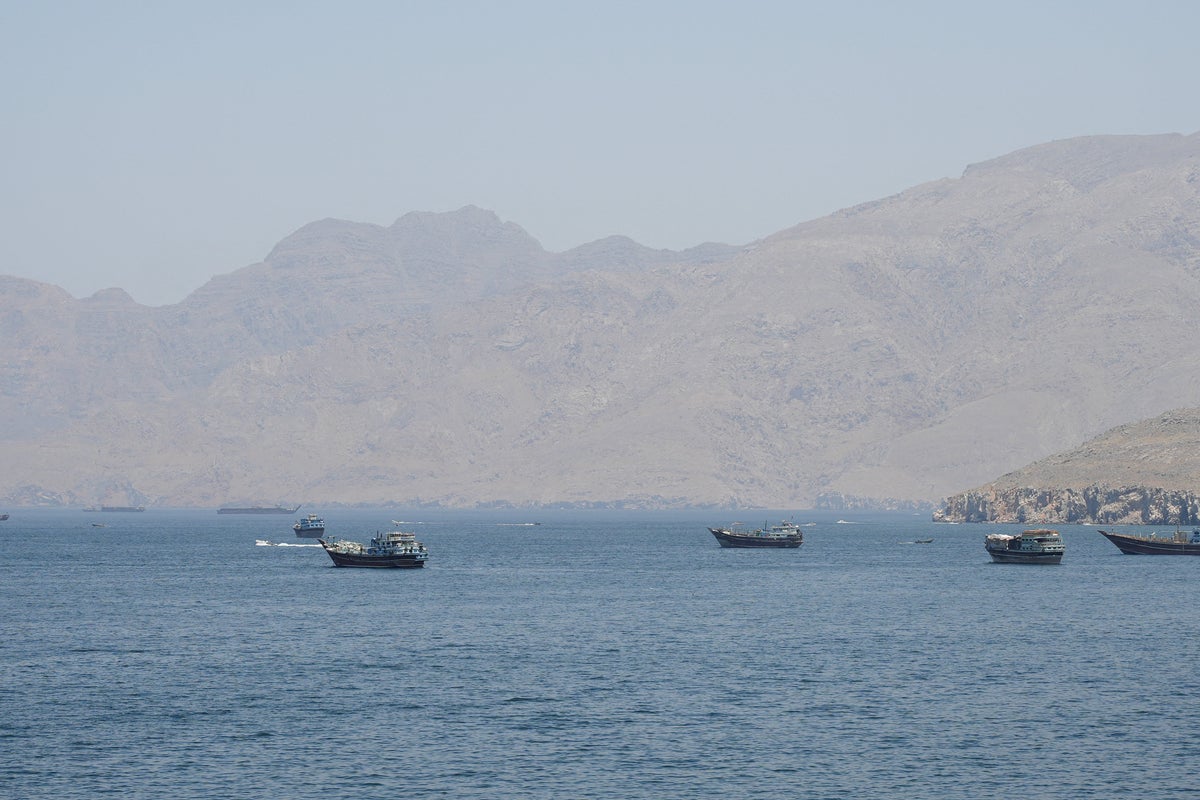
He looks at the water, which is a deceptive, shimmering turquoise. It looks peaceful. It isn't.
Vitalii’s journey did not begin in these volatile waters. It began in the scream of air-raid sirens in Odessa. Imagine—and this is no metaphor, but a documented reality for thousands of merchant mariners—fleeing a land war only to find yourself a pawn in a maritime one. He left Ukraine to escape the rain of Russian Kalibr missiles, seeking the supposed neutrality of the high seas. He traded the fear of a collapsing ceiling for the uncertainty of a horizon that belongs to no one and everyone.
Now, he is a ghost on a vessel. The MSC Aries was seized by Iranian forces in April, a move that turned a commercial transit into a hostage situation. While the world's eyes track the flight paths of drones and the trajectories of ballistic missiles, men like Vitalii sit in the galley, drinking lukewarm coffee and wondering if they have been forgotten by the very industry that relies on their labor to keep the global heartbeat steady.
The Geography of a Trap
The Strait of Hormuz is a choke point. That sounds clinical. In reality, it is a narrow throat of water through which the lifeblood of the global economy—oil, gas, consumer goods—is squeezed. When that throat constricts, the first things to suffocate are the human beings on the decks.
Vitalii is caught in a cruel irony. In Ukraine, the enemy was visible. You could hear the whistle of the incoming shell. You could see the charred remains of the apartment block down the street. In the Strait, the enemy is a signature on a piece of paper in a distant capital. The enemy is a "diplomatic impasse." The enemy is the silence of a shipping company that cannot—or will not—negotiate a way out of a regional shadow war.
He is not just a sailor; he is a statistical anomaly. Most people fleeing war find a shore. Vitalii found a deck.
The Weight of Salt and Silence
Life on a seized ship is a slow erosion of the soul. There is a specific kind of psychological wear that occurs when you are confined to a space that was designed for movement. A ship is a creature of momentum. When it sits idle, tethered by force rather than necessity, it becomes a tomb for the living.
The crew of the MSC Aries consists of various nationalities—Indians, Filipinos, Pakistanis, and Estonians. But Vitalii carries a specific, double-edged burden. Every time he gets a few precious minutes of satellite internet, the news is a pincer movement. On one side, his home is being dismantled by an invasion. On the other, his physical body is being held as leverage against an international order he did not create.
He watches videos of his family in Ukraine. They are hiding in basements while he is trapped in a floating oven. He wants to protect them, but he can’t even step off the gangway.
The maritime industry often treats sailors as "human capital." It’s a sterile phrase. It suggests they are parts of a machine, like a piston or a propeller. But pistons don’t have daughters who are afraid of the dark. Propellers don’t feel the creeping dread of being a bargaining chip in a game played by men in air-conditioned rooms in Tehran and Tel Aviv.
The Invisible Stakes of the Merchant Marine
Why should we care about one sailor in a sea of trouble?
Because our world is built on the backs of the invisible. Every piece of electronics you touch, the fuel in your car, the fruit on your table—it all moved through a choke point. The safety of the men and women who move these goods is the thin line between a functioning society and total collapse. When we allow sailors to be kidnapped under the guise of "national security," we are tearing up the social contract of the sea.
Consider the law of the ocean. For centuries, the "freedom of navigation" has been a sacred tenet. It is the belief that a merchant vessel, carrying the goods of the world, should be granted passage regardless of the squabbles of kings. Vitalii is witnessing the death of that era. He is living in a new reality where the ocean is no longer a neutral highway, but a series of tactical cells.
The logistics of his captivity are mundane and terrifying. Food has to be bargained for. Water is rationed. The heat reaches 110 degrees Fahrenheit, and the air conditioning is a luxury that depends on the whims of the captors and the health of the generators. There is no manual for how to be a professional sailor while being a political prisoner.
The Cost of Being a Shadow
There is a term in psychology called "ambiguous loss." It’s what families feel when a loved one is missing but not confirmed dead. Vitalii’s family is experiencing a double dose. They are living through a war of attrition at home, and they are mourning a man who is technically alive but practically erased.
He tells stories of the nights in the Strait. The sky is incredibly clear. You can see the stars that sailors have used for navigation for five thousand years. Polaris. The Southern Cross. They used to represent a way home. Now, they are just reminders of how far away home has become.
"Rockets flew over our heads in Odessa," he told a contact during a brief communication. "I thought the sea would be the place where I could breathe."
The breath is hard to find now. It is thick with the smell of diesel and the stagnant air of the Gulf.
We often talk about the "global supply chain" as if it were a series of lines on a digital map. We talk about "disruptions" and "market volatility." We rarely talk about the fact that a "disruption" means a man named Vitalii hasn't felt grass under his feet in months. It means a man who survived the bombardment of a European city is now being used to send a message to a superpower.
The Horizon is a Lie
The maritime world is currently facing a crisis of recruitment. Young people look at the stories of the MSC Aries, the Galaxy Leader, and the crews caught in the Red Sea crossfire, and they make a rational choice. They stay on land.
If the sea becomes a place where you can be snatched from your life because of the flag on your stern or the ethnicity of your owner, the world will eventually go quiet. The ships will stop. The lights will go out. Vitalii is a canary in a very deep, very salty coal mine.
He spends his days performing maintenance tasks that feel increasingly futile. He chips paint. He greases hinges. He maintains the integrity of a ship that isn't going anywhere. It is a way to stay sane. If he stops working, he has to think. And if he thinks, he has to confront the possibility that his life has become a footnote in a news cycle that has already moved on to the next crisis.
He is a man of the sea who is being denied the water. He is a man of Ukraine who is being denied his struggle.
The sun sets over the Strait, turning the water the color of bruised plums. Vitalii stands at the rail. He is not looking for a rescue ship; those don't come for individuals. He is looking for a sign that the world still remembers that he is a person, not a piece of cargo.
As the light fades, the heat stays. It clings to the skin. It reminds him that he is still there, still breathing, still waiting for a door to open that he didn't even know was locked. He is the human cost of a world that has forgotten how to be human.
The MSC Aries remains at anchor. The tides go in and out, indifferent to the men on board. And somewhere in Odessa, a phone stays silent, waiting for a call from a man who escaped the rockets only to be swallowed by the silence of the sea.