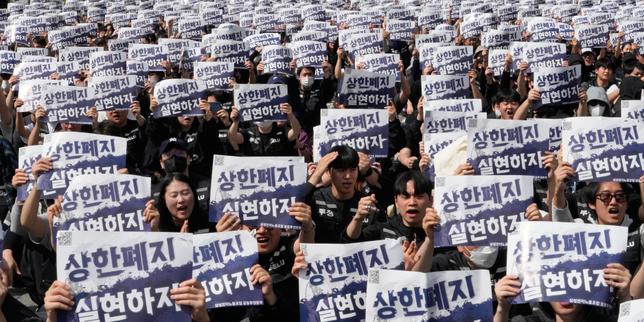
Samsung Electronics is currently trapped between its most profitable quarter in history and the largest labor uprising the company has ever seen. On April 30, 2026, the tech giant reported a staggering KRW 57.2 trillion in operating profit for the first quarter alone, yet its Pyeongtaek production hub is teetering on the edge of a shutdown. The National Samsung Electronics Union (NSEU), representing roughly 74,000 workers, has announced an 18-day total strike scheduled for May 21. This is no longer a standard negotiation over cost-of-living adjustments. It is a fundamental war over the spoils of the AI era.
At the heart of the conflict is a demand that has stunned industry analysts: the union wants a direct 15% cut of the company’s operating profit. Workers are also pushing for the total removal of a long-standing bonus cap that currently limits performance pay to 50% of an employee’s annual base salary. For a workforce that watched the company rake in KRW 43.6 trillion across 2025, only to see those numbers eclipsed in a single quarter this year, the "shared sacrifice" narrative used during the lean years has lost its teeth.
The High Bandwidth Disconnect
The explosive growth of High Bandwidth Memory (HBM) and the global AI super-cycle have turned Samsung's semiconductor division into a cash machine of unprecedented scale. But that wealth has created a deep internal fracture. While the company is minting money on the back of silicon, the human element in the cleanrooms feels left behind.
The union’s math is bold. They argue that because Samsung’s success is now inextricably linked to the frantic demand for AI infrastructure, the traditional compensation models are obsolete. If the company can report a 43% jump in revenue in three months, the union believes the workforce deserves more than a 5.1% wage increase—the offer currently on the table from management.
There is also the "SK Hynix factor." For decades, Samsung was the undisputed gold standard for Korean tech talent. That changed when rival SK Hynix revamped its own compensation structure last year to better reflect the AI windfall. Reports of a "talent exodus," with hundreds of Samsung engineers defecting to Hynix for better bonus transparency, have bruised the corporate ego in Suwon. The NSEU is using this competitive vulnerability as a lever, suggesting that if Samsung won't pay the AI tax to its own people, its rivals will.
The Nuclear Option and the Spin Off Threat
Management's response has been uncharacteristically defensive. For the first time, senior officials have begun floating what insiders call the "nuclear option": spinning off the semiconductor division entirely.
The logic is cold. Samsung Electronics is a sprawling conglomerate that makes everything from refrigerators to 3nm chips. Historically, the massive profits from semiconductors subsidized the less lucrative consumer electronics and home appliance wings. Now, that synergy is becoming a liability. "We cannot match semiconductor-level compensation in the home appliance segment," a senior official reportedly told government representatives in Seoul this week.
By dangling the threat of a spin-off, Samsung is sending a message to the union. If the semiconductor business becomes its own entity, the unionized workers in other divisions would lose their claim to the chip-driven profit pool. It is a high-stakes bluff. A spin-off of that magnitude would trigger a massive shareholder revolt and potentially destabilize the South Korean economy, given Samsung's weight in the KOSPI.
The Looming Supply Chain Shock
The market has not yet fully priced in the risk of an 18-day strike. If the walkout proceeds on May 21, the impact on global memory supply will be immediate.
- DRAM and NAND Flash: Pyeongtaek is a primary artery for the world's memory supply. Even a week of downtime could send spot prices for memory modules soaring.
- AI Server Deliveries: Major cloud providers waiting for HBM3E and HBM4 shipments would face delays that could stall the rollout of new data centers.
- Smartphone Cycle: With the next generation of flagship devices entering production, a localized strike in Korea becomes a global problem for every major handset brand.
The union claims a total walkout would cost Samsung more than KRW 1 trillion per day. While that number is likely inflated for rhetorical effect, the reality isn't far off when you calculate the cost of restarting specialized fabrication equipment that must run 24/7 to maintain yields.
Transparency as the Final Frontier
Beyond the raw numbers, this dispute is about the death of the "Samsung Way." For decades, the company maintained a "no-union" policy, a legacy of the founding Lee family. While that policy officially ended in 2020, the culture of opaque, top-down compensation remained.
The younger generation of Samsung workers, the "MZ Generation" as they are known in Korea, does not share the same brand-loyalty-at-all-costs mindset as their predecessors. They want a formula. They want to know exactly how a $57 billion profit quarter translates into their bank accounts. When the company offers "restricted stock" instead of liquid bonuses, these workers see it as a move to lock them into the company rather than reward their output.
Samsung’s leadership is currently trying to buy time with legal filings against the union's rally tactics, but the clock is ticking toward May 21. If management fails to break the bonus cap or provide a transparent roadmap for profit sharing, they won't just be facing a strike. They will be facing a permanent shift in how high-tech labor is priced in the AI age. The era of the silent, loyal corporate soldier in the South Korean tech sector has ended, and it has been replaced by a workforce that knows exactly how much their specialized labor is worth in a world hungry for silicon.