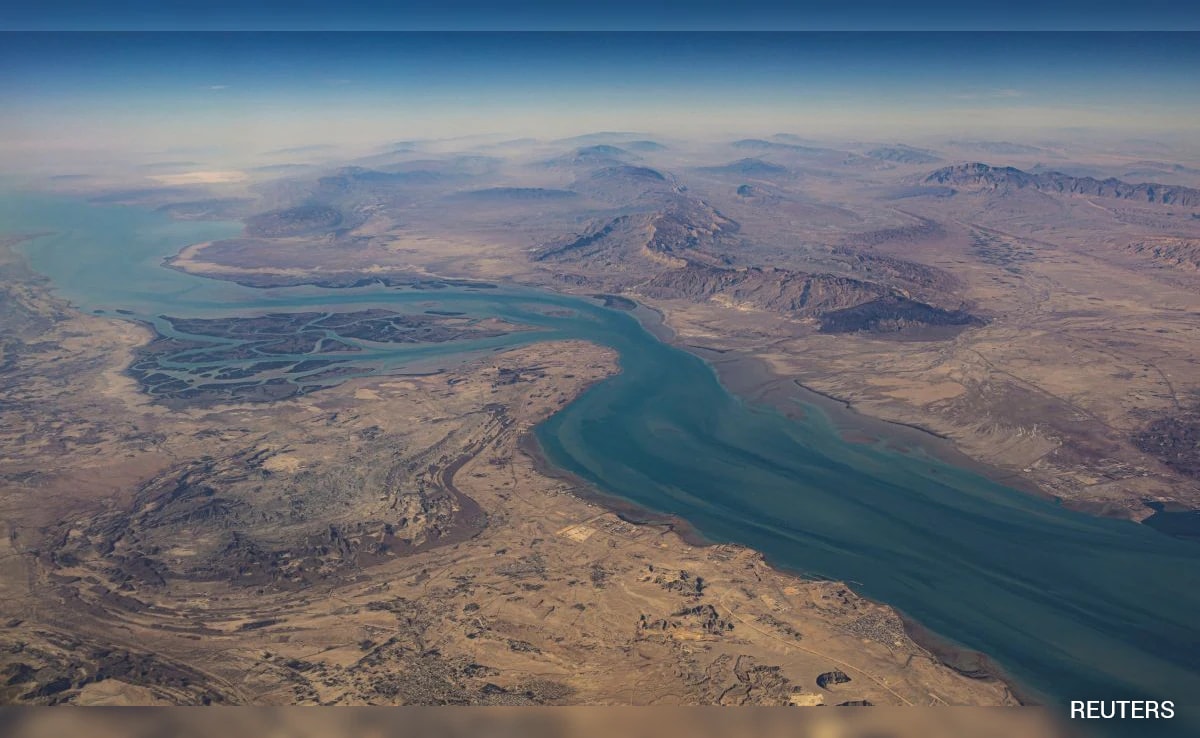
The maritime blockade of Iran was supposed to be absolute. On April 13, 2026, the United States Central Command declared a total halt to Iranian seaborne trade, positioning a formidable naval presence to choke off the regime’s economic lifeblood. Yet, just forty-eight hours after those orders took effect, three sanctioned tankers—the Deep Sea, the Sonia I, and the Diona—slipped through the Strait of Hormuz. Carrying five million barrels of crude, these vessels represent the first significant breach of a blockade that was touted as the definitive end of Tehran’s oil revenue.
This is not a simple story of a few ships evading a net. It is a demonstration of the resilient, dark-market infrastructure that Iran has spent years perfecting. While Washington maintains that the blockade is "fully implemented," the successful exit of these tankers proves that the "Shadow Fleet" remains the most effective weapon in Iran's economic arsenal.
The Mechanics of the Breach
The departure of these vessels was not a sudden dash for the open sea. It was a calculated, multi-stage operation. Data from maritime tracking firm Kpler indicates the tankers loaded their cargo at Kharg Island between April 2 and April 9, well before the April 13 blockade deadline. They sat in Iranian waters, waiting for the precise moment when naval patrols were stretched or distracted.
The "how" of this escape involves more than just physical movement. These ships are masters of AIS (Automatic Identification System) manipulation. By spoofing their locations or going "dark" entirely, they create a digital fog that complicates real-time interdiction.
- The Deep Sea: Previously linked to ship-to-ship transfers near Singapore.
- The Sonia I: A veteran of the sanctioned trade, often using fraudulent flags.
- The Diona: Recently detected delivering cargo to northern Chinese ports like Dongjiakou.
The U.S. Navy reported that while they have successfully turned back over a dozen vessels since Monday, these three tankers managed to cross the strategic chokepoint on Wednesday. The sheer volume—five million barrels—is enough to fund weeks of domestic operations for a cash-strapped Iranian government.
The Singapore Connection
Where are these ships heading? If history is any guide, they aren't going to a traditional port under their own names. The endgame for Iranian crude almost always involves the waters off Singapore and Malaysia.
This region serves as the world’s largest laundromat for sanctioned oil. Here, the tankers will engage in ship-to-ship (STS) transfers, pumping their cargo into non-sanctioned "clean" vessels. Once the oil is mixed or rebranded, it is offloaded at Chinese refineries in Yantai or Dongjiakou. Since March 1, at least 37 tankers associated with Iran have performed these maneuvers, moving roughly 62 million barrels of crude into the global market despite the escalating war.
The blockade fails if it only watches the ports. The real challenge is the "middlemen" vessels that wait in international waters, ready to catch the hand-off.
The Myth of a Sealed Border
The current U.S. strategy relies on the assumption that a naval blockade can function like a physical wall. However, the Persian Gulf is one of the most congested waterways on earth. Distinguishing between a legitimate commercial tanker and a shadow fleet vessel requires more than just radar; it requires constant, high-stakes boarding operations.
In the first 24 hours of the blockade, CENTCOM reported that eight tankers complied with orders to reverse course. But compliance is often a stall tactic. A ship that turns back today may simply wait for a shift change or a weather window tomorrow. The successful transit of the Deep Sea and its peers suggests that the "seal" on the Strait of Hormuz is more of a sieve.
Furthermore, Iran has countered the blockade with a "reopening" of the Strait to commercial traffic. This is a brilliant, if cynical, tactical move. By declaring the waterway open to everyone except those complying with U.S. orders, Tehran creates a chaotic environment where the U.S. Navy must constantly decide whether to intercept a ship and risk an international incident with the ship’s flag state—often countries like Malta, Panama, or India.
Financial Fallout and Domestic Pressure
Every day the blockade holds, Iran loses an estimated $400 million to $435 million in revenue. With only about 13 days of oil storage capacity remaining, the regime is facing a catastrophic backlog. If they cannot move the oil, they have to shut down the fields. Shutting down a field isn't like turning off a faucet; it can cause permanent geological damage to the reservoirs, potentially crippling Iran’s production capacity for a generation.
This pressure is exactly what the U.S. intends to use as a lever in the stalled Islamabad ceasefire talks. But for the Iranian leadership, the shadow fleet is more than a business; it is a survival mechanism. If they can keep even 20% of their exports moving through the "Singapore laundromat," they can stretch their reserves and outlast the political will of the West.
The Escalation Trap
The presence of U.S. warships enforcing a blockade against tankers that refuse to stop creates a hair-trigger environment. On April 16, General Dan Caine and Secretary of War Pete Hegseth clarified that the blockade targets Iranian ports, not the Strait itself. This is a subtle but vital distinction intended to avoid a direct confrontation with global shipping interests.
Yet, as the Sonia I and Diona move toward the Indian Ocean, they are essentially mocking the naval presence behind them. If the U.S. chooses to seize these vessels in international waters, it risks a violent response from the IRGC, which has already threatened to make "no port in the Persian Gulf safe."
The breach by these three tankers is a message from Tehran. It says that no matter how many carriers are in the water, the shadow fleet will find a way through. The blockade is currently a test of endurance, but as these millions of barrels head for China, it is becoming clear that the net has holes large enough to sail a supertanker through.
The success of these three ships may embolden the rest of the 823 vessels currently idling in the Gulf. If the "Deep Sea" reaches its destination, the blockade will be revealed as a high-priced political theater rather than a functional military reality.



