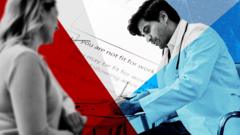
Doctors are lying to you. Not because they are malicious, but because they are exhausted.
The recent BBC report claiming that hundreds of GPs have "never refused" a sick note for mental health reasons isn't the badge of compassion the medical establishment thinks it is. It is a confession of systemic failure. By rubber-stamping every request for a "fit note," the medical profession has transitioned from being the gatekeepers of public health to being the high-volume clerks of a burgeoning work-from-home-forever culture.
We’ve reached a point where the medical certificate is no longer a tool for recovery. It’s a get-out-of-jail-free card that actually traps the patient in a cycle of long-term economic inactivity.
The Myth of the Compassionate Signature
The prevailing narrative suggests that GPs are protecting vulnerable workers from "toxic" environments. The logic is simple: work is causing stress, so remove the work, and the stress vanishes.
It’s a seductive lie. In reality, the longer a person stays away from the workplace, the lower the probability they will ever return. Data from the Department for Work and Pensions (DWP) has shown for years that after six months of absence, there is less than a 50% chance of a worker making it back to their desk. By signing off on every request without pushback, GPs are effectively prescribing professional obsolescence.
The BBC’s "hundreds of GPs" represent a dereliction of clinical duty. If a patient asked for a course of high-dose steroids for a mild cough, a doctor would refuse because the side effects outweigh the benefits. Yet, when a patient asks for a three-month hiatus for "stress," doctors fold. They ignore the side effects: social isolation, loss of routine, financial degradation, and the atrophy of professional skills.
The Ten Minute Trap
Why is this happening? Look at the clock.
A standard GP consultation in the UK is roughly ten minutes. In that window, a doctor must assess, diagnose, and treat. Refusing a sick note—especially for subjective mental health concerns—requires a difficult, confrontational conversation. It requires the doctor to explain why work might actually be good for the patient’s recovery. It requires a deep dive into the specific stressors of the job.
Signing the note takes thirty seconds. Refusing it takes twenty minutes of emotional labor.
GPs are path-of-least-resistance practitioners. They aren't assessing "fitness for work"; they are managing their own burnout by offloading the patient to the benefits system. I’ve seen clinics where the "fit note" is the default setting for anyone presenting with anything less than a smile. It’s a clinical shortcut that has massive macroeconomic consequences.
Work as Therapy vs. Work as Trauma
The modern discourse has rebranded "pressure" as "trauma." This linguistic shift is the engine behind the sick-note explosion.
We have pathologized the normal friction of a career. Deadlines, difficult managers, and performance reviews are now treated as medical emergencies. When a GP signs a sick note for "work-related stress" without suggesting workplace adjustments, they are validating the idea that the patient is fragile.
Real clinical expertise recognizes that employment is a social determinant of health. Having a reason to get out of bed, a social circle at the office, and a paycheck provides more mental stability than a bottle of SSRIs and a daytime TV marathon. By "protecting" patients from work, doctors are stripping them of their most potent antidepressant.
Imagine a scenario where a therapist tells an agoraphobic patient to just stay home forever because the outside world is scary. We would call that malpractice. Yet, we applaud GPs who tell stressed employees to stay away from the office for months on end. It’s the same logic, just applied to a different phobia.
The Economic Ghost Town
The "People Also Ask" sections of the internet are filled with queries like "How long can a GP sign me off for stress?" or "Can my employer fire me if I have a sick note?" These questions reveal a workforce that is looking for a loophole, not a cure.
The reality is brutal: a sick note doesn't fix a bad job. If your manager is a tyrant, a piece of paper from a doctor won't turn them into a mentor. It just delays the inevitable confrontation while your skills rot.
Businesses are currently carrying the weight of a "hidden" unemployed class—people who are technically employed but functionally absent. This drives up costs for everyone, lowers productivity, and ultimately leads to the very layoffs and economic instability that cause the "stress" in the first place.
We are subsidizing a national nervous breakdown because GPs find it too awkward to say "no."
The Professional Price of Compliance
If you are a worker reading this, understand that a long-term sick note is a career killer.
HR departments might smile and wish you well, but in the background, they are rerouting your responsibilities. Your colleagues are picking up your slack and growing resentful. The "protection" offered by a sick note is a legal shield, not a social one.
When you return—if you return—you are no longer the "high performer." You are the "liability."
GPs aren't telling you this. They are too busy clearing their queue. They don't have to deal with your mortgage when your "stress" leave turns into a permanent exit from the workforce. They just have to make sure you leave the exam room feeling "heard."
Stop Medicalizing Discontent
We need to strip GPs of the power to issue long-term sick notes for non-clinical stress.
The decision to stay away from work should be a tripartite agreement between the employee, the employer, and an occupational health specialist—someone who actually understands the workplace, not just the symptoms. GPs are qualified to diagnose pneumonia; they are rarely qualified to diagnose the organizational culture of a mid-sized marketing firm.
We must move toward a "Work-First" model. Instead of "Fit for Work" or "Not Fit for Work," the default should be "Fit with Modifications."
- Can’t handle the commute? Work from home.
- Can’t handle the phones? Do data entry.
- Can’t handle the boss? Transfer departments.
Total absence should be a last resort, reserved for the truly incapacitated.
The current system is a feedback loop of fragility. The more we sign people off, the more we convince them they can't cope. The more they can't cope, the more we sign them off. It is a spiral that ends in a stagnant economy and a medicated, isolated population.
The BBC’s report isn't a story about the kindness of doctors. It’s a story about the abdication of responsibility. We have replaced resilience with certificates and wonder why the nation feels more stressed than ever.
Stop asking your doctor for a note to hide from your life. Start asking for the tools to face it. GPs, stop signing away your patients' futures for the sake of a quiet afternoon.
The most compassionate thing a doctor can do for a stressed patient is to tell them to go back to work.


