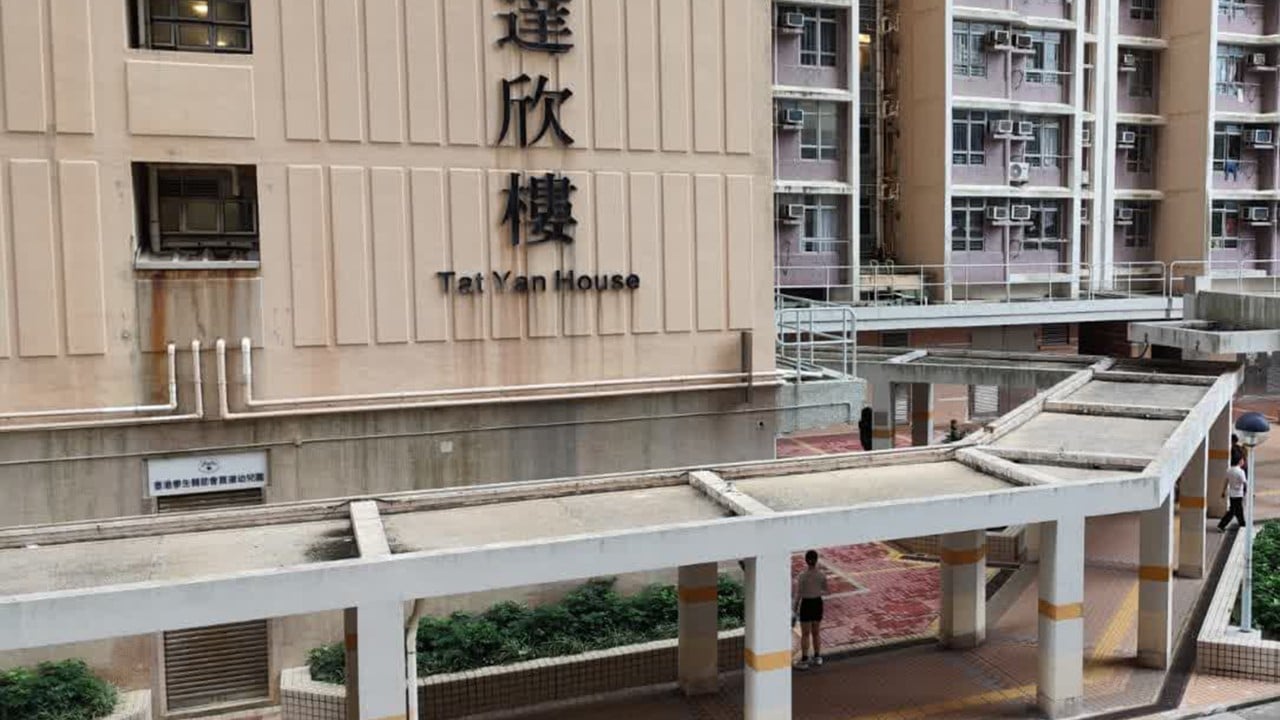
The air in Hong Kong's vertical neighborhoods often feels pressurized, a heavy mix of humidity and the collective hum of seven million souls living on top of one another. We exist in a state of forced intimacy, separated by only a few inches of concrete and steel. You hear your neighbor’s kettle whistle. You hear their television. You hear the muffled cadence of an argument through the vent. Yet, in a city where space is the ultimate luxury, privacy becomes a fortress. Sometimes, that fortress becomes a tomb.
On a Tuesday that began like any other in the bustling district of Kwun Tong, that fortress was breached.
The report from the Shun Lee Estate was skeletal, stripped of the messy, bleeding reality of human life. Police were called. A door was forced. Inside, a man and a woman were found. They were dead. To the authorities, it was a scene to be processed—a series of measurements, timestamps, and evidence bags. To the rest of us, it is a chilling reminder of how easily a life can vanish while the world continues to churn just outside the window.
Hong Kong’s public housing estates are marvels of efficiency. They are concrete forests designed to house the masses, characterized by long corridors and heavy iron gates. To live there is to be part of a hive. But hives can be lonely.
Consider the sensory details that the official reports ignore. The smell of incense lingering in the hallway from a neighbor’s morning ritual. The flickering fluorescent light in the stairwell. The rhythmic thud of a delivery driver’s footsteps. Somewhere behind one of those identical metal doors, two people stopped breathing. The clocks kept ticking. The neighbors kept cooking. The city didn't blink.
The Anatomy of an Investigation
When the police enter a "flat of death," as the local vernacular morbidly puts it, the process is cold. Officers in blue windbreakers cordoned off the floor. Forensic technicians in white suits stepped delicately over the threshold, their cameras flashing like strobe lights in a darkened club. They look for the physical: a note, a struggle, the presence of charcoal, or the tell-tale signs of a medical emergency left unanswered.
The man was 60. The woman was 50. In the eyes of a demographer, they were at the intersection of the city’s aging crisis and its social isolation.
The "core facts" tell us they were found in a bedroom. There were no immediate signs of a break-in. The door was locked from the inside. In the cold logic of a criminal investigation, these details point away from a predator and toward a tragedy born of internal forces. But logic doesn't account for the weight of the silence that preceded the discovery.
It often starts with a smell. Or a stack of mail. Or a utility worker noticing a meter that hasn't moved in weeks. In this case, it was the silence that finally grew loud enough to be heard.
The Invisible Stakes of Vertical Living
We talk about Hong Kong’s housing crisis in terms of square footage and property heat maps. We discuss the "coffin homes" and the "nano-flats" as economic failures. We rarely discuss them as psychological pressure cookers. When you live in such proximity to others, you develop a survival mechanism: you stop seeing. You look at your phone in the elevator. You avoid eye contact in the lobby.
This social contract of mutual invisibility is what allows a tragedy to ripen in the dark.
Think about the man and the woman. Were they a couple bound by affection, or by the grim necessity of sharing rent in the world’s most expensive market? Were they siblings caring for one another in a world that had forgotten them? The investigation will eventually put labels on their relationship, but it won't capture the quiet desperation of a Tuesday night when the lights stayed off.
The statistics are a blunt instrument. They tell us that isolation among the middle-aged and elderly in high-density urban areas is rising. They tell us that mental health resources are stretched thin, a fragile safety net with gaping holes. But a statistic doesn't have a face. It doesn't have a favorite tea mug or a half-finished book on the nightstand.
Breaking the Concrete Seal
The police investigation will conclude. A coroner will sign a piece of paper. The flat will eventually be cleared, scrubbed of its history, and returned to the housing pool. Someone else will move in. They will paint the walls. They will hang curtains. They will try to ignore the lingering energy of what happened before they arrived.
But the real problem lies elsewhere.
It lies in the gap between "living together" and "living near." We have mastered the art of the latter. We are experts at navigating the crowded MTR stations and the packed wet markets without ever truly touching another person's life. The Shun Lee Estate discovery isn't just a police blotter entry; it is a crack in the facade of our urban efficiency.
It forces us to ask: Who would notice if I didn't come out today?
There is a specific kind of horror in the "locked door" mystery. It suggests a finality, a choice to shut the world out before the world shut them down. Whether it was a double tragedy of health or something more intentional, the iron gate was the final barrier between a cry for help and the ears that might have heard it.
The investigators moved out by nightfall. The blue tape was eventually stripped away. The neighbors, momentarily shocked into conversation, returned to their routines. They walked past the flat, perhaps a little faster than usual, their eyes fixed on the floor or their screens.
The city’s heartbeat is loud, frantic, and unrelenting. It is a sound that drowns out the quietest deaths. We move in shadows, billions of us, brushing shoulders in the dark, convinced that we are alone until the police arrive to prove we were there all along.
The light in the hallway remains a harsh, buzzing white, illuminating nothing but the closed doors of those still waiting to be seen.