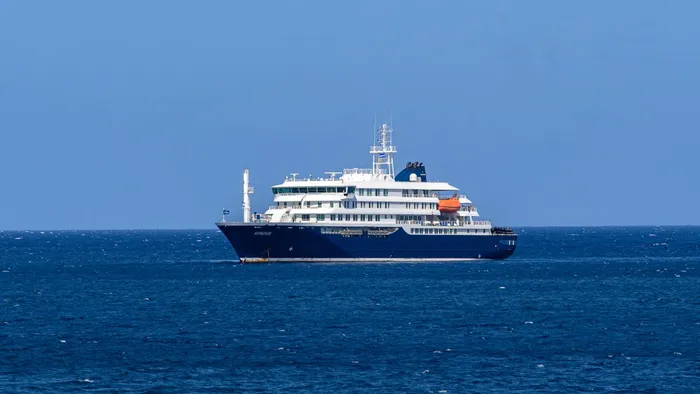
The MV Hondius, a vessel marketed as the most advanced polar expedition ship in the world, recently became the unlikely stage for a medical anomaly that should worry every major cruise operator. A passenger tested positive for hantavirus while showing absolutely no clinical symptoms. While the headlines focused on the lack of a fever or a cough, the real story lies in the terrifying gap between maritime health protocols and the biological realities of high-latitude tourism. This was not a failure of the passenger’s immune system. It was a glaring warning that the screening methods used by the industry are designed for the threats of the last century, not the zoonotic surprises of the current one.
Hantavirus is generally associated with rodent droppings and severe respiratory failure. It is a "dry" virus, often contracted through the inhalation of aerosolized particles in confined spaces. On a ship like the Hondius—a steel labyrinth of recycled air and tight quarters—the presence of any pathogen is a high-stakes gamble. The asymptomatic nature of this specific case suggests a shift in how we must view viral transmission at sea. If a person can carry a high enough viral load to trigger a positive test without feeling a single ache, the entire concept of "symptom-based screening" becomes a dangerous relic.
The Logistics of a High Latitude Contagion
Expedition cruising is not like a standard Caribbean loop. These ships operate in the most remote corners of the planet, where the nearest Level I trauma center or specialized infectious disease ward is often a multi-day flight away. When the Hondius set sail, it carried the standard complement of medical supplies: basic diagnostic kits, stabilizers, and enough antibiotics to handle a localized outbreak of standard flu or gastrointestinal distress. It was not prepared for a pathogen that effectively hides.
The mechanics of the positive test itself remain a point of intense scrutiny. Most hantavirus infections are caught because the patient enters a state of pulmonary distress that is impossible to ignore. In this instance, the detection occurred through what sources suggest was a supplemental screening process, perhaps a leftover habit from the rigorous testing mandates of the early 2020s. Had that test not been administered, the passenger would have continued to mingle in the observation lounges, shared meals in the dining hall, and potentially shed viral particles into the ship’s ventilation system.
We are looking at a fundamental breakdown in the "boarding gate" philosophy. The industry relies on the honesty of passengers and the visible health of the crowd. This case proves that visibility is a false metric.
Rodents in the Supply Chain
To understand how hantavirus reaches a polar vessel, you have to look at the ports. Ships like the Hondius do not exist in a vacuum; they are tethered to a global supply chain that moves through urban centers and rural staging grounds. Hantaviruses are not native to the Antarctic ice. They are hitchhikers.
The primary suspect in any maritime zoonotic event is the cargo. Crates of dry goods, linens, and technical equipment are staged in warehouses before being winched aboard. If those warehouses have a rodent problem—a common reality in international shipping hubs—the virus enters the ship before the first passenger even checks their cabin. The virus can survive in dust for days. Once the crates are cracked open in the hold, the ship's internal airflow does the rest of the work.
The Myth of the Sterile Ship
Ship owners spend millions on high-efficiency particulate air (HEPA) filters and UV-C sterilization lights. They want the public to believe the air on a modern expedition vessel is as clean as a surgical suite. It isn't. The Hondius is a masterpiece of engineering, but it is still a closed loop.
- Recirculation: Even with advanced filtering, a percentage of cabin air is often mixed with fresh air to maintain thermal efficiency in sub-zero climates.
- Surface Contact: Handrails, touchscreens, and buffet utensils remain the primary vectors for cross-contamination.
- Human Density: The social nature of expedition travel—briefings in cramped theaters and shared Zodiac rides—maximizes the opportunity for a virus to jump.
The asymptomatic carrier on the Hondius represents the ultimate "black swan" for maritime insurers. If you cannot see the threat, you cannot contain it. The current protocol for a positive test involves isolation, but that assumes you find the case early. In this instance, the timing was a matter of luck, not a victory for the ship's health safety management system.
The Medical Mystery of Asymptomatic Hantavirus
In the medical literature, hantavirus pulmonary syndrome (HPS) has a mortality rate that often exceeds 35 percent. It is a brutal, fast-acting disease. Finding it in a patient who feels perfectly fine is a statistical outlier that demands a re-evaluation of the virus’s incubation period and its ability to maintain a low-level presence in the human host.
Epidemiologists are now forced to consider two possibilities. First, that the passenger possessed a rare genetic resistance that allowed them to harbor the virus without the cytokine storm that usually kills the host. Second, and more concerning, that we are seeing a strain of the virus that has adapted for higher transmissibility at the expense of immediate virulence. A virus that doesn't kill its host right away has more time to find a new one. On a cruise ship, that time is measured in days of uninterrupted social contact.
This case strips away the comfort of the "fever check." For years, the travel industry has used thermal cameras and health questionnaires as a shield. Those tools are useless against a ghost.
Why the Industry is Silent
You will not find the owners of major expedition lines talking about this case in their marketing materials. There is a deep, systemic fear that admitting the presence of such viruses will tank the post-pandemic recovery of the luxury travel sector. The Hondius incident was handled with quiet efficiency, but the lack of transparency is a disservice to the traveling public.
The cost of upgrading these ships to handle real-time, broad-spectrum pathogen detection is astronomical. It would require onboard PCR labs capable of testing for more than just the common cold or the latest headline-grabbing respiratory bug. Most ships are lucky to have a single doctor and a nurse with a limited diagnostic suite. To truly secure a vessel against asymptomatic threats, the medical bay would need to be the most expensive room on the ship.
Instead, the industry settles for "reasonable care." They follow the guidelines set by maritime authorities that are often years behind the latest virological research. It is a calculated risk. They bet that the "Hondius anomaly" won't happen twice, or that if it does, the next carrier will be just as asymptomatic as the last.
The Failure of Regional Health Oversight
The international waters aspect of cruise travel creates a jurisdictional nightmare. When a virus is detected on a ship in the middle of the Southern Ocean, which health authority takes the lead? Usually, it is the flag state of the ship, which might be a country thousands of miles away with little interest in the specific health dynamics of a polar expedition.
This vacuum of oversight allows companies to self-report. While the crew of the Hondius followed the rules, the system itself is built on an honor code that is easily manipulated. If a ship's doctor decides a cough is "just a cold" to avoid a costly quarantine or a diverted itinerary, there is no one to challenge that decision until it is too late. The asymptomatic carrier is the perfect cover for a company that wants to keep the engines turning and the guests happy.
Protecting the Future of Polar Exploration
The allure of the Antarctic is its isolation. That same isolation is what makes a viral outbreak a potential catastrophe. If we are going to continue sending thousands of people into these fragile ecosystems on floating hotels, the health standards must exceed those of a land-based resort, not merely mimic them.
- Mandatory Cargo Fumigation: Stricter controls at the point of origin to ensure rodents and their waste never make it into the hold.
- Broad-Spectrum Onboard Testing: Moving away from symptom-reactive testing toward proactive, random sampling of the passenger population.
- Enhanced Air Scrubbing: Moving to 100 percent fresh air intake, regardless of the fuel cost required to heat that air in polar conditions.
The MV Hondius case isn't a curiosity to be filed away under "strange medical news." It is a structural crack in the foundation of modern travel. We have built vessels that can withstand crushing ice and howling gales, yet they remain vulnerable to a microscopic passenger that doesn't even have the decency to make its host sneeze.
The industry must decide if it will wait for a symptomatic tragedy to occur before it overhauls its medical protocols. Relying on the luck of an asymptomatic carrier is not a strategy; it is a stay of execution. The next stowaway might not be so quiet. All it takes is one mutation or one particularly vulnerable passenger for a luxury expedition to turn into a floating morgue. The technology to prevent this exists, but the will to spend the money does not. Until that changes, every person stepping onto a gangplank is part of a massive, unmonitored biological experiment.
Stop looking at the thermometer and start looking at the logistics. The threat isn't just the virus; it's the complacency of the people running the ship.