The dust in Tashkent tastes different than it did thirty years ago. It used to taste like stagnation—the heavy, metallic tang of Soviet-era machinery grinding to a halt in the heat. Now, it carries the scent of fresh concrete and the electric hum of a nation trying to outrun its own history.
In the wood-paneled boardrooms of London’s Square Mile, Uzbekistan has long been a ghost. A name on a map. A place associated with ancient turquoise domes and the brutal efficiency of a closed economy. But that is changing. The Uzbek government is preparing to list its crown jewels—state-owned banks, energy giants, and mining titans—on the London Stock Exchange. This isn't just a financial transaction. It is a cultural exorcism.
To understand why a state-owned bank in Central Asia matters to a pension fund manager in London, you have to look past the spreadsheets. You have to look at the people like "Bakhtiyor"—a hypothetical but representative mid-level manager at one of these state firms. For decades, Bakhtiyor’s job wasn't to innovate. It was to exist. He worked in a system where "profit" was a secondary concern to "stability," and "transparency" was a dirty word that invited unwanted scrutiny. Now, he is being told that his company’s books must be laid bare for the world to see. He is terrified. He is also, for the first time in his life, ambitious.
The Great Unlocking
The math is simple, even if the execution is agonizing. Uzbekistan sits on a mountain of assets—gold, copper, chemical plants, and telecommunications—that have been locked behind a door of state control for decades. The government owns nearly 80% of the banking sector. Imagine trying to run a race while carrying a thousand-pound weight of legacy debt and bureaucratic inertia. You can't.
By moving toward an Initial Public Offering (IPO) in London, the Uzbek state is essentially inviting the world to help them carry the load. They are seeking billions in foreign capital, but more importantly, they are seeking the discipline that comes with a London listing. You can't hide a slush fund when you have to answer to a shareholder in Manhattan or a regulator in Canary Wharf.
The stakes are invisible but absolute. If this transition fails, Uzbekistan risks falling back into the gravitational pull of its more authoritarian neighbors. If it succeeds, it becomes the blueprint for how a post-Soviet state can reinvent itself without losing its soul.
The Price of Sunlight
Sunlight is the best disinfectant, but it also burns. As these companies prepare for London, they are undergoing a painful "corporatization." This is a sterile word for a violent process. It means firing the cousins of powerful ministers who have held "consultant" roles for years. It means installing independent board members who actually ask questions. It means auditing every som, every dollar, and every gram of gold.
Consider the Navoi Mining and Metallurgical Combinat (NMMC). It is one of the largest gold producers on the planet. For years, its production figures were treated like state secrets. Now, it has to explain its environmental impact, its labor practices, and its long-term reserves to people who have never set foot in the Kyzylkum Desert.
The transition is jarring. In the old world, the NMMC was a fiefdom. In the new world, it is a ticker symbol.
The skepticism from the West is palpable. Investors remember the 1990s. They remember the "Wild East" where assets were stripped and billionaires were minted overnight while the public starved. The Uzbek leadership is trying to prove this is different. They are hiring Western advisors—the big banks, the white-shoe law firms—to act as chaperones. They are speaking the language of ESG (Environmental, Social, and Governance) with the fervor of new converts.
The Silent Revolution in the Alleys
While the headlines focus on the London Stock Exchange, the real impact is felt in the mahallas—the tight-knit neighborhoods of Tashkent and Samarkand.
When a state bank is privatized, the ripple effect reaches the small business owner who can finally get a loan without a bribe. It reaches the tech graduate who no longer feels the need to move to Moscow or Berlin to find a job that pays a living wage. The IPO is the visible tip of a very deep iceberg. It represents a shift from a command economy to a demand economy.
But there is a lingering fear. What happens when the "state" is no longer the safety net? In the old system, a state enterprise wouldn't let you go, even if there was no work. In a privatized, London-listed company, efficiency is king. The human cost of this efficiency is the ghost at the banquet.
Why London?
People often ask why Tashkent doesn't just build its own local exchange to a world-class level first. Why fly five thousand miles to list in a city that is still grappling with its own post-Brexit identity?
The answer is trust. Trust is the only currency that matters in global finance, and Uzbekistan is currently in a deficit. By listing in London, they are "borrowing" the UK’s legal framework. They are telling investors: "If we break the rules, you can sue us in a court that we don't control." It is a massive concession of sovereignty in exchange for a massive injection of credibility.
It is also about the exit. Uzbekistan doesn't want to be a satellite state anymore. By tethering its economy to the global financial heart, it creates a shield of economic interest. If British, American, and European funds own a piece of the Uzbek energy grid, they have a vested interest in the country’s stability.
The Friction of Reality
It isn't all smooth transitions and ribbon-cutting ceremonies. There is a massive friction between the old guard and the new reformers. For every young, Western-educated minister pushing for transparency, there is an "Oksakal" (elder) who remembers the old ways and fears the loss of control.
The reform process is often described as "irreversible." That is a dangerous word. Nothing is irreversible. A global recession, a sudden shift in regional geopolitics, or a domestic scandal could send the whole project spiraling. The move to London is a high-stakes gamble that the world’s appetite for "frontier markets" remains strong.
Investors are currently looking at Uzbekistan with a mix of fascination and caution. They see a country with a young, growing population (over 35 million people), a strategic location, and a wealth of natural resources. But they also see the ghosts of the past. They see the corruption indices. They see the distance yet to be traveled.
The Last Caravan
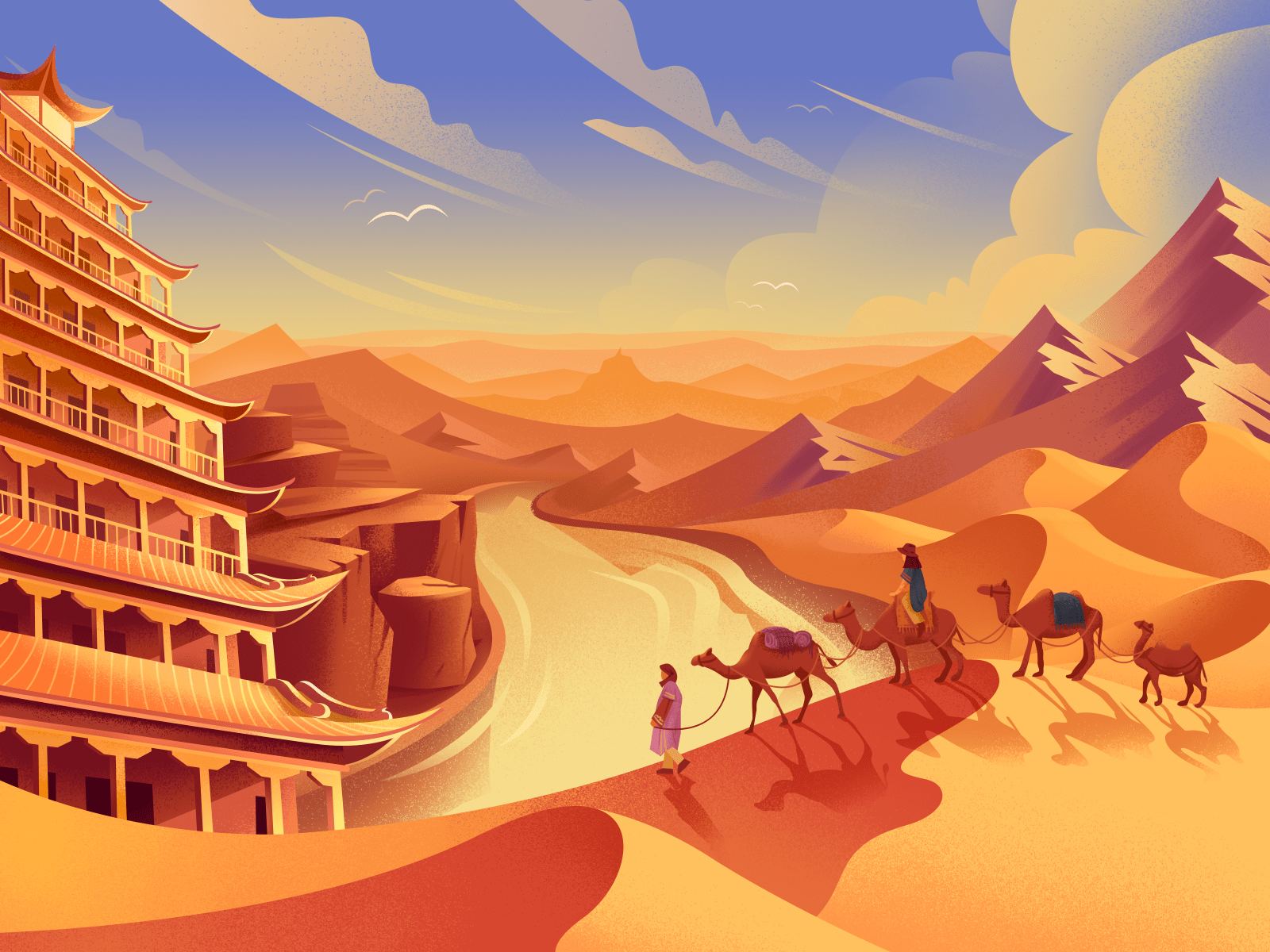
The Silk Road was never just about silk. It was about the movement of ideas, the blending of cultures, and the high-risk, high-reward nature of global trade. In many ways, these IPOs are the modern version of a camel caravan crossing the mountains.
Instead of spices and textiles, the cargo is equity and debt. Instead of bandits in the mountain passes, the dangers are market volatility and regulatory hurdles. But the underlying motivation is identical: the restless, human need to connect, to grow, and to find a better price for what you have to offer.
Bakhtiyor, our hypothetical manager, sits in his office today looking at a draft of a prospectus. It is five hundred pages of dense, English-language legal jargon. He doesn't understand all of it. But he understands that the old world is dead. He understands that the walls have come down, and the wind blowing in from the West is cold, bracing, and full of possibility.
He picks up a pen. He has a meeting with an auditor in twenty minutes. He isn't just balancing books anymore; he is helping to write the opening chapter of a new country. The dust still tastes of concrete and electricity, but for the first time in a generation, it also tastes like hope.
The turquoise domes of Samarkand still stand, indifferent to the fluctuations of the FTSE 100. They have seen empires rise and fall, and they will likely see this new experiment through to its end. The question isn't whether Uzbekistan will change—it is whether the world is ready to buy what a transformed Uzbekistan is selling.
As the first bells ring in London, the answer is finally moving toward the light.


