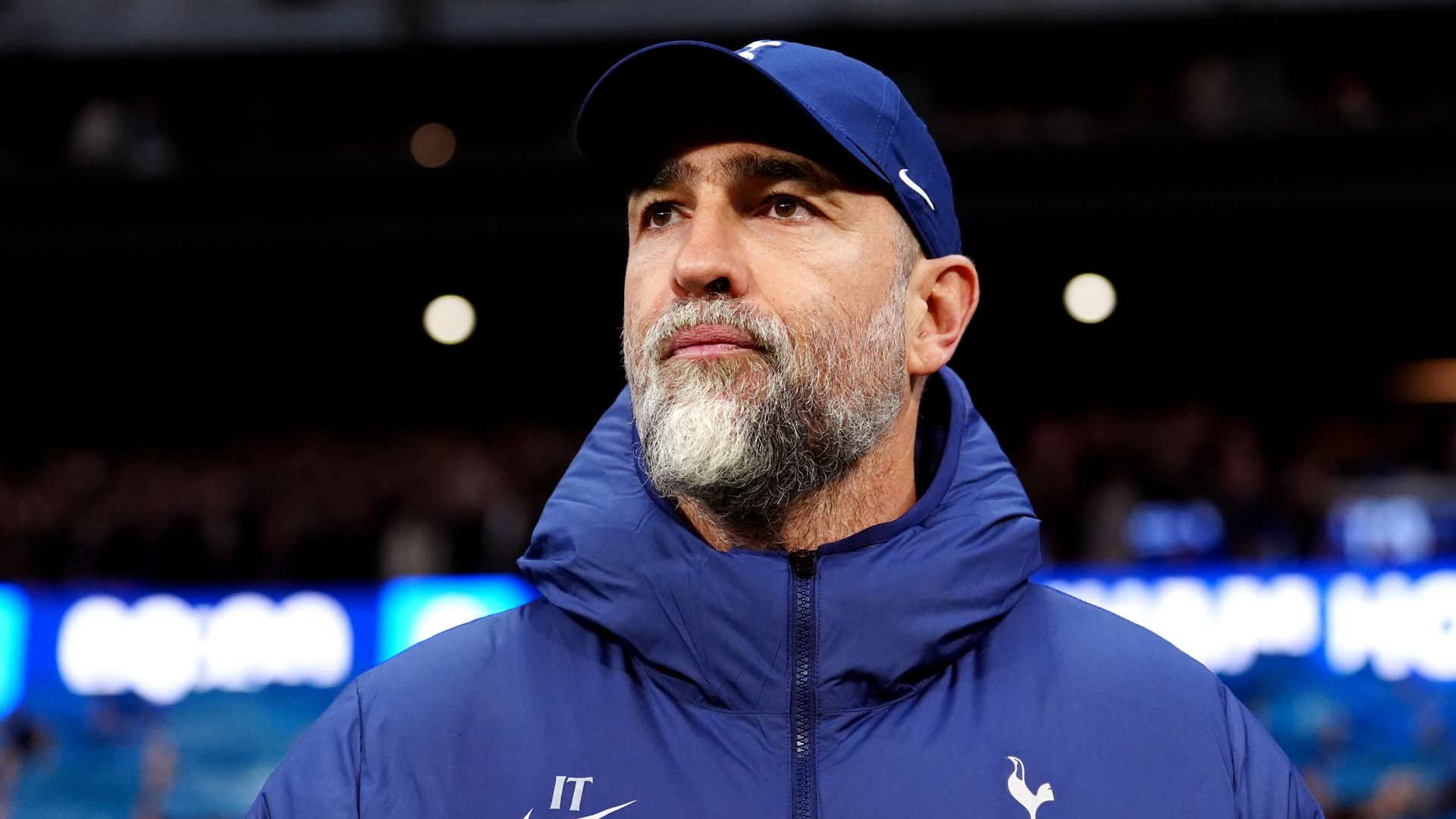
The dismissal of Igor Tudor after 42 days and zero Premier League victories is not a statistical anomaly of poor form but a predictable outcome of a misalignment between tactical identity and squad composition. When a football club replaces a manager mid-season or during a volatile transition, they often fall into the trap of "Reactionary Recruitment"—hiring a profile that is the polar opposite of the predecessor without auditing the existing technical assets. Tottenham’s failure with Tudor provides a clinical study in how a rigid tactical system collapses when it lacks the specific athletic and cognitive profiles required for execution.
The Structural Mismatch The Tudor System vs. The Spurs Roster
Igor Tudor’s managerial reputation is built on a specific high-intensity, man-marking defensive block and a vertical transition model. This system relies on three non-negotiable physical and tactical pillars.
- Elite Aerobic Capacity in the Wing-back Strata: The system demands that wide players cover approximately 11-12 kilometers per match, with a high percentage of that distance covered in high-intensity sprints (above 25km/h).
- Aggressive Center-back Proactivity: In a man-to-man defensive scheme, central defenders must be comfortable leaving the defensive line to shadow attackers into the midfield.
- Verticality Over Retention: The objective is to move the ball from the defensive third to the final third in under three passes or ten seconds.
Tottenham’s roster, constructed through various philosophical pivots over the last three seasons, possessed none of these attributes in the required density. The squad featured technical "recyclers"—midfielders who excel at lateral ball retention—rather than "verticalizers." By forcing a retention-based squad into a high-turnover, high-transition model, Tudor essentially increased the team's "Error Rate per Possession" without the defensive coverage to mitigate the fallout.
The Cost Function of Defensive Transition
In the Premier League, the speed of transition is the primary determinant of defensive stability. Tudor’s insistence on a man-marking press created a structural vulnerability known as "Positional Dislocation." When one player fails to win his individual duel in a man-marking system, the entire defensive structure suffers a cascading failure because there is no "zonal safety net" to catch the runner.
Throughout Tudor’s six-week tenure, Tottenham’s Expected Goals Against (xGA) surged because the team was caught in "No Man’s Land." They were neither deep enough to protect the space behind them nor synchronized enough to win the ball high up the pitch. This created a massive "Defensive Void" in the half-spaces.
The analytical breakdown of their goals conceded reveals a recurring pattern:
- Initial press is bypassed via a simple lofted ball or a dropped-off striker.
- The central defenders, caught between Tudor’s instruction to push up and their natural instinct to drop, remained static.
- Opposition wingers exploited the "blind side" of the wing-backs who were too high up the pitch to recover.
This was not a lack of effort; it was a "Cognitive Overload" issue. Players were thinking about where they should be rather than reacting to the ball. In elite-level sports, a 0.5-second delay in decision-making equates to a three-to-five meter disadvantage on the pitch.
The Volatility of the Six Week Sample Size
While the "zero wins" statistic is the headline, the underlying data suggests that the board’s decision was driven by a total collapse in "Performance Indicators" rather than just the points tally. A six-week window is generally considered too short for a tactical overhaul, yet the trajectory of the team’s metrics showed a downward trend rather than a "Learning Curve" plateau.
Consider the "Degradation of Output" across Tudor's brief stint:
- Week 1-2: High energy, increased tackle volume, but poor shot conversion.
- Week 3-4: Significant drop in "Pressing Intensity" as physical fatigue from the new training regime set in.
- Week 5-6: Complete breakdown in "Secondary Ball Recovery," suggesting a loss of belief in the system or physical exhaustion.
The decision to sack a manager after 42 days is an admission by the executive board that the "Profile Filter" used during the hiring process was flawed. If the board realized the squad could not physically or mentally adapt to the man-marking requirements, every day spent under Tudor was a day of "Asset Depreciation." The value of the players was actively falling as they were being asked to perform roles that highlighted their weaknesses rather than their strengths.
The Leadership Vacuum and the "Tactical Rejection"
In any high-performance environment, the introduction of a radical new methodology requires "Early Buy-in" from the influential veterans or "Linchpin Players." When a manager’s system requires a significant increase in physical output without immediate results, the "Psychological Contract" between the coach and the squad thins.
Tudor’s abrasive, direct style—often successful in Serie A where the tactical pace allows for more deliberate man-marking—clashed with the cultural expectations of a Premier League locker room that has been conditioned for high-speed zonal transitions. This resulted in "Tactical Rejection."
The players didn't necessarily "revolt" in the traditional sense; they simply reverted to their "Baseline Habits" under pressure. In the final match of his tenure, the data showed players ignoring Tudor’s instructions to push the line high, choosing instead to drop into a deep block. This creates a "Dual-System Conflict" where half the team is playing the manager's way and the other half is playing for self-preservation. A team split between two tactical philosophies is mathematically less effective than a team perfectly executing a mediocre philosophy.
The Economic Impact of the Short-Term Hire
The financial implications of a six-week managerial cycle extend beyond the severance package. There are three primary "Hidden Costs" to this failure:
- Opportunity Cost of the Transfer Window: Tudor likely influenced minor personnel shifts or training priorities that may not align with the next appointment.
- Training Load Scarring: Drastic changes in physical conditioning (moving from a low-block system to a high-press system) often lead to soft-tissue injuries that manifest 8-12 weeks later.
- Brand Erosion: Continuous volatility in the managerial position signals a lack of "Strategic Governance" to potential high-value targets, both players and future coaches.
The "Churn Rate" at Tottenham has become a deterrent. When a club develops a reputation for "Trigger-Happy Leadership," the pool of elite managerial talent shrinks to only those seeking a high-payout severance, rather than those looking to build a multi-year project.
Theoretical Framework for the Next Appointment
To avoid a repetition of the Tudor disaster, the club must move away from "Name-Based Hiring" and adopt a "Systemic Compatibility Matrix." This requires identifying a manager whose tactical "Basics" align with the existing 80% of the squad's capability.
The next hire must address the "Rest-Defense" issue immediately. Tottenham currently lacks the recovery speed in the center of the pitch to play a high line. Therefore, the strategy must shift toward a "Modified Zonal Press"—a system that pressures the ball but maintains a structured back four to prevent the catastrophic "One-Pass Breakthroughs" that characterized the Tudor era.
Future recruitment must be filtered through a "Technical Audit" that asks:
- Does this player possess the "Aerobic Profile" for the desired system?
- Does the player's "Passing Map" align with the verticality requirements?
- What is the player's "Adaptability Rating" based on previous coaching changes?
The board must accept that the squad requires a "Stabilization Phase" before another attempt at a radical tactical shift. The Tudor experiment failed because it attempted to force a "Hardware Update" (the tactics) on "Incompatible Firmware" (the players). The immediate priority is to restore a tactical baseline that minimizes "Unforced Positional Errors" and allows the squad's natural technical superiority to manifest in the final third.
A successful transition now depends on finding a "Bridge Manager"—someone capable of implementing a pragmatic, high-floor system that stops the defensive bleeding while the long-term squad re-profiling begins. Anything else risks a total "Systemic Collapse" and a multi-year exit from European competition contention.
Ensure the next candidate's "Defensive Density" metrics align with the current squad's limited recovery speed, or the cycle of 40-day failures will continue.