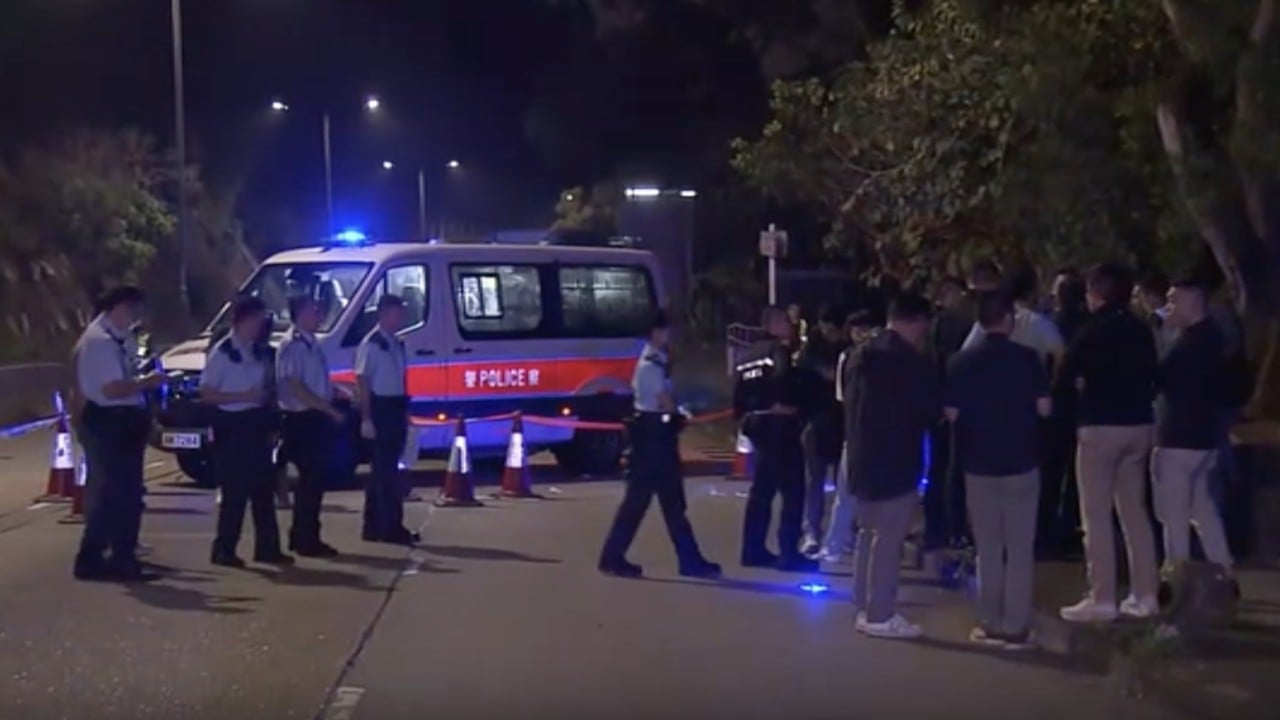
Five shots. One serrated knife. One metal rod. A charging assailant.
The standard news cycle digests this as a "tragic failure of protocol" or a "necessary use of force." Both sides are wrong because they are arguing about the wrong timeline. When a human being closes a fifteen-foot gap in under two seconds with a blade, the "de-escalation" window didn't just close—it never existed in the way the public imagines it.
We need to stop pretending that every violent encounter is a chess match where one player just forgot to be polite.
The Tueller Drill Reality Check
Most people sitting behind a keyboard have never heard of the Tueller Drill. In the tactical world, it’s the baseline for understanding why "just shoot the leg" is a murderous piece of advice. Sgt. Dennis Tueller established that an average person can cover 21 feet in roughly 1.5 seconds.
That is less time than it takes for your brain to register a threat, decide on a response, and physically pull a trigger.
When an assailant is "charging," as reported in this case, the distance is likely already well within that 21-foot kill zone. Critics argue for "proportional response," but they fail to account for the biological reality of adrenaline. A human body pumped with epinephrine and potentially narcotics does not stop because it was hit once. It stops because the central nervous system is disrupted or the mechanical means of locomotion (the skeleton and muscles) are shattered.
Five shots isn't "excessive." In a high-stress environment with a moving target, five shots is a desperate attempt to achieve a "stop" before the officer becomes a statistic. I’ve seen bodycam footage where suspects took twelve rounds of .40 S&W and kept swinging a hammer. The idea that police can surgically disable a charging attacker with a single, cinematic shot is a Hollywood lie that is getting people killed.
The Myth of the Less-Lethal Panacea
Why didn't they use a Taser?
This is the "People Also Ask" question that drives me insane. Let’s look at the failure rate of the Taser 7 and even the newer Taser 10. Tasers require two probes to impact the skin and complete a circuit. If the assailant is wearing a heavy jacket, if one probe misses, or if the spread is too narrow because the suspect is too close, the Taser does exactly nothing.
Actually, it does something: it leaves the officer holding a plastic toy while a man with a serrated knife is three feet away.
Why Tasers Fail in "Charging" Scenarios:
- Clothing Disconnect: Loose clothing prevents the barbs from embedding.
- Muscle Tension: High-intensity encounters often involve suspects with extreme muscle tension or "excited delirium," which can override the neuromuscular incapacitation.
- The "One-Shot" Gamble: You get one real chance. If it fails, the transition time to a sidearm is longer than the time it takes for a knife to reach a throat.
If you are facing a metal rod and a serrated knife, and you choose a Taser, you are betting your life on a battery-operated device with a 30% to 40% real-world failure rate in dynamic movements. No professional would take those odds.
Stop Asking "Why" and Start Asking "When"
The "lazy consensus" in modern journalism is to analyze the moment the trigger was pulled. That is the wrong point of entry. To understand why five shots were fired at a man with a metal rod, you have to look at the three minutes before the charge.
We have a systemic failure in mental health intervention and perimeter containment. By the time the assailant is "charging," the tactical options have narrowed to a binary: kill or be killed.
The industry insider truth? We are training officers to be social workers for 99% of their shift and then expecting them to be Tier 1 operators for the 1% where everything goes sideways. That disconnect is where the bodies are buried. We provide "de-escalation training" that assumes a rational actor on the other side. A man charging with a serrated knife and a metal rod is not a rational actor. He is a biological threat.
The Problem with "Proportionality"
There is a flawed legal and social argument that a knife is "less dangerous" than a gun. This is weapon-bias. In close quarters, a knife is arguably more lethal because it never jams, it never runs out of ammunition, and it creates massive, ragged hemorrhaging that is harder to treat than a clean ballistic entry.
When an officer sees a "serrated knife," they aren't seeing a tool; they are seeing a device designed to tear tissue. The presence of a "metal rod" in the other hand suggests a dual-threat capability—one tool to parry or bludgeon, one to eviscerate.
If you think five shots is a lot, you haven't seen what a serrated blade does to a human face in 0.8 seconds.
The Cognitive Dissonance of Oversight
We want police to be "less violent," but we refuse to fund the technology that would actually allow for it. We talk about "smart guns" and "wraps," yet we push for budget cuts that eliminate the very training hours required to master these tools.
I’ve watched departments slash their range time to twice a year. You cannot expect a human being to maintain the composure required for a "perfect" tactical response when they only practice that response for four hours every six months.
The Brutal Math of the Encounter
- Reaction Gap: 0.75 to 1.5 seconds.
- Average Sprint Speed: 10-12 feet per second.
- Shot Cadence: A standard Glock 17 can fire 5 rounds in under 1.5 seconds.
The math tells the story. The five shots weren't a choice made after deliberation. They were a single "string of fire" delivered in the time it takes you to blink three times. By the time the officer's brain registered that the suspect was falling, the fifth round was already leaving the barrel.
The High Cost of the "Clean" Narrative
The public wants a clean narrative where the "good guy" uses a magic trick to disarm the "bad guy." This desire for a bloodless outcome is making the world more dangerous. It creates an environment where officers hesitate.
In the world of high-stakes security, hesitation is a death sentence. When you tell a cop they will be crucified for firing five shots instead of two, they wait. They wait for "certainty." And in that half-second of waiting, the assailant closes the gap, the knife finds a gap in the vest, and we have a funeral for a public servant instead of a headline about a shooting.
I am not saying every shooting is justified. I am saying that criticizing the volume of fire in a charging-assailant scenario is a mark of tactical illiteracy.
The Uncomfortable Truth
The uncomfortable truth is that we have a segment of the population that is more comfortable with an officer being stabbed than an assailant being shot. We have prioritized the aesthetic of the encounter over the outcome of the encounter.
If you find yourself in a situation where a human being is sprinting at you with a jagged piece of steel and a heavy blunt object, you will not be thinking about "proportionality." You will not be thinking about "de-escalation." You will be thinking about the fact that your heart is hitting 180 beats per minute and your fine motor skills have evaporated.
You will pull the trigger until the threat stops moving.
Anyone who tells you they would do differently is either a liar or has never stood on that line. The "competitor" articles will continue to count the shell casings and moralize the math. They will ignore the physics of the charge and the biology of the stress response.
Stop looking at the five holes in the suspect. Start looking at the 15 feet that wasn't enough to save a life without them.
The next time you see a headline about "multiple shots fired," don't ask why they didn't fire less. Ask why we live in a society that thinks a man with a serrated knife is someone you can talk down once he’s already started his sprint.
The conversation is over. The clock hit zero. The result was inevitable.