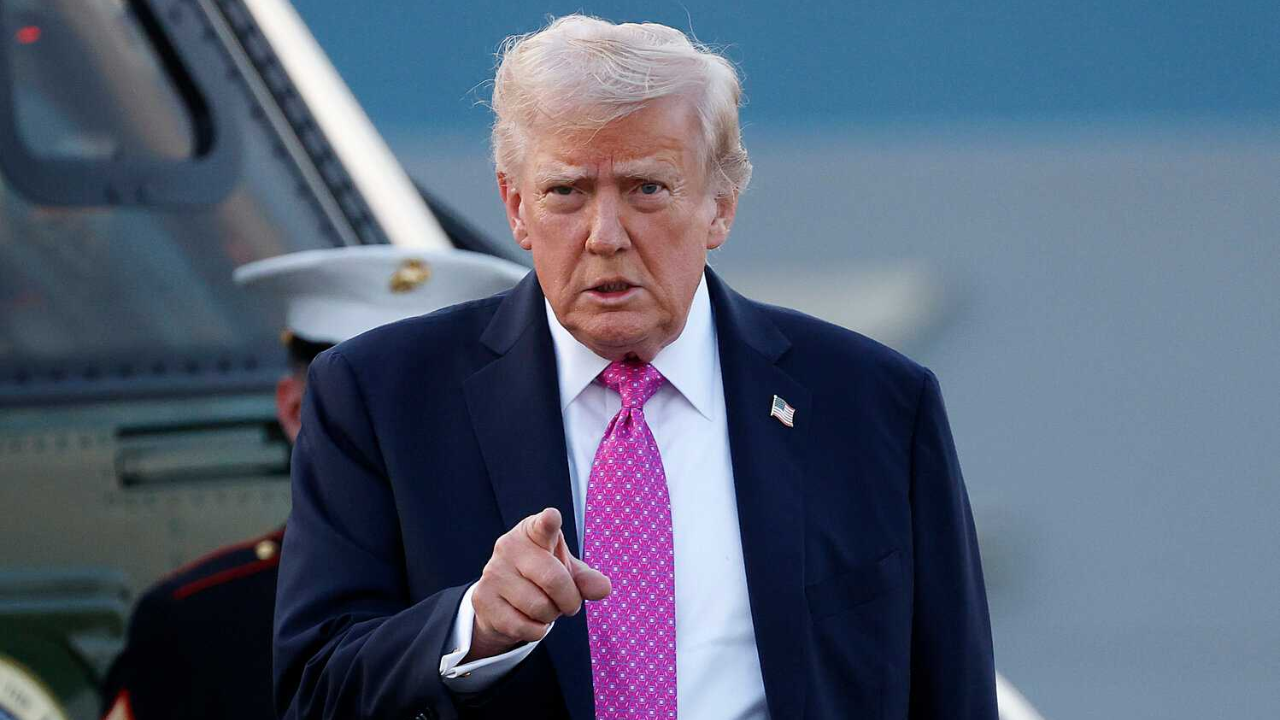
The extension of a military strike deadline in favor of "total resolution" negotiations represents a shift from kinetic deterrence to a high-stakes diplomatic leverage model. This transition is not a retreat but a recalibration of the cost-benefit analysis governing U.S.-Iran relations. By delaying planned kinetic action, the administration has transitioned from a binary "strike/no-strike" logic to a multifaceted negotiation where time itself is treated as a tradeable commodity. The pivot relies on three structural pillars: the credible threat of overwhelming force, the economic asphyxiation of the target state, and the offer of a comprehensive "grand bargain" that addresses regional hegemony, ballistic missile development, and nuclear enrichment simultaneously.
The Mechanics of the Extended Deadline as a Bargaining Tool
Deadlines in international relations typically serve as catalysts for decision-making under pressure. However, the decision to extend a deadline functions as a psychological and strategic "reset" that tests the internal cohesion of the opposing regime. When a superpower offers an extension, it forces the Iranian leadership to choose between two diverging paths: utilizing the window for genuine concessions or risking a more severe, unified response if the extension is perceived as a stalling tactic. Don't forget to check out our recent coverage on this related article.
The extension introduces a Variable Risk Coefficient. For Iran, every day the strike is delayed without a signed agreement increases the likelihood that the eventual U.S. response—if triggered—will be more expansive and less predictable. This creates a "pressure cooker" effect where the Iranian negotiation team must weigh the diminishing returns of delay against the catastrophic costs of a total breakdown in talks.
The Three Pillars of the Total Resolution Strategy
To move beyond the "maximum pressure" campaigns of previous cycles, the current framework utilizes a more integrated approach. This is not a piecemeal negotiation regarding specific nuclear sites; it is a holistic attempt to redefine Iran’s role in the Middle East. To read more about the context here, Reuters provides an informative summary.
- Security Architecture Integration: The U.S. is demanding a cessation of "gray zone" activities—asymmetric warfare conducted through proxies in Lebanon, Yemen, and Iraq. The logic dictates that a nuclear deal is worthless if the regional environment remains destabilized by unconventional means.
- Economic Re-entry Thresholds: Sanctions relief is being positioned not as a reward for signing a document, but as a phased process tied to verifiable behavioral changes. This creates a "pay-for-performance" model that prevents the front-loading of economic benefits, which Iran previously used to fund regional expansion.
- Verification and Enforcement Escalation: Unlike previous agreements that relied on specific "sunset clauses," the total resolution framework seeks permanent restrictions on enrichment capabilities. This is the "Total" in the resolution—a permanent closure of the nuclear weapons path rather than a temporary pause.
The Cost Function of Non-Compliance
The Iranian regime operates under a specific economic and political cost function. The internal stability of the Islamic Republic is directly correlated with its ability to provide basic services and maintain the loyalty of the Islamic Revolutionary Guard Corps (IRGC). The U.S. strategy targets this function by making the cost of non-compliance higher than the cost of a domestic political pivot.
The Economic Decay Factor
The Iranian economy faces a compounding interest of misery. Inflation, currency devaluation, and the lack of foreign direct investment (FDI) create a structural deficit that cannot be solved by oil smuggling alone. The "total resolution" offer exploits this by presenting a binary choice: total economic collapse or a fundamental restructuring of the state’s foreign policy.
The Kinetic Shadow
The military strike remains "on the table," but its purpose has evolved. It is no longer just a punishment for past actions but a looming shadow over the negotiation table. The extension suggests that the U.S. has finalized its target lists, coordinated with regional allies like Israel and Saudi Arabia, and is now simply waiting for a reason to hit "send." This readiness reduces the "first-mover advantage" Iran might seek in a localized conflict.
Strategic Bottlenecks and Information Asymmetry
A primary obstacle in these conversations is the information gap between the U.S. executive branch and the various power centers in Tehran. The Iranian government is not a monolith; it consists of the Supreme Leader’s office, the pragmatic diplomatic corps, and the hardline IRGC.
The U.S. extension strategy aims to create a rift between these factions. By offering a "total resolution," the U.S. empowers the pragmatists to argue that a deal is the only way to save the regime. Conversely, it forces the hardliners to justify why they would choose a devastating military strike over a path to economic recovery. This internal friction is a deliberate outcome of the deadline extension.
The Role of Regional Power Dynamics
The Abraham Accords and the shifting alliances in the Persian Gulf have fundamentally altered the "Total Resolution" landscape. Iran no longer faces a fragmented Arab world; it faces an emerging security bloc that is increasingly integrated with Western intelligence and defense systems.
- Intelligence Sharing: Real-time data sharing between the U.S. and its Gulf partners narrows Iran's window for covert operations.
- Defense Interoperability: The deployment of advanced missile defense systems across the region reduces the effectiveness of Iran’s primary deterrent—its ballistic missile stockpile.
This regional alignment means that the U.S. is not negotiating from a position of distant intervention but as the leader of a regional coalition. The "Total Resolution" is as much for the benefit of Riyadh and Jerusalem as it is for Washington.
Identifying the Probability of Success
Quantifying the likelihood of a "Total Resolution" requires looking at the Reservation Points of both parties. The U.S. reservation point is a verifiable end to the Iranian nuclear program. Iran’s reservation point is the survival of the regime and a degree of regional influence.
The overlap between these two points—the Zone of Possible Agreement (ZOPA)—is narrow. The U.S. extension of the deadline suggests that the administration believes the ZOPA has expanded, likely due to back-channel communications that have signaled a willingness from Tehran to discuss items previously deemed "non-negotiable," such as their ballistic missile program.
The Strategic Risk of Perpetual Extension
While extensions provide room for diplomacy, they also carry the risk of "negotiation fatigue" and a loss of credibility. If the U.S. extends the deadline multiple times without tangible progress, the threat of force loses its "immediacy bias." The Iranian regime might begin to view the extension not as a gesture of goodwill, but as a sign of American hesitation or domestic political constraint.
To mitigate this, the U.S. must pair every extension with a visible escalation in another domain. This could include:
- Tier 3 Sanctions: Targeting the subsidiaries and shell companies that facilitate Iranian trade.
- Naval Exercises: Increasing the presence of carrier strike groups in the Strait of Hormuz to signal that the military option remains fully operational.
- Cyber Operations: Degrading Iranian infrastructure in non-lethal but highly visible ways to demonstrate technological superiority.
The Pivot Point
The success of this strategy hinges on the next 14 to 30 days. This window is the "Actionable Horizon." If Iran does not produce a framework for "total resolution" within this timeframe, the logic of the extension collapses, and the U.S. will be forced to execute the strikes to maintain the integrity of its global deterrent posture.
The administration is betting that the Iranian regime's fear of total loss exceeds its pride in regional expansion. The "Total Resolution" is the final exit ramp on a highway leading toward a regional conflagration.
The strategic play here is to force Iran into a "Golden Bridge" scenario—a term from Sun Tzu's The Art of War—where the enemy is provided a dignified way to retreat. By framing the deal as a "Total Resolution" rather than a "Surrender," the U.S. allows the Iranian leadership to save face domestically while dismantling the very infrastructure that makes them a global threat.
Monitor the movements of the IRGC leadership and the volume of back-channel communications through intermediaries like Oman or Switzerland. A sudden decrease in bellicose rhetoric from Tehran, paired with a temporary halt in enrichment activities, will be the first verifiable indicators that the "Total Resolution" framework is gaining traction. If these markers do not appear within the next two weeks, prepare for a transition back to kinetic operations, as the deadline extension will have exhausted its utility as a diplomatic lever.
Establish a firm metric for "progress" that includes the immediate suspension of advanced centrifuge installation; anything less should be interpreted as a failure of the extension and a trigger for the pre-authorized strike packages.