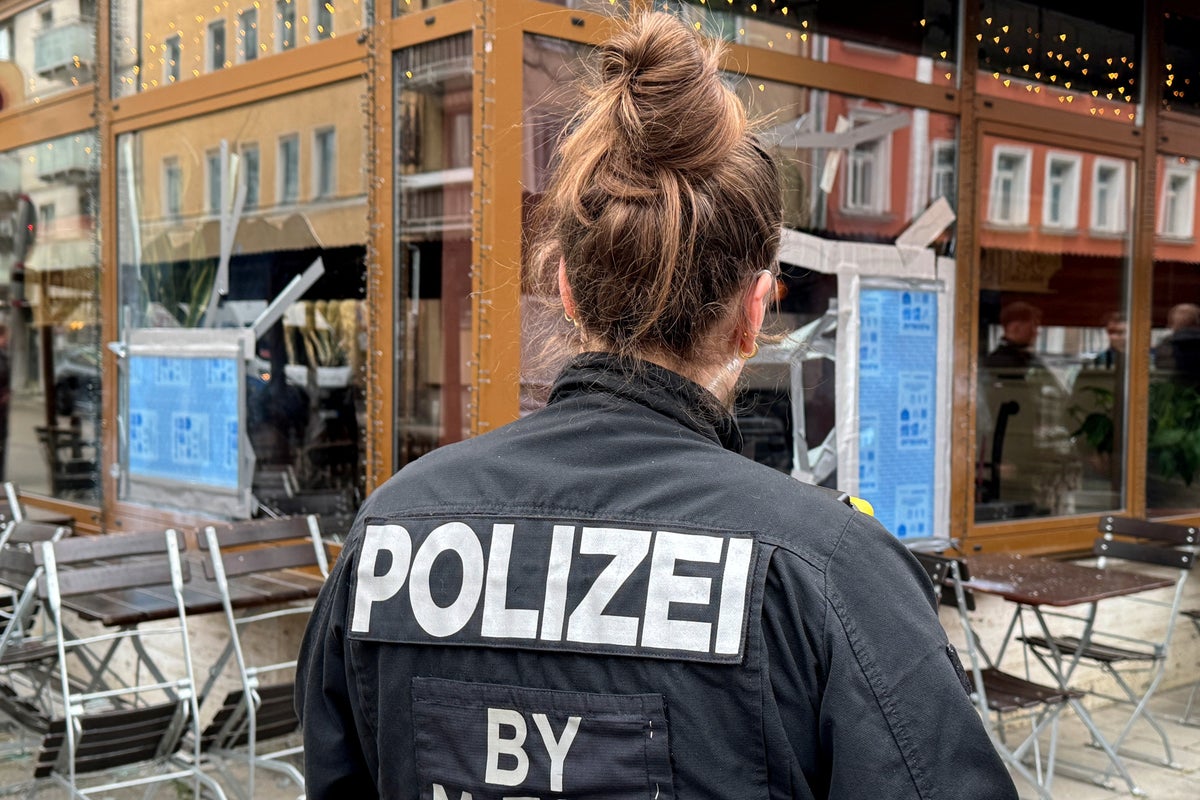
The recent vandalism of a Jewish-owned restaurant in Munich serves as a localized case study for a broader systemic trend: the intersection of geopolitical tension and the physical security of minority-owned commercial assets. When a business is targeted under the suspicion of antisemitic motivation, the event transcends simple property damage. It enters the realm of symbolic warfare, where the intent is the disruption of the target’s economic viability and the psychological stability of the surrounding community. Analyzing this event requires moving beyond the surface-level reportage of broken glass to examine the security vulnerabilities of urban "soft targets" and the specific socio-political catalysts that trigger these spikes in targeted aggression.
The Taxonomy of Targeted Property Damage
To understand the Munich incident, one must categorize the act of vandalism not as a random crime of opportunity, but as a calculated expression of ideological friction. Targeted attacks on commercial establishments typically follow a three-stage progression:
- Identification and Surveillance: The business is selected based on its public identity (religious, ethnic, or political affiliation). In the Munich case, the restaurant’s public profile as a Jewish establishment makes it a high-visibility surrogate for broader geopolitical grievances.
- Symbolic Degradation: The physical act—smashing windows or applying graffiti—is designed to devalue the property. The goal is to create a visual marker of "otherness" and vulnerability that signals to the public that the space is no longer under the protection of the state’s security umbrella.
- Economic Chokepoints: The immediate cost of repair is secondary to the long-term erosion of consumer confidence. Potential patrons may avoid the location due to a perceived increase in the risk of physical harm, creating a "security tax" on the business owner.
The Geopolitical Transmission Mechanism
Local acts of antisemitism in European urban centers rarely occur in a vacuum. There is a quantifiable correlation between escalated conflict in the Levant and the frequency of hate-motivated incidents in Germany. This transmission mechanism operates through a process of "vicarious victimization," where individuals far removed from a conflict zone feel empowered to lash out at local representatives of the perceived adversary.
In Munich, the historical weight of the city adds a layer of compounding trauma to these events. The city’s history with the National Socialist movement ensures that any act of antisemitic vandalism carries an amplified psychological load. This creates a feedback loop: the more historical significance a location has, the more "value" an attacker derives from desecrating it. The perpetrator is not just breaking a window; they are attempting to rewrite the contemporary narrative of German civil society.
Assessing the Security Gap in Urban Commercial Zones
The Munich incident highlights a critical failure in the proactive security posture of urban centers. Most commercial security is designed to deter theft (loss prevention) rather than ideological assault. This distinction is vital because the incentives of an ideologically motivated actor differ fundamentally from those of a rational economic criminal.
- Deterrence Failure: Standard alarms and cameras are often insufficient deterrents for attackers who view their actions as a form of "activism." The risk of arrest is weighed against the perceived social or ideological "reward" of the act.
- Response Lag: In dense urban environments like Munich, police response times to "low-level" property damage are rarely fast enough to intercept a perpetrator who can blend into the pedestrian flow within seconds.
- Infrastructure Vulnerability: Large glass storefronts, while aesthetically necessary for retail and dining, represent a structural vulnerability. They provide a low-barrier entry point for maximum visual impact with minimal effort or equipment.
The Economic Burden of Hate Crimes
Quantifying the impact of the Munich attack requires looking at the "Total Cost of Hate" (TCH). This is not merely the bill from the glazier; it is a complex equation involving insurance premiums, labor costs, and brand equity.
- The Insurance Spiral: Repetitive targeting leads to the reclassification of a business as "high risk." This results in skyrocketing premiums or the outright cancellation of coverage, effectively forcing the business out of the market through economic attrition.
- Operational Friction: Following an attack, management must divert resources from growth and service toward security audits, legal consultations, and community relations. This "defensive management" slows the business's ability to compete with non-targeted rivals.
- Human Capital Erosion: Staff members at a targeted location face heightened stress levels, leading to increased turnover and difficulty in recruiting high-quality talent. The psychological cost to the workforce becomes a drag on operational efficiency.
The Role of State and Social Intervention
The German legal framework regarding "Volksverhetzung" (incitement to hatred) provides a robust basis for prosecution, but the judicial system struggles with the "anonymity of the street." When suspects are not immediately identified, the case often moves into a cold-file status, which inadvertently signals to potential copycats that the risk-to-reward ratio for such attacks is favorable.
Furthermore, the public discourse surrounding these events often falls into the trap of "normalization." When antisemitic incidents reach a certain frequency, the media and the public develop a tolerance for them, treating them as an unfortunate but inevitable byproduct of modern urban life. This normalization is the precursor to systemic exclusion. If the state cannot guarantee the physical integrity of a Jewish-owned business in a major European city, it fails its primary obligation under the social contract: the protection of the minority against the tyranny of the mob.
Strategic Hardening and Resilience
The path forward for businesses in this risk category is not found in passive hope but in active resilience. This involves a shift toward "architectural security"—incorporating reinforced materials that maintain transparency while resisting blunt force, and implementing advanced surveillance systems that utilize behavioral analytics rather than simple recording.
More importantly, the response must involve a community-wide "reputational shield." When an attack occurs, the rapid mobilization of local political and social leaders to patronize the establishment serves as an economic counter-offensive. It negates the attacker's goal of economic isolation by providing a surge in revenue and social capital.
The Munich incident is a warning shot regarding the fragility of the urban commercial fabric. The structural response must be twofold: a more aggressive deployment of intelligence-led policing to identify perpetrators before they strike, and an economic framework that subsidizes the security costs of historically targeted groups. Without these measures, the "security tax" on Jewish life in Europe will continue to rise until it becomes an insurmountable barrier to participation in the public square.
The strategic priority for Munich’s municipal government must be the immediate establishment of a dedicated task force focused on "High-Risk Cultural Assets." This body should move beyond symbolic condemnation and toward the provision of technical grants for physical security upgrades and the implementation of a high-speed forensic response unit specifically for hate-motivated property crimes. Only by making the "cost" of the attack—both in terms of legal risk to the perpetrator and failure to achieve the desired economic damage—unbearably high can the cycle of targeted vandalism be broken.