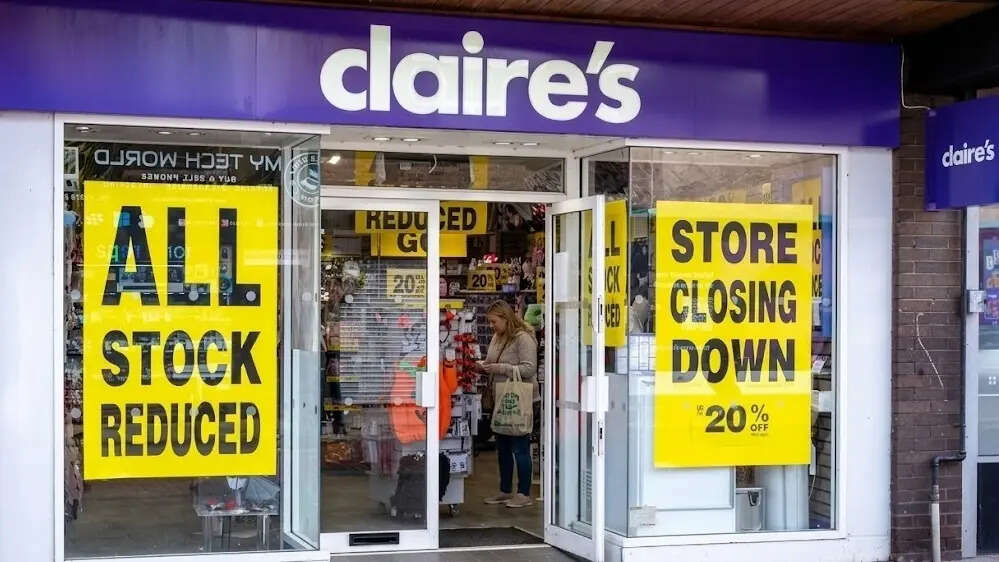
The overnight closure of 154 Claire’s outlets and the subsequent elimination of 1,300 roles is not an isolated market shock but the terminal phase of a decade-long compression in the value-point accessories segment. While headline narratives often prioritize the suddenness of such collapses, the underlying mechanics are rooted in three intersecting failure points: fixed-cost inflexibility, the evaporation of impulse-buy footfall, and a fundamental misalignment between the physical unit economics and the shifting customer lifetime value (CLV) of the Gen Z and Alpha demographics.
The Unit Economic Trap
The collapse is best understood through the lens of a failing Contribution Margin. For a specialized retailer like Claire’s, the business model relies on high-volume, low-ticket transactions. When the average transaction value (ATV) hovers in the £10 to £15 range, the sensitivity to operational overhead is extreme.
The Fixed-Cost Floor
Retailers in this category operate with a high proportion of fixed costs—specifically long-term commercial leases and business rates. In a high-inflation environment, these costs remain stagnant or escalate via upward-only rent reviews, while the "affordable luxury" pricing model prevents the brand from passing these costs onto a price-sensitive consumer. The moment the volume of transactions drops below the Breakeven Point (BEP), the store transitions from a profit center to a cash-drain overnight.
The Footfall Dependency
Claire’s strategy historically leveraged "parasitic footfall"—relying on the gravity of major department stores or shopping centers to pull consumers past their lease line. As anchor tenants (like Debenhams or Topshop) vanished, the organic discovery mechanism died. The 154 stores slated for closure likely shared a specific profile: high-rent, low-discovery locations where the cost of customer acquisition (CAC) exceeded the margin of the single pair of earrings sold.
The Piercing Service as a Defensive Moat
A critical component of the Claire’s model was the "Service-to-Product" bridge. Ear piercing served as a high-margin, non-commoditizable service that physical stores offered as a defense against e-commerce.
The Piercing Paradox
- The Hook: Piercing creates a captive audience for aftercare solutions and "starter" jewelry sets.
- The Failure: While the service cannot be replicated by Amazon, it is a low-frequency event. Once a customer has the piercing, the incentive to return to a physical store diminishes.
- The Quality Gap: Increased consumer awareness regarding hygiene standards and the preference for needle piercing over traditional "guns" shifted the high-value segment toward independent tattoo and piercing studios, leaving the mall-based retailer with the lowest-margin demographic.
This creates a bottleneck where the service staff—the 1,300 individuals now facing redundancy—represent a specialized labor cost that the shrinking product sales can no longer subsidize.
Operational Insolvency and the Liquidation Trigger
The decision to shutter 154 stores "overnight" indicates a liquidity crisis rather than a slow strategic pivot. In retail restructuring, this typically follows a failed CVA (Company Voluntary Arrangement) or an inability to meet a quarterly rent quarter day.
The Inventory Liquidation Cycle
When a retailer collapses this rapidly, it is usually to prevent further "bleeding" of cash into inventory that cannot be moved. Retailers often face a "death spiral" where:
- Cash flow tightens.
- New, trendy inventory cannot be purchased.
- The store is left with "dead stock" (stale inventory).
- Footfall drops further because the offering is outdated.
- Liquidation becomes the only way to recover creditor value.
The Digital Displacement of Impulse Jewelry
The "high street collapse" mentioned in the source is specifically a collapse of the Impulse Purchase Funnel. The digital native consumer no longer "browses" the mall; they browse TikTok and Instagram.
- Micro-Trends vs. Supply Chains: Claire’s traditional supply chain, often involving long lead times from overseas manufacturers, cannot compete with the 10-day "ultra-fast fashion" cycles of Shein or Temu.
- The Aesthetic Shift: The "cluttered" aesthetic of a Claire’s store, designed to maximize product density per square foot, now acts as a deterrent to a demographic that prioritizes curated, "minimalist" shopping experiences.
The Cost of Labor Displacement
The loss of 1,300 jobs reflects more than a number; it represents the shedding of a specific labor type: the Generalist Service-Retailer. As retail bifurcates into "Ultra-Luxury" (high service, high touch) and "Automated/Online" (zero service, low cost), the middle ground where Claire’s operated has become a dead zone. The labor costs associated with staffing 154 stores 10–12 hours a day, seven days a week, against a backdrop of rising minimum wages in the UK, made the human capital element of the business unsustainable.
Strategic Forecast: The Lean Portfolio Model
The survival of the remaining Claire’s estate depends on a radical shift from "Store-as-a-Destination" to "Store-as-a-Touchpoint."
- Concession Dominance: Expect the brand to migrate almost entirely into concessions within supermarkets (ASDA) or high-traffic pharmacies (Boots). This offloads the primary lease risk to the host and focuses purely on high-velocity stock turn.
- Service Specialization: To remain relevant, the physical footprint must pivot from a "shop that pierces" to a "sterile studio that sells." If the brand cannot elevate the perceived value of its primary service, the remaining stores will face the same unit-economic collapse as the first 154.
- Digital First, Physical Second: Future physical stores will likely serve as "Content Hubs" or click-and-collect points rather than primary revenue drivers.
The 1,300 redundancies are a lagging indicator of a shift that happened three years ago. Retailers failing to decouple their brand value from expensive, low-yield square footage will inevitably face the same overnight rationalization. The strategic play now is a total abandonment of the "Mall Anchor" philosophy in favor of a hyper-mobile, low-overhead concession model that follows the consumer's daily routine rather than waiting for them to visit a dying high street.