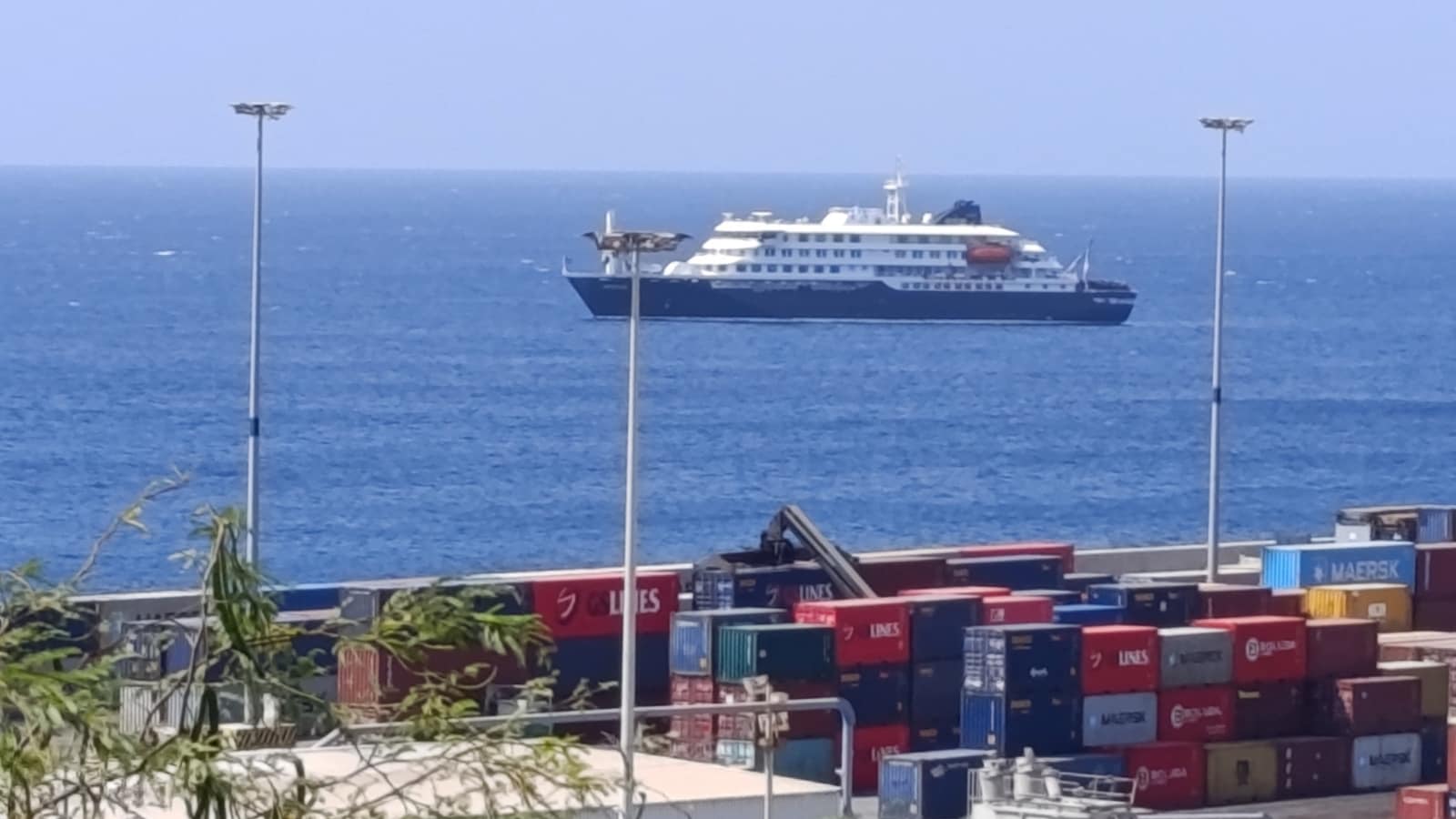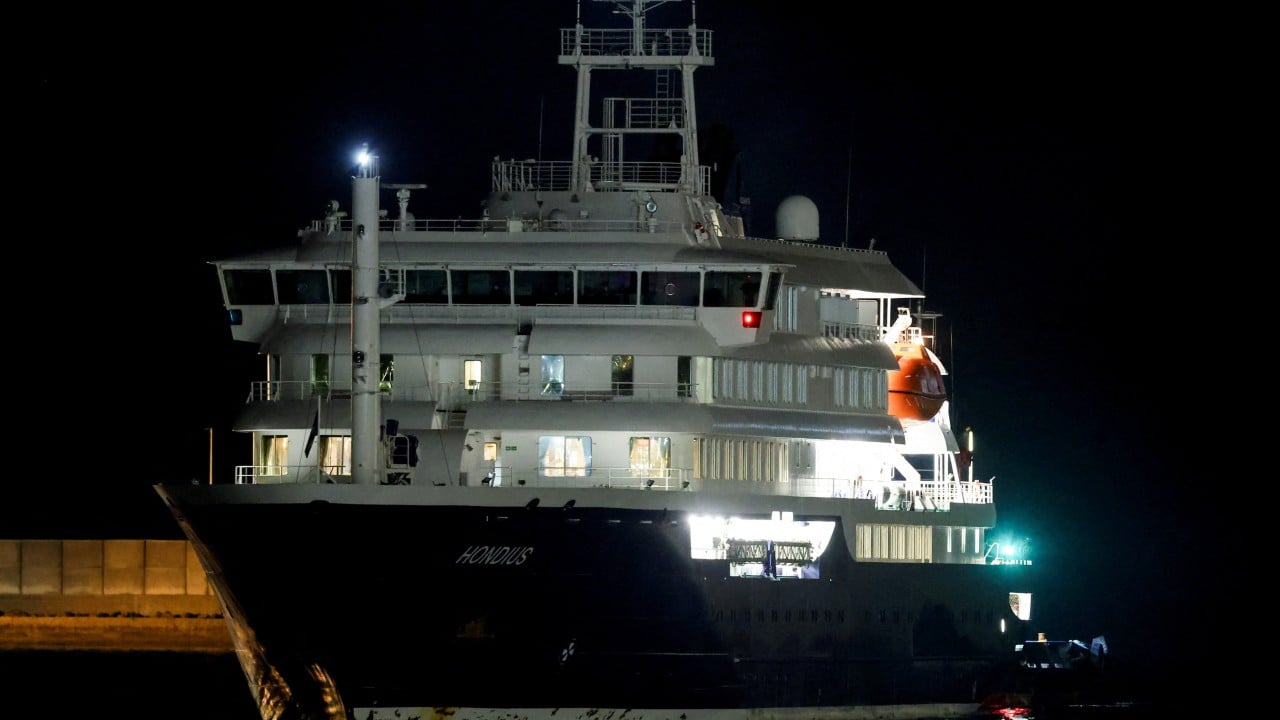
The arrival of a cruise vessel at a Spanish port for a WHO-led evacuation following a Hantavirus outbreak represents a critical breakdown in maritime biosecurity protocols. While public discourse often focuses on the immediate drama of evacuation, the structural reality involves a failure of the three-tier containment system required for high-density environments. This event highlights the friction between international maritime law, public health sovereignty, and the biological reality of zoonotic transmission in closed-loop HVAC systems.
The Zoonotic Vector Mechanics
Hantaviruses are primarily transmitted via the aerosolization of excreta from infected rodents. In a maritime context, the risk profile shifts from rural exposure to infrastructure-based vulnerability. The ship’s architecture serves as an unintended incubator for viral spread through three primary mechanisms: If you found value in this article, you might want to look at: this related article.
- Vermin Infiltration of Internal Voids: Modern cruise ships contain miles of cable runs, ventilation ducts, and service crawl spaces. If the integrated pest management (IPM) system fails during port calls or dry-docking, rodents establish colonies in areas inaccessible to standard cleaning.
- Aerosolization via HVAC Recirculation: Hantavirus particles are small enough to remain suspended in the air. If the ship’s climate control system lacks HEPA-grade filtration or fails to maintain adequate fresh-air exchange rates, a single point of contamination in a galley or storage area can become a ship-wide respiratory threat.
- The High-Density Interaction Coefficient: Cruise ships maintain a population density that exceeds most urban centers. This increases the probability of human-vector contact, particularly in lower-deck crew quarters and food storage zones where the "bridge" between rodent habitats and human activity is shortest.
Unlike common noroviruses, which dominate maritime health reports, Hantavirus carries a significantly higher case fatality rate (CFR), often exceeding 35% in cases of Hantavirus Pulmonary Syndrome (HPS). This shifts the operational requirement from "management" to "total evacuation."
The Evacuation Bottleneck and WHO Protocol
The decision to involve the World Health Organization (WHO) and dock at a Spanish port indicates that the ship’s internal medical capabilities were overwhelmed, or the legal complexity of the outbreak exceeded flag-state jurisdiction. The International Health Regulations (IHR 2005) dictate a specific hierarchy of response that was triggered here. For another perspective on this development, see the recent coverage from Medical News Today.
The Tripartite Legal Friction
The evacuation process must navigate a conflict between three distinct interests:
- The Flag State: The nation where the ship is registered (often a "flag of convenience") typically holds primary legal authority but lacks the local physical infrastructure to manage a level-4 biohazard.
- The Coastal State: Spain, as the host nation, assumes the immediate burden of medical triage and quarantine. This creates a "Not In My Backyard" (NIMBY) political risk, as the local population fears a land-based spillover.
- The Ship Owner: Corporate entities prioritize asset protection and brand preservation. An evacuation of this scale incurs massive "off-hire" costs, legal liabilities, and the potential total loss of the hull if decontamination proves impossible.
The WHO acts as the technical arbiter in this friction, ensuring that the "Ship Sanitation Control Certificate" is not just a checkbox but a lived operational reality. The evacuation itself is a high-stakes logistics exercise involving "hot zone" extraction. Patients are moved through negative-pressure corridors to land-based biocontainment units, while the remaining passengers undergo a stratified risk assessment: asymptomatic contacts are sequestered, while those showing prodromal symptoms (fever, myalgia) are prioritized for imaging and pulmonary support.
Quantifying the Failure of Onboard Biosecurity
A Hantavirus outbreak on a modern vessel suggests a specific failure in the "Deep Cleaning" and "Vector Exclusion" protocols. We can categorize this failure through a Biosecurity Integrity Score (BIS), which measures the gap between theoretical safety and operational reality.
The Exclusion Zone Breach
Rodents enter vessels through mooring lines or contaminated food pallets. The standard countermeasure—rat guards on lines—is often improperly installed or bypassed by modern nimble species. If the ship was recently in a region with high endemic Hantavirus activity, such as parts of South America or the Southwestern United States, the failure to perform a "deep sweep" upon departure becomes a liability.
The Latency Trap
Hantavirus has an incubation period ranging from one to eight weeks. This creates a "latency trap" where a ship can clear multiple port inspections while carrying an active, asymptomatic infection within its rodent or human population. By the time the first passenger presents with respiratory distress, the virus has likely been circulating in the ship’s environment for twenty days or more.
Tactical Realities of Large-Scale Decontamination
Once the ship is evacuated, the vessel enters a state of "Biological Dead Space." Reclaiming the asset requires a multi-stage decontamination strategy that far exceeds standard hospitality cleaning.
- Gaseous Sterilization: Using chlorine dioxide or vaporized hydrogen peroxide (VHP) to penetrate the HVAC system and cable runs. This is the only way to ensure that aerosolized particles in inaccessible voids are neutralized.
- Structural Stripping: Soft surfaces—carpeting, upholstery, and bedding—in affected zones act as "fomite sinks." These materials must often be removed and incinerated, as surface disinfectants cannot reach the deep fibers where dried excreta might settle.
- Rodent Eradication and Forensic Analysis: Pests must be trapped and tested to identify the specific strain of Hantavirus. This is critical for determining the source port and preventing future breaches.
Strategic Forecast for the Cruise Industry
The Hantavirus incident in Spain serves as a precursor to more stringent maritime health regulations. The industry currently relies on self-reporting and periodic inspections that are ill-equipped to handle high-consequence zoonotic threats.
The immediate strategic requirement for the sector is the integration of "Passive Biosurveillance." This involves the installation of real-time air quality sensors capable of detecting specific biological markers within the HVAC loops and the automation of pest-tracking via thermal imaging in sub-deck compartments.
Furthermore, the legal precedent set by this WHO-led evacuation will likely lead to "Pathogen Port Fees." Coastal states may begin charging a premium to ships that cannot prove a high BIS, effectively taxing the risk of a potential land-based evacuation. The cost of a single Hantavirus evacuation—incorporating port fees, medical bills, litigation, and brand damage—can exceed the annual operating profit of the vessel. Consequently, the industry must pivot from a reactive "clean-up" posture to a proactive "exclusionary" model where the ship’s environment is treated with the same biosecurity rigor as a high-containment laboratory.
The transition from a leisure environment to a quarantine zone is a binary switch that the industry currently manages poorly. Until the structural vulnerabilities of the HVAC and vermin-exclusion systems are addressed with engineering-grade solutions, the maritime sector remains a significant "soft target" for zoonotic spillover events. Owners must now treat biosecurity not as a sub-department of housekeeping, but as a core pillar of naval architecture and risk management.