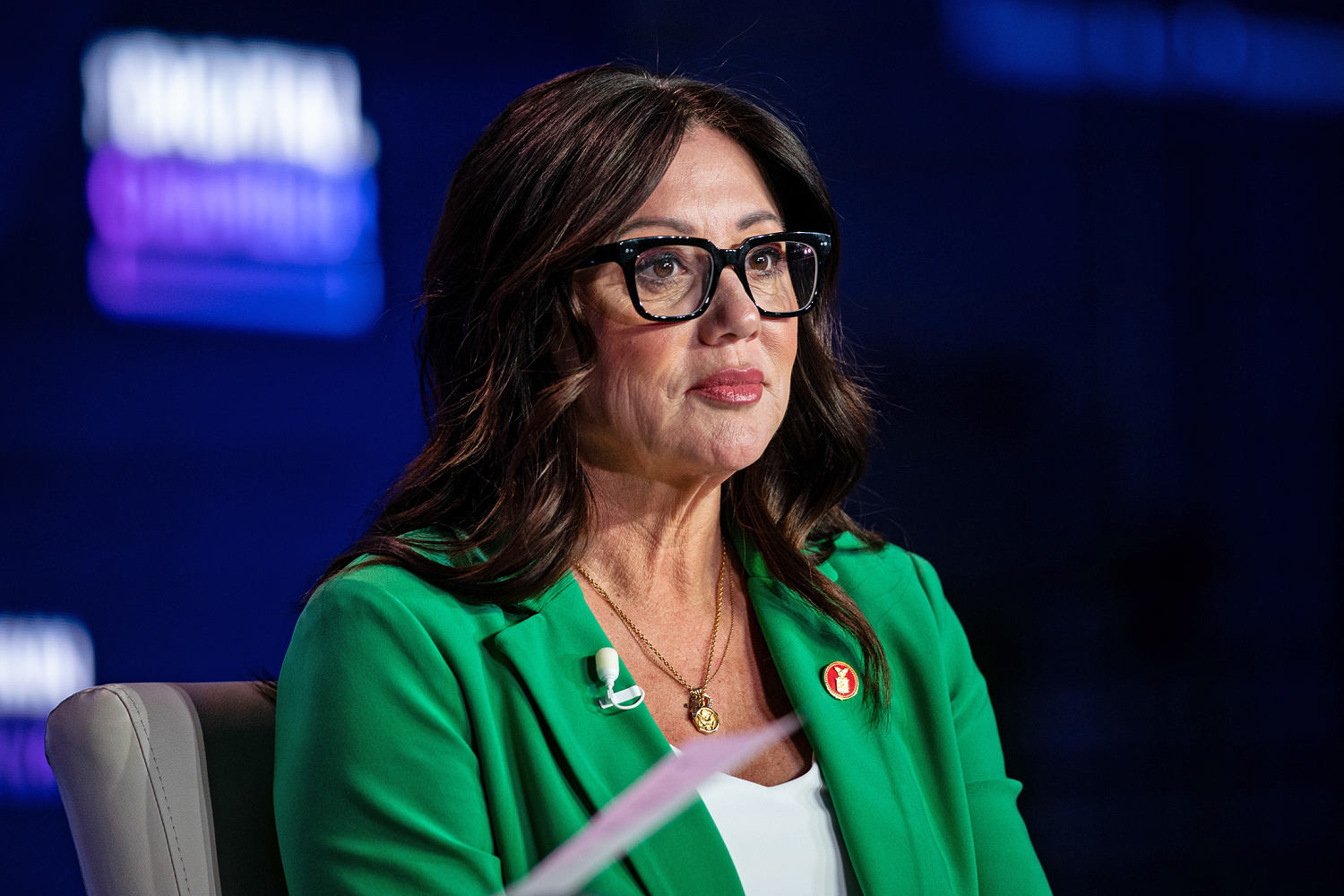
The resignation of Labor Secretary Lori Chavez-DeRemer, marking the third high-level Cabinet departure in the nascent stages of the second Trump administration, signals a systemic friction between populist labor protectionism and the deregulation-heavy mandates of the executive branch. This departure is not an isolated personnel fluctuation; it is the culmination of a fundamental misalignment in policy architecture. When the executive branch seeks to simultaneously implement aggressive tariff-based protectionism and radical deregulation, the Department of Labor becomes the primary site of internal contradiction. Chavez-DeRemer’s exit highlights the "Three Pillars of Cabinet Attrition" within this specific administration: ideological incompatibility, the acceleration of the "Shadow Cabinet" influence, and the operational paralysis of the federal rulemaking process.
The Triad of Executive Policy Friction
The Labor Department operates under a mandate to balance worker protections with the maintenance of a flexible labor market. In a standard administration, this tension is managed through incremental adjustments to the Fair Labor Standards Act (FLSA) or Occupational Safety and Health Administration (OSHA) enforcement. However, the current administration’s objective function focuses on "The Great Reorganization," which prioritizes the reduction of the federal workforce and the rollback of pro-labor precedents.
- The Protectionist Paradox: Chavez-DeRemer, a former Member of Congress with a history of engaging organized labor, represented a bridge to the blue-collar base that secured the 2024 electoral victory. Her resignation indicates that the administration’s focus has shifted from labor as a constituency to labor as a cost center.
- Regulatory Retrenchment: The mandate to purge "non-essential" regulations creates a binary choice for a Labor Secretary. One must either dismantle the very enforcement mechanisms they oversee or be viewed as an obstruction to the executive’s broader efficiency goals.
- The Executive Overreach Feedback Loop: When Cabinet secretaries are bypassed in favor of policy advisors within the West Wing—often referred to as "Czars" or Department of Government Efficiency (DOGE) leads—the institutional authority of the Secretary is hollowed out.
The Cost Function of Cabinet Instability
High-velocity turnover at the Cabinet level imposes significant transaction costs on the federal government. These are not merely political optics; they are measurable disruptions to the machinery of state.
Institutional Memory Erosion
The Department of Labor (DOL) manages an annual budget exceeding $13 billion and oversees programs ranging from Unemployment Insurance to the Pension Benefit Guaranty Corporation. A leadership vacuum at the top causes a "Decapitation Effect" in the bureaucracy. Senior Executive Service (SES) employees, sensing a lack of top-down protection, default to risk-avoidance strategies. This stalls the processing of H-1B and H-2A visa certifications, crucial for the agricultural and tech sectors, and halts the resolution of complex wage-and-hour disputes.
The Implementation Bottleneck
Executive Orders (EOs) are not self-executing. They require the Administrative Procedure Act (APA) process—Notice of Proposed Rulemaking (NPRM), public comment periods, and Final Rule issuance. Every time a Secretary resigns, the legal "Notice" of these rules is subject to challenge. Opposing interest groups can argue that rules issued during a period of "Acting" leadership lack the constitutional legitimacy of a Senate-confirmed official. This creates a legal vulnerability that corporate or labor litigants can exploit to freeze policy changes in federal court for years.
The Mechanism of the Departure
The departure of Chavez-DeRemer followed those of other key figures, suggesting a pattern of "The Loyalty Filtration System." In this system, the executive prioritizes absolute ideological alignment over domain expertise or political coalition-building.
The primary mechanism here is the Policy Pivot Point. Chavez-DeRemer likely encountered a specific directive—potentially related to the classification of independent contractors or the enforcement of union-related transparency acts—that conflicted with her established political brand. When the cost of compliance (loss of political capital with labor allies) exceeds the benefit of retention (diminishing influence within the Cabinet), resignation becomes the rational economic choice for the individual.
Measuring Success in a Volatile Cabinet
Standard metrics for Cabinet success usually involve the number of bills passed or the stability of the department's workforce. These metrics are broken in the current political landscape. A more accurate measure of "Cabinet Utility" in the second Trump term is the Alignment-to-Execution Ratio.
- Alignment: The degree to which the Secretary’s public statements mirror the President’s social media directives.
- Execution: The speed at which the Secretary can purge civil servants and rescind prior administration rules without triggering a permanent injunction from the judiciary.
Chavez-DeRemer’s failure to maintain a high ratio suggests that the Department of Labor is currently unmanageable under the current executive constraints. The department is caught between the "Pro-Worker" rhetoric of the campaign and the "Pro-Efficiency" reality of the governing strategy.
Strategic Implications for Labor Markets
The vacancy at the DOL will likely be filled by an "Acting" Secretary with a background in corporate law or venture capital, rather than political governance. This shift will accelerate specific market trends:
The Deregulation of the Gig Economy
Without a Secretary committed to the "Economic Realities Test," the DOL will likely move toward a broad "safe harbor" for companies using independent contractors. This will shift the cost of social safety nets (health insurance, payroll taxes) from corporations to the individual worker and the state, fundamentally altering the unit economics of the service sector.
OSHA Enforcement Decay
The mechanism of OSHA enforcement relies on a specific ratio of inspectors to workplaces. A leaderless department, or one led by an interim official focused on budget cuts, will see a decline in unannounced inspections. For industry players, this reduces the "Expected Cost of Non-Compliance," leading to a short-term increase in margins but a long-term risk of catastrophic workplace incidents.
The Automation Mandate
If the Labor Department becomes a vehicle for pure efficiency, expect a pivot toward subsidizing or incentivizing automation over human labor retention. The "Labor" department may, in practice, become the "Labor Displacement Management" department.
The Risk of the "Acting" Secretary Strategy
The administration appears to be leaning into a strategy of using "Acting" officials to bypass the Senate confirmation process. While this allows for rapid ideological deployment, it introduces a "Structural Fragility."
Under the Vacancies Act, there are strict limits on how long an acting official can serve and what powers they can exercise. If the administration continues to lose confirmed Secretaries, the executive branch will eventually run into a "Legal Ceiling" where its directives are no longer legally binding. This creates a vacuum where state-level Attorneys General (AGs) fill the void, creating a fragmented regulatory environment. A company operating in 50 states would rather have one federal standard—even a strict one—than a patchwork of 50 different labor codes. The resignation of Chavez-DeRemer increases the probability of this "Regulatory Balkanization."
Forecasting the Department’s Next Phase
The next appointee will likely be vetted through a "Litmus Test of Disruption." The administration is moving away from the "Team of Rivals" model toward a "Unitary Executive" model where Cabinet heads function as Chief Operating Officers rather than independent advisors.
The strategic play for observers is to monitor the NLRB (National Labor Relations Board) Vacancy Rate. If the administration leaves these seats empty while the Labor Secretary position is in flux, it signals a deliberate intent to paralyze the federal government's ability to adjudicate labor disputes. This is not a "failure" of the system; it is the "feature" of a strategy designed to move power from the administrative state back to private capital.
Entities must now prepare for a period of extreme federal volatility. This involves shifting compliance focus from federal DOL standards to state-level enforcement, particularly in jurisdictions like California, New York, and Illinois, which will likely escalate their own labor protections to counter federal withdrawal. The departure of Lori Chavez-DeRemer is the signal that the federal bridge to organized labor has been dismantled, and the era of "Clinical Deregulation" has begun.



:strip_icc()/pic2513216.jpg)