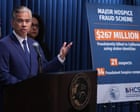
The California Department of Justice’s felony charges against 21 individuals for an alleged $267 million Medi-Cal and Medicare fraud scheme expose a fundamental vulnerability in the capitated payment models governing end-of-life care. This is not merely a case of opportunistic theft; it is a demonstration of how decentralized healthcare billing systems can be weaponized through a high-volume, low-friction exploitation of the Medicare Hospice Benefit. By weaponizing the "hospice election" process, the perpetrators converted a critical social safety net into a high-yield illicit financial vehicle.
The Triple-Axis Fraud Model
The effectiveness of this specific $267 million operation relied on the simultaneous manipulation of three distinct operational axes: patient acquisition, clinical certification, and billing velocity. When these three levers are pulled in coordination, the resulting cash flow bypasses standard automated audit triggers used by the Centers for Medicare & Medicaid Services (CMS). If you found value in this post, you might want to read: this related article.
1. Illicit Patient Acquisition and Kickback Loops
The scheme functioned on a "pay-for-enrollment" basis. In a legitimate hospice environment, patient acquisition is a clinical referral process driven by a terminal diagnosis with a six-month life expectancy. In this fraudulent architecture, acquisition was treated as a pure marketing expense. Marketers and "cappers" were paid illegal kickbacks to recruit individuals who were not terminally ill.
These recruits often qualified for Medi-Cal or Medicare but did not require palliative care. The "value proposition" offered to these individuals—often cash payments or free groceries—created a perverse incentive for the "patient" to sign enrollment forms they did not understand or that were actively misrepresented as general health benefits. For another angle on this story, refer to the recent coverage from Business Insider.
2. Systematic Erosion of Clinical Integrity
The second axis involves the subversion of the Physician’s Certification of Terminal Illness (CTI). For a hospice claim to be valid, a physician must certify that the patient has a terminal prognosis. The California indictment alleges that the 21 defendants, including medical professionals, systematically falsified these certifications.
This creates a "phantom clinical layer" where the medical necessity required by law exists only on paper. By controlling the physicians and nurses within the organization, the syndicate removed the primary roadblock to billing: the independent clinical judgment. When the person signing the certification is part of the profit-sharing structure, the medical record becomes a marketing document rather than a clinical one.
3. High-Velocity Billing and Shell Diversification
The scale of $267 million indicates a massive volume of claims processed over a sustained period. To avoid the "spike" in billing that often triggers a Zone Program Integrity Contractor (ZPIC) audit, large-scale fraud often utilizes multiple corporate shells. By spreading the $267 million across various entities, the perpetrators could keep the billing profile of any single hospice agency within a seemingly "normal" range of peer-to-peer comparisons.
The Economic Incentives of Hospice Arbitrage
The hospice benefit is a lucrative target because it pays a per-diem rate. Unlike a Fee-For-Service (FFS) model where every aspirin or bandage must be documented, hospice providers receive a set daily rate for every day a patient is enrolled.
The Profit Margin Formula
The profitability of this fraud can be expressed through a simple cost-minimization logic. In a legitimate hospice, the per-diem payment covers nursing visits, social workers, medications, and durable medical equipment (DME). In the alleged fraud scheme, the "cost of care" is virtually zero because the patients are not actually ill and do not receive services.
$$Profit = (Per-Diem Rate \times Enrollment Days) - Kickback Costs$$
Because the variable costs of actual medical care are removed, the margin on every fraudulent patient approaches 90% or higher, minus the "customer acquisition cost" of the kickback. This creates an infinite-growth incentive where the only constraint is the number of identities the group can successfully enroll.
Regulatory Blind Spots and the "Death Trap" Loophole
The regulatory framework for hospice care was designed under the assumption of high-friction entry and professional ethics. Several systemic bottlenecks allowed this $267 million leakage to occur:
- The Certification Gap: CMS frequently relies on retrospective audits rather than real-time verification of terminality. By the time an audit is conducted, the "patient" has often been discharged or the agency has shut down and reorganized under a new National Provider Identifier (NPI) number.
- The Geographic Concentration Risk: California, and specifically Los Angeles County, has seen a statistical anomaly in the number of new hospice licenses issued. This "hospice gold rush" signaled a systemic failure in the licensing and vetting process, allowing bad actors to obtain multiple licenses with minimal scrutiny.
- Identity Theft and Data Breaches: A secondary layer of this fraud often involves the use of stolen patient identities. When a patient's information is compromised, they can be enrolled in hospice without their knowledge. This prevents them from receiving curative care for actual ailments, as Medicare will not pay for curative treatment once a patient is "locked" into the hospice benefit.
The Cost to the Healthcare Infrastructure
While the $267 million figure represents the direct loss to the taxpayer, the secondary costs are more insidious.
Displacement of Curative Care
When a healthy or chronically ill individual is fraudulently enrolled in hospice, they are effectively opted out of the standard Medicare system for their existing conditions. If a "patient" in this scheme suffered a non-terminal injury and sought emergency care, the claim would be denied because the system flagged them as being in palliative care. This creates a physical risk to the participants that exceeds the financial theft.
Inflation of Regional Benchmarks
Massive fraud distorts the data used by regulators to set future reimbursement rates. If 20% of the hospice population in a region is fraudulent and requires zero medical spend, the average "cost of care" for that region appears artificially low. This can lead to downward pressure on reimbursement rates, which punishes legitimate providers who are actually delivering intensive end-of-life services.
Structural Requirements for Mitigation
To prevent the recurrence of $200 million+ syndicates, the oversight model must shift from retrospective recovery ("pay and chase") to real-time algorithmic intervention.
Implementation of Biometric or Multi-Factor Enrollment
The current system relies on a signature on a paper or digital form. A transition to a "Verified Election of Benefits" system, requiring a multi-factor authentication from the patient or a legal guardian at the point of enrollment, would collapse the "capper" and "kickback" model. If the patient must verify their intent to waive curative care through a secure, independent portal, the ability to "ghost enroll" individuals vanishes.
Real-Time Utilization Review
The disparity between a terminal diagnosis and the lack of medication/DME utilization is a primary indicator of fraud. A hospice patient who is not prescribed pain management, oxygen, or specialized equipment—yet remains on the census for 180+ days—is a statistical outlier. Integrating pharmacy benefit manager (PBM) data with hospice billing data would allow CMS to flag agencies with high enrollment but zero clinical utilization in real-time.
Physician Accountability and License Linking
The medical professionals involved in the California scheme provided the "veneer of legitimacy." Strengthening the "Strike Force" model involves not just chasing the shell companies, but aggressively pursuing the medical licenses of any physician who signs a CTI for a patient they have not physically examined or who does not meet the clinical criteria.
Strategic Forecast: The Shift Toward Pre-Payment Review
The California DOJ’s action is a precursor to a wider federal crackdown. We are entering an era of "targeted probe and educate" (TPE) expansion. Expect CMS to implement "Pre-Payment Review" for all new hospice agencies in high-risk geographic clusters. This will mandate that every single claim be manually or algorithmically reviewed before funds are released. For legitimate operators, this means an increase in the days sales outstanding (DSO) and a requirement for more robust documentation. For the fraudulent syndicates, this removes the liquidity that makes the scheme viable.
The prosecution of these 21 individuals is a necessary reactive measure, but the systemic survival of the hospice benefit depends on closing the "per-diem arbitrage" window. This requires moving beyond the prosecution of individuals and toward the technological hardening of the enrollment pipeline. Agencies must now treat their compliance departments not as a cost center, but as a defensive necessity against the inevitable wave of rigorous, data-driven audits that follow a seizure of this magnitude.