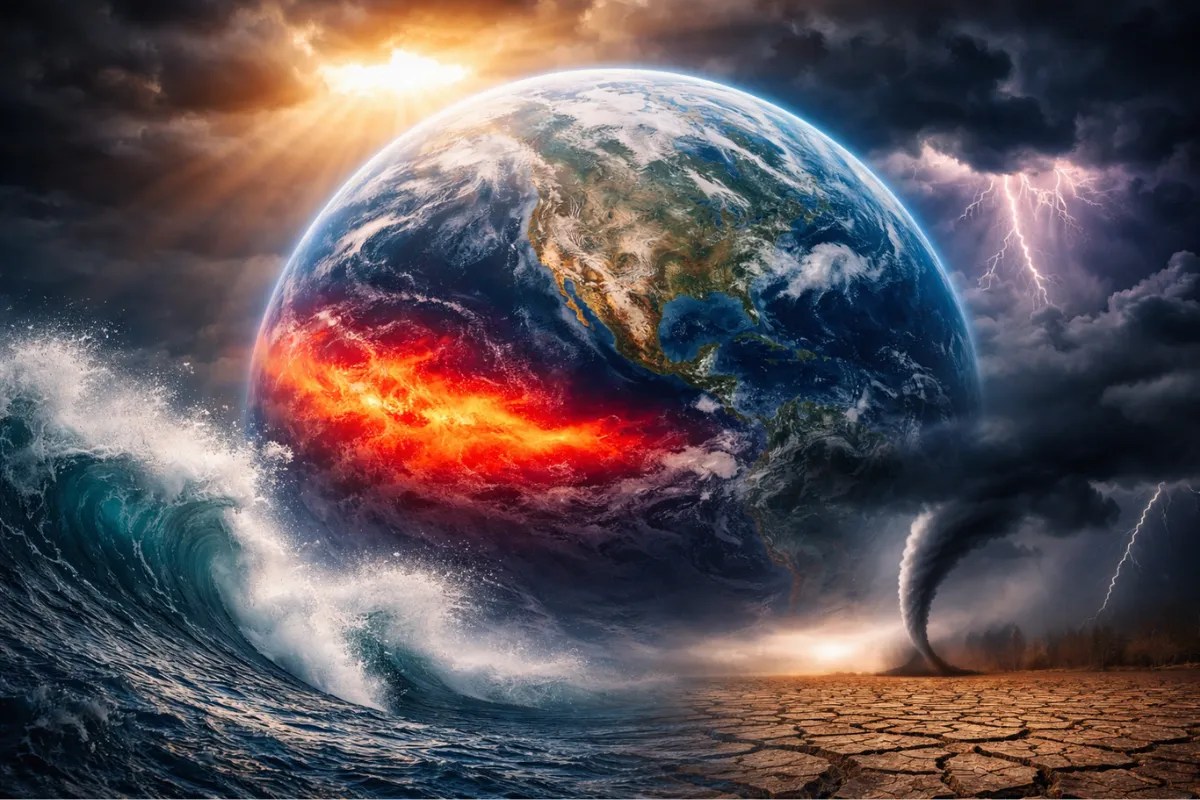
Fear sells better than physics. For weeks, the headlines have been screaming about a "Super El Niño" set to incinerate the planet in 2026. They cite the National Oceanic and Atmospheric Administration (NOAA) as if a single data point from a single agency is a prophecy written in stone. It isn’t.
The media loves the El Niño narrative because it’s simple. Warm water in the Pacific equals a global fever. But this hyper-focus on one cyclical weather event is a dangerous distraction. By obsessing over the "super" label, we are ignoring the structural decay of our meteorological predictability and the far more terrifying "cold" variables that are actually shifting the tectonic plates of global food security and energy markets. If you enjoyed this piece, you should check out: this related article.
The Flaw of the Linear Forecast
Current reporting assumes that El Niño is a giant thermostat that only turns one way. The "lazy consensus" argues that because 2026 aligns with certain historical cycles, we are guaranteed a record-breaking disaster. This is classic linear thinking applied to a non-linear system.
Weather models are failing. Not because the technology is bad, but because the baseline has shifted so far that "historical precedents" are becoming increasingly irrelevant. When NOAA or any other body issues a warning, they are working within a Gaussian distribution of probability that assumes the "normal" still exists. It doesn’t. For another perspective on this development, see the recent update from The New York Times.
We aren't just seeing a "hotter" version of a natural cycle. We are seeing a complete decoupling of traditional oceanic patterns from atmospheric responses. I have watched analysts dump billions into commodities futures based on these El Niño "certainties," only to be wiped out when the expected drought turns into a localized, unpredicted deluge because they ignored the Indian Ocean Dipole or the weakening of the Jet Stream.
Stop Blaming the Water
The obsession with Pacific surface temperatures is a red herring. Yes, the El Niño Southern Oscillation (ENSO) matters, but it’s the Atmospheric Angular Momentum (AAM) that actually dictates how that heat is distributed.
If the atmosphere doesn’t "couple" with the ocean, you can have the warmest Pacific on record and still see average temperatures in the regions that actually produce the world's grain. The "Super El Niño" tag is a marketing term, not a scientific certainty. In 2014, the world braced for a "monster" El Niño that turned out to be a total dud. The same thing is happening now. People are bracing for a fire that might not have enough oxygen to burn.
The Real 2026 Threat Nobody Is Discussing
While everyone stares at the Pacific, the real crisis is brewing in the Antarctic Circumpolar Current.
Standard climate reporting treats the poles like distant ice cubes. They are actually the engine room. We are seeing a breakdown in deep-water formation that has nothing to do with El Niño cycles. This disruption affects global trade routes and thermal regulation far more permanently than a temporary warm-water surge in the tropics.
By focusing on a one-year "super" event, governments are failing to build the long-term infrastructure required for the permanent volatility we’ve entered. We are building sea walls for a 2026 surge when we should be redesigning entire agricultural zones for a world where "seasons" no longer exist in the traditional sense.
Data Overload and the Death of Insight
We have more satellites than ever, yet our ability to predict a harvest three months out is actually declining. Why? Because we are drowning in data and starving for synthesis.
The "Super El Niño" warning is a product of algorithmic bias. Models are trained on past data. When they see a spike in Pacific heat, they spit out the "Super El Niño" script. But these models are struggling to account for the massive influx of freshwater from melting glacial sheets, which acts like a giant brake on the ocean currents that El Niño usually rides.
- Misconception: El Niño means universal heat.
- Reality: It causes radical redistribution. Some areas will see record cold; others will see humidity levels that make human labor impossible.
- The Trap: Buying into the "2026 Heat Record" headline leads to "crisis fatigue." When the "Super" event manifests as a series of disjointed, chaotic storms rather than a uniform heatwave, the public loses trust in the science.
The Economic Mirage
I’ve seen hedge funds pivot their entire portfolios based on these NOAA warnings. They short wheat, they go long on energy. It’s a sucker’s game.
The real winners in 2026 won’t be those who bet on "heat." They will be the ones who bet on volatility. The "Super El Niño" isn't a single event; it's a symptom of a chaotic system losing its rhythm. If you are waiting for a specific date or a specific "record" to be broken, you’ve already lost.
The heat isn't coming; it's already here, baked into the system, and it doesn't need a specific name like "El Niño" to wreck your supply chain. We need to stop treating these events like rare eclipses and start treating them like the new operating conditions.
The Price of Wrong Questions
People ask: "How hot will 2026 be?"
The better question is: "How much of our current power grid is based on cooling technology that fails at 45°C?"
We are obsessing over the thermometer while the house is being restructured. The "Super El Niño" narrative allows politicians to blame "nature" for what is actually a failure of engineering and urban planning. It’s a convenient scapegoat for the inevitable blackouts and crop failures that would have happened anyway because we refused to modernize.
The danger of the 2026 "Super El Niño" warning isn't the heat itself. It’s the fact that it gives us a deadline. It makes us think we have until 2026 to prepare, or that once 2026 is over, the "threat" has passed.
It hasn't. The cycle is broken. The "Super" event is just the noise of a system hitting a wall. Stop looking at the Pacific and start looking at your own local resilience. The records will break, not because of a "Super" event, but because the old world is gone.
Prepare for the chaos, not the cycle.