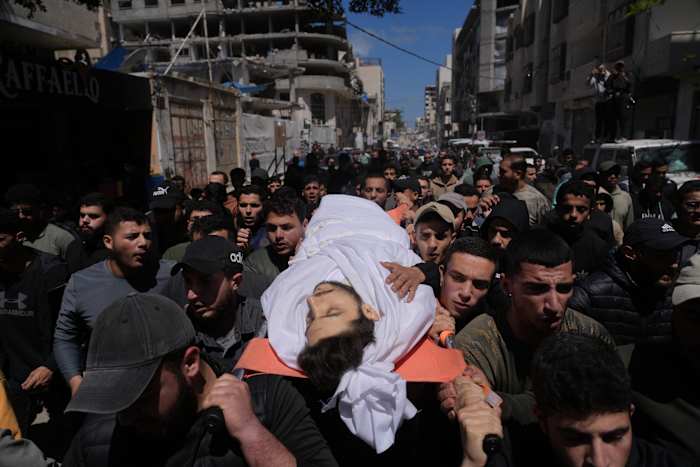
Israel just killed the fourth son of Hamas’s chief negotiator, and if you think this moves the needle on ceasefire talks, you haven't been paying attention. Azzam al-Hayya, the 32-year-old son of Khalil al-Hayya, died Thursday from wounds he took during an airstrike in Gaza City's Daraj neighborhood. This isn't just another name on a casualty list. It’s a direct hit on the family of the man currently sitting across the table—metaphorically, at least—from mediators in Cairo and the Trump administration's "Board of Peace."
The strike happened Wednesday night. By Thursday, Hamas officials confirmed Azzam didn't make it. Khalil al-Hayya, who lives in exile and runs Hamas's political bureau, is no stranger to this. He’s already buried three other sons—two in 2008 and 2014, and another in a Doha strike just last year. When your job is negotiating the survival of a movement while the other side is actively dismantling your family tree, the personal and the political don't just blur; they fuse.
The collateral damage debate
Israel's military hasn't officially touted this as a targeted hit on a high-value asset. In fact, some military sources are leaking that Azzam wasn't the goal at all. They claim they were after a Nukhba fighter in the area and Azzam was simply "somewhere he should not have been." It’s a cold way to frame it. The IDF's stance is basically: we don't care about his family ties, he just happened to be in the blast radius.
But Hamas doesn't see it that way. They're calling it "psychological pressure." They argue that by hitting the families of the leadership, Israel is trying to squeeze concessions out of a negotiating team that has remained stubborn. Honestly, both sides are playing a very specific kind of PR game here. Israel wants to show that no one is safe and Hamas's presence anywhere is a liability to those around them. Hamas wants to use these deaths to prove their leaders "suffer just like the people."
A pattern of targeted family strikes
This isn't an isolated incident. We’ve seen this script before.
- Ismail Haniyeh: Lost three sons and four grandchildren in a single strike last April.
- Khalil al-Hayya: Now mourning his fourth son.
- The Doha Strike: A failed attempt on al-Hayya's life in Qatar last year that killed his son Hammam instead.
If the goal is to break the spirit of the negotiators, it’s arguably backfiring. Al-Hayya’s daughter, Tasnim, spoke from Shifa Hospital and made it clear: her father's hand won't be forced. This is the "culture of martyrdom" that Western observers often fail to grasp. In their eyes, these deaths don't weaken their position—they validate it.
Negotiating in a pressure cooker
Right now, the stakes couldn't be higher. We’re in the middle of trying to push Trump’s Gaza plan into its second phase. You’ve got Nickolay Mladenov and the Board of Peace trying to navigate a "shaky" ceasefire that was supposed to bring stability back in October.
The deal is a mess. Israel wants Hamas disarmed and a total withdrawal contingent on security guarantees. Hamas wants the aid surge and a permanent end to hostilities before they even talk about laying down weapons. Every time a strike like this happens, the trust—which was already non-existent—bottoms out further. Al-Hayya himself said these attacks prove Israel doesn't actually want to abide by any truce.
What this means for the Trump plan
The "Board of Peace" is trying to run a corporate-style mediation on a religious and territorial blood feud. It’s a tough sell. When a negotiator's son dies in a strike, the "concessions" they were prepared to make often vanish. Hardliners within Hamas gain more leverage. They can point to Azzam's death and say, "Why should we trust a process that kills our children while we're talking?"
The IDF is also fighting on multiple fronts. While the Gaza strike was happening, they were hitting Hezbollah commanders in Beirut. It’s a clear message: the ceasefire doesn't mean a total stop to "targeted" operations. But the line between a targeted military operation and a political assassination is razor-thin when you're hitting the family of the guy you need to sign a document.
The reality on the ground
Forget the high-level politics for a second. The situation in Gaza City is still a nightmare. People are moving out of schools and trying to set up tents only to get hit by "collateral" strikes. Just on Wednesday, three members of one family were killed while trying to put up a tent near a mosque.
- Hamas's strategy: Stay "steadfast" and use the deaths to gain regional sympathy.
- Israel's strategy: Keep the pressure high enough that the leadership feels the personal cost of continuing the fight.
- The Result: A cycle where the "peace" looks exactly like the war, just with fewer tanks on the main roads.
Don't expect al-Hayya to soften his stance in Cairo this week. If anything, he'll be more rigid. He's already said that his sons are no different from any other Palestinian child. Whether you believe that or think it's political theater, the outcome is the same: the conflict remains a zero-sum game.
If you're following the peace talks, keep an eye on how Hamas handles its internal elections. They're supposedly finalizing who will lead the political bureau in Gaza next. These strikes usually push the group toward more militant leadership, not less. The "Board of Peace" has its work cut out for it. You can't negotiate a future when the present is still being written in blood.
Watch the Cairo updates closely. If the "Phase Two" talks stall again this weekend, you'll know exactly why. The personal costs for the men in the room just went up.


