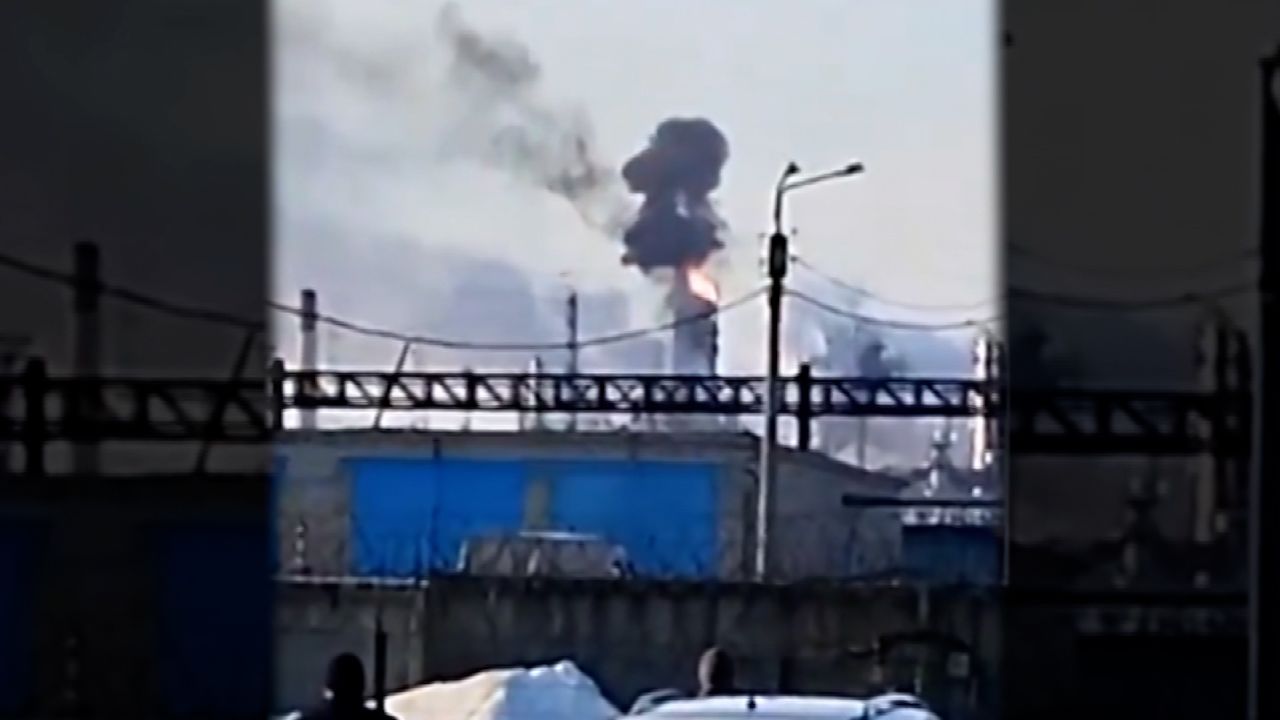
The smoke hasn't even cleared from the latest high-rise fire in Moscow before the digital vultures start circling. You’ve seen the headlines. They scream about trapped hundreds, soaring death counts, and "infernos" before the first fire engine has even hooked up to a hydrant.
Modern breaking news isn't reporting. It’s a competitive sport in speculative fiction.
When a building goes up in flames, the "lazy consensus" of the media is to prioritize speed over structural reality. They feed you a diet of raw panic because panic scales. Panic generates clicks. But behind the shaky vertical video and the breathless live blogs, there is a fundamental failure to understand how large-scale urban disasters actually work.
If you want to understand why these events happen and why the reporting on them is almost always wrong, you have to stop looking at the flames and start looking at the physics and the bureaucracy.
The Myth of the Trapped Hundreds
Every major urban fire report follows the same script: "Up to [X] people trapped." It’s a number usually pulled from thin air or based on the total occupancy of a building during peak hours. In the recent Moscow incident, the "200 trapped" narrative became the focal point.
Here is the cold truth from someone who has spent years analyzing urban risk: in modern concrete-and-steel structures, "trapped" is a fluid, often misinterpreted term.
Most people in a burning building aren't trapped by fire; they are stalled by bad information. In the 2017 Grenfell Tower disaster in London, the "stay put" policy—a standard protocol for compartmentalized buildings—became a death sentence because the building’s skin was flammable. In Moscow, we see a different brand of chaos. Russia’s rapid urban expansion has led to a patchwork of "Frankenstein buildings"—Soviet-era skeletons wrapped in modern, often unregulated, plastic facades.
When a reporter says 200 people are trapped, they are usually describing people who are simply following evacuation protocols that are failing in real-time. By sensationalizing the number, the media creates a secondary disaster: a surge of panicked relatives and onlookers who clog emergency lanes, making it physically impossible for heavy equipment to reach the scene.
The Cladding Scandal Nobody Wants to Discuss
We love to blame "electrical faults." It’s the easiest, most boring explanation. It shifts the blame to an invisible spark.
The real culprit is usually the "Value Engineering" trap. I have seen developers across Eastern Europe and Asia shave millions off construction costs by using Aluminum Composite Material (ACM) or High-Pressure Laminate (HPL) panels that meet the absolute bare minimum of fire safety codes—or bypass them entirely through bribery.
When fire hits these buildings, it doesn't just burn; it "chimneys." The gap between the structural wall and the decorative cladding acts as a vertical wind tunnel. It sucks the flames upward at a rate that no internal sprinkler system can stop.
The media focuses on the bravery of the firefighters—which is real—but they ignore the architects and contractors who signed off on the tinderbox. We shouldn't be mourning a tragedy; we should be investigating a white-collar crime. Every time a "fire rips through" a modern building, someone made a conscious financial decision to allow that fire to spread.
Why Real Time Updates Are Toxic
We live in an era of "The Narrative of the First Five Minutes."
In the first five minutes of a disaster, nobody knows anything. Not the police, not the fire chief, and certainly not the guy with a smartphone across the street. Yet, newsrooms treat these early tweets as gospel.
This creates a feedback loop of misinformation.
- A witness claims they heard an explosion.
- A news outlet reports a "possible terrorist link" or "gas leak."
- The authorities, under pressure to respond to the report, divert resources to investigate a non-existent threat.
- The actual cause—often a simple, preventable safety violation—is buried under the noise.
Accuracy has a lag time. If you are reading about a disaster while it is happening, you are reading a draft. You are consuming a product that is, by definition, incomplete and likely incorrect. The "up to 200 trapped" figure in Moscow was a classic example of this. It was a peak-occupancy guess, not a headcount.
The Logistics of Death
Death in high-rise fires is rarely about the fire itself. It’s about the air.
We talk about people being "killed" by the fire, but $CO$ (carbon monoxide) and $HCN$ (hydrogen cyanide) are the true executioners. In modern buildings filled with synthetic furniture and plastic electronics, the smoke is a chemical cocktail.
$$2 \text{C}_8\text{H}_8 + 25 \text{O}_2 \rightarrow 16 \text{CO}_2 + 8 \text{H}_2\text{O}$$
That is a simplified combustion reaction. In reality, when oxygen is limited—as it is inside a burning office—you get incomplete combustion, producing $CO$ at lethal levels within seconds.
The media’s focus on "raging flames" obscures the reality that most victims are unconscious before the fire even reaches their floor. This isn't just a grim detail; it’s a critical piece of the safety puzzle. If we spent less time on "dramatic footage" and more time educating the public on the reality of smoke inhalation and the necessity of smoke-sealed "refuge floors," we might actually save lives.
Stop Watching the News and Start Checking the Stairwells
If you want to survive the next "breaking news" event, stop looking at your screen.
The status quo tells you to trust the "experts" on TV. I’m telling you to trust the blueprints.
- Identify the "Plenum": Know if your building uses the space above the ceiling tiles for air circulation. If it does, smoke will travel faster than you can run.
- The "Pressurized Stairwell" Fallacy: Most people think stairwells are safe zones. They are only safe if the fans are working. If the power fails and the backup generator is in a flooded or burning basement, that stairwell is just a giant chimney.
- The Door Problem: In the rush to report on "trapped victims," no one mentions that propped-open fire doors are the single biggest cause of death in high-rise fires.
The Moscow fire wasn't an act of God. It wasn't a freak accident. It was the predictable result of urban density, lax enforcement, and a media apparatus that prefers the heat of the fire to the cold, hard facts of structural engineering.
We don't need more "live coverage." We need more building inspectors with the power to shut down a skyscraper.
The next time you see a headline about a burning building and "hundreds trapped," don't click it. You’re not being informed; you’re being entertained by a tragedy that was bought and paid for by a developer who knew exactly what would happen when the first spark hit the cladding.
Put the phone down and find your nearest exit. At least you'll know where it is when the screen goes dark.