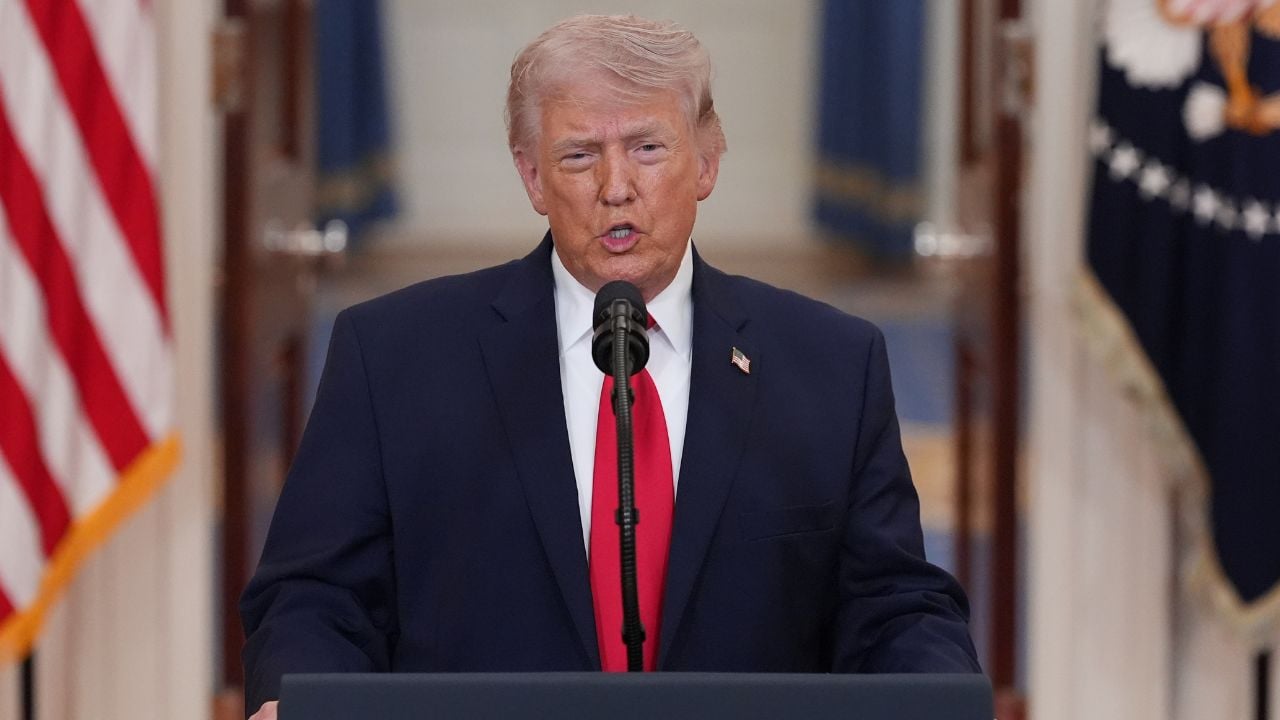
Geopolitical analysts are obsessed with the idea of the "clean desk." They want every conflict filed away in a neat folder before a leader moves on to the next big meeting. The prevailing narrative—pushed by the likes of KP Fabian and the old-guard diplomatic corps—is that Donald Trump is under some crushing deadline to "settle" the West Asia tension before he steps foot in Beijing.
This is a fundamental misunderstanding of how power actually works.
The idea that Trump needs to pacify Tehran to gain leverage against Xi Jinping is a relic of 20th-century diplomacy. It assumes that global conflicts are a zero-sum game of bandwidth. It suggests that a President cannot walk and chew gum at the same time. More importantly, it ignores the fact that a "settled" Iran is often a more dangerous Iran for American interests in the long run.
The Myth of the Diplomatic Pre-requisite
Traditional envoys love the word "stability." They treat it like a holy grail. But look at the history of the region. Every time Washington tries to "solve" Iran with a grand bargain or a rush to the finish line, we end up with a mess. We saw it with the JCPOA. We saw it with the frantic shuttle diplomacy of the late 2010s.
Rushing a deal to satisfy a travel schedule is how you get bad deals. It’s how you get "sunset clauses" that leak like a sieve. It’s how you leave out ballistic missile constraints because you were in a hurry to get to the airport.
If Trump goes to China with an ongoing, simmering tension in West Asia, he isn't "distracted." He is unpredictable. And in the world of high-stakes negotiation with a peer competitor like China, unpredictability is an asset, not a liability.
Beijing Actually Benefits from Your "Solution"
The "lazy consensus" argues that China wants a peaceful Middle East because it needs the oil flow. Wrong. China wants a Middle East that is dependent on Beijing’s mediation.
If the U.S. successfully "settles" the Iran crisis on American terms before the China visit, it removes a massive piece of friction that China uses to drain American resources. For decades, the U.S. has acted as the unpaid security guard for China’s energy supply. Why would we want to solidify that arrangement right before a trade showdown?
Imagine a scenario where the U.S. fully stabilizes the region. Oil prices drop. The risk premium vanishes. Who benefits most? The world’s largest net importer of crude: China. By "fixing" West Asia, Trump would effectively be giving Xi Jinping a massive economic stimulus package right before they sit down to talk tariffs.
That isn't strategy. That's a gift.
The Sanctions Delusion
Standard diplomatic circles insist that sanctions have a shelf life and that Trump must "cash them in" for a deal now or lose them forever. This is a misunderstanding of how the modern financial system operates.
I’ve watched as policymakers argue that "maximum pressure" only works if there is an off-ramp. While that’s true in a textbook, in reality, the off-ramp is often a trap. The Iranian regime doesn't moderate when the pressure lifts; it expands. It funds the very proxies that create the "tension" the diplomats are so desperate to resolve.
The E-E-A-T (Experience, Expertise, Authoritativeness, Trustworthiness) of the situation shows that "settling" the crisis usually just means "refunding the crisis." We saw billions in unfrozen assets used to modernize the IRGC's drone program. Is that the "settlement" we want before we go talk to their primary tech partner in Beijing?
China is Watching the Process, Not the Result
The CCP doesn't care if Trump signs a piece of paper with Tehran. They care about how he handles the pressure.
If Trump bows to the "pressure" Fabian describes, he signals to Xi that he is susceptible to artificial deadlines. He shows that he values the appearance of a win over the substance of a strategic position.
If I were advising the administration, I’d tell them to lean into the friction. Keep the Iranian leadership guessing. Keep the sanctions airtight. If the situation is still "unresolved" when the wheels touch down in Beijing, so be it. It demonstrates that the U.S. has the stamina to manage multiple fronts without blinking.
The Oil Price Trap
Let’s talk about the math that the "settlement" crowd ignores. The Brent crude price isn't just a number; it’s a weapon.
| Actor | Desired Oil Price | Strategic Reason |
|---|---|---|
| Iran | $90+ | Needs to fund internal survival and external proxies. |
| China | $50-60 | Needs cheap energy to fuel a stuttering manufacturing base. |
| U.S. (Domestic) | $70-80 | High enough for shale profitability, low enough for the pump. |
| U.S. (Geopolitic) | Volatile | Keeps adversaries off-balance and prevents long-term planning. |
By forcing a resolution in West Asia, you likely stabilize the price at a level that favors Chinese industry. Why would you hand your primary global rival a 15% reduction in their energy bill just to say you "finished" a task?
The "tension" actually works as a tax on Chinese growth. As long as the U.S. remains energy independent—or close to it—we can withstand the volatility far better than a Beijing that is desperate for every drop of imported Gulf crude.
Stop Asking "When," Start Asking "Why"
The People Also Ask (PAA) section of the internet is full of questions like "When will the Iran crisis end?" or "Will Trump go to war with Iran?"
These are the wrong questions. The right question is: "Why should we want it to end on anything other than a total capitulation of the revolutionary guard?"
Any "settlement" that leaves the proxy network intact is a failure. Any "settlement" that doesn't address the 2030 sunset clauses is a delay, not a solution. The former envoy argues for a settlement because that’s what diplomats do—they process paperwork. They want the inbox at zero.
But a leader’s job isn't to clear the inbox. It’s to ensure that the contents of the inbox serve the national interest.
The High Cost of Artificial Deadlines
I have seen CEOs and heads of state blow their leverage because they wanted a "deal" to announce at a specific summit or press conference. It’s the "Sunk Cost Fallacy" applied to time. You’ve spent so much time talking about a solution that you feel you must deliver one, even if it’s a bad one.
Trump’s greatest strength in his first term was his willingness to walk away. Think of Hanoi. The world expected a deal with North Korea. The stage was set. The pens were ready. He walked.
That walk did more to command respect in Beijing than any signed treaty ever could. It proved that he wasn't a slave to the optics.
Applying that same logic to Iran is essential. If the "former envoys" and the "regional experts" are screaming that the sky is falling and a deal must be reached before the China trip, that is the exact moment to stay the course.
The Tehran-Beijing Nexus
We must stop treating Iran and China as separate tabs in a browser. They are part of the same operating system.
Iran provides the disruption. China provides the financial and technological backbone. If you "settle" with the disruptor on weak terms, you have effectively validated the backbone’s strategy.
A "settled" Iran is an Iran that can more efficiently funnel resources into the "Belt and Road" initiatives that compete directly with American influence. We shouldn't be looking for a way to let Iran off the hook; we should be looking for ways to make their partnership with China as expensive and painful as possible for both parties.
The "West Asia tension" isn't a fire that needs to be put out before the next meeting. It’s a heat source. Use it to cook the competition.
Stop trying to fix the crisis. Start using it.