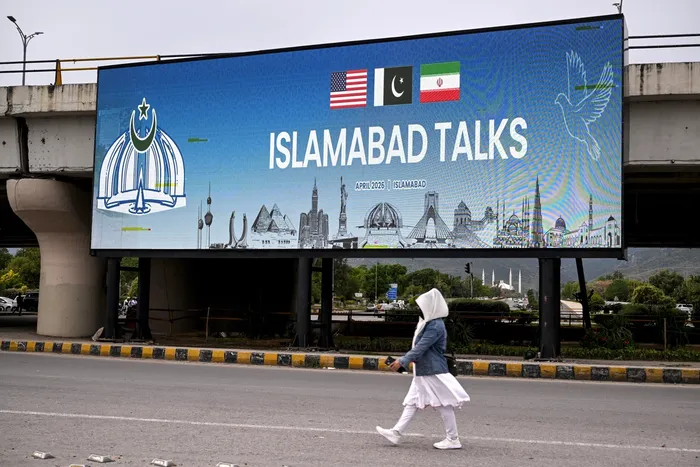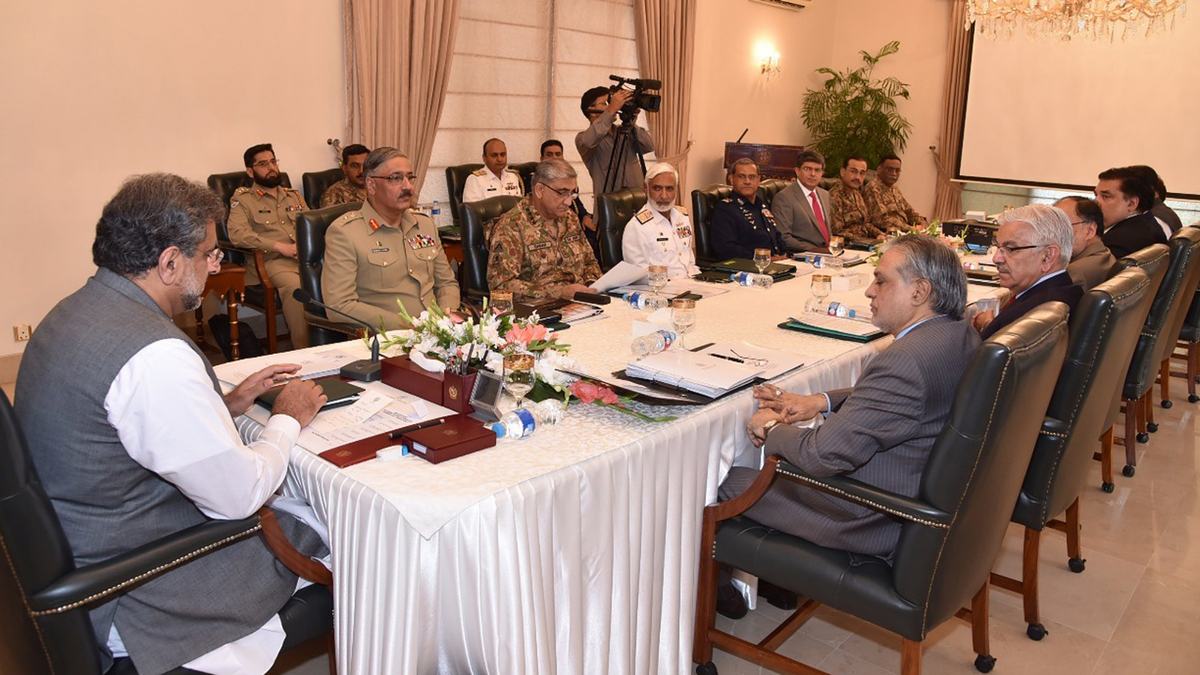
The media is salivating over the prospect of a motorcade in Islamabad. They see a "historic visit." They see a "thaw in relations." They see a "strategic pivot." They are completely wrong.
When Donald Trump suggests he might visit Pakistan if a deal is signed, he isn't playing the role of a diplomat. He’s playing the role of a liquidator. This isn't about fostering regional peace or some vague notion of South Asian stability. It is about closing a messy book on the West Asia conflict and demanding a return on investment from a partner that has, for decades, mastered the art of taking American cash while hedging every single bet.
The mainstream narrative suggests that a presidential visit is a reward for Pakistan’s cooperation. That is the lazy consensus. In reality, a visit to Islamabad is the ultimate leverage. It is the final "check" in a high-stakes audit of Pakistan’s military-intelligence complex.
The Myth of the Strategic Reward
For twenty years, Washington treated Pakistan like a delicate vase. The logic was simple: keep the money flowing, or the nuclear-armed state collapses. This "too big to fail" doctrine allowed Islamabad to play both sides of the Afghan conflict while effectively holding a gun to its own head every time the aid checks slowed down.
Trump’s approach disrupts this cycle by treating the relationship as a transaction rather than a charity. If he goes to Islamabad, he isn’t going there to hand out medals. He’s going there to verify that the "deal" actually serves American interests in the Middle East and beyond.
The West Asia conflict—specifically the tension involving Iran, Israel, and the proxy networks—has reached a boiling point where Pakistan can no longer remain a "neutral" observer. Islamabad’s close ties with Riyadh and its complicated border with Tehran make it a critical node. If a deal is signed, it means Pakistan has finally been forced to choose a side. The visit is just the signature on the contract.
Why the West Asia Link Changes Everything
The competitor articles focus on the optics of a Pakistan-US meeting. They miss the mechanical reality of how these deals actually work.
Pakistan is currently drowning in debt, primarily to China. They are desperate for an IMF lifeline and Western capital. Meanwhile, the U.S. needs a Sunni-majority nuclear power to act as a stabilizing weight against Iranian expansionism if a broader West Asian settlement is to hold.
Imagine a scenario where the U.S. offers a massive debt restructuring package in exchange for Pakistan providing specific intelligence and logistics support to contain Iranian proxies. That is the "deal" being negotiated in the shadows. The Islamabad visit is the PR cover for a fundamental shift in Pakistan’s foreign policy—a shift that many in the Pakistani street will view as a betrayal.
I have seen state departments waste decades trying to "win hearts and minds" in the region. It doesn't work. The only thing that moves the needle is the cold, hard reality of the balance sheet.
Dismantling the Stability Argument
Critics argue that pressuring Pakistan too hard risks destabilizing the region. This is a fallacy.
- Pakistan is already unstable. Relying on a status quo that includes double-digit inflation and a constant tug-of-war between the civilian government and the military (the GHQ) is not "stability."
- The "Leverage" is the Visit itself. In the world of high-stakes optics, a U.S. President standing in Islamabad gives the current Pakistani administration a temporary shield against domestic rivals. Trump knows this. He is selling his presence for specific, measurable concessions on counter-terrorism and regional alignment.
The Cost of the "Contrarian" Reality
Let’s be honest about the downsides. This transactional diplomacy is ugly. It strips away the veneer of shared values and exposes the relationship for what it is: a mercenary arrangement.
If Trump goes to Islamabad, he validates a military-backed government that has a spotty record on human rights. He signals to the world that if you have enough nukes and a strategic enough location, the U.S. will eventually come to the table, regardless of your past "double games."
But from a purely realist perspective, the alternative is worse. The old way—endless aid with no strings attached—resulted in a twenty-year war in Afghanistan that ended in a humiliating retreat. The new way demands results before the plane even lands.
The Real Question You Should Be Asking
Instead of asking "Will Trump go to Pakistan?" you should be asking "What has Pakistan agreed to give up to get him there?"
A presidential visit is one of the most valuable currencies in global politics. You don't spend it on a whim. You spend it when the other party has agreed to terms that they can't walk back.
What People Also Ask (and the Brutal Truth)
- Does this mean Pakistan is moving away from China? No. Pakistan will always try to play both sides. But the U.S. is currently the only one who can fix their immediate liquidity crisis. China provides infrastructure; the U.S. provides the global financial system's "green light."
- Will this help the West Asia conflict? Only if Pakistan agrees to actively patrol its border with Iran and stop the flow of illicit funds. If the deal doesn't include that, the visit is a waste of jet fuel.
- Is Trump being "soft" on Pakistan? Far from it. Demanding a signed deal before agreeing to visit is a classic "show me the money" tactic. It's the ultimate lack of trust.
The Mechanics of the Deal
To understand the gravity of this, you have to look at the math of Pakistani debt.
The country owes billions. Its foreign exchange reserves often barely cover a few weeks of imports. When Trump talks about a deal, he is talking about the U.S. Treasury using its influence at the IMF to keep Pakistan's economy on life support.
$$\text{Geopolitical Compliance} = \frac{\text{Financial Bailout}}{\text{Strategic Necessity}}$$
The "Strategic Necessity" in this case is the containment of the West Asia conflict. If Pakistan provides the "Geopolitical Compliance," the "Financial Bailout" follows. The visit is the ribbon-cutting ceremony for this new, grim reality.
The Mirage of "Mediation"
The media loves the word "mediation." They claim Trump wants to mediate between India and Pakistan or between regional factions in West Asia.
Stop.
Trump does not mediate; he arbitrates. Mediation implies a neutral third party helping two sides find common ground. Arbitration implies a powerful entity telling two smaller entities what the outcome will be, with the threat of economic or military consequences if they refuse.
If this deal happens, it won't be because Islamabad and Washington suddenly became friends. It will be because the U.S. finally decided to use its economic weight as a bludgeon rather than a carrot.
The Institutional Resistance
Expect the "experts" in the Beltway to scream. They will talk about "long-term strategic interests" and "the importance of institutional ties." They are the same people who oversaw two decades of failure in the region. They hate this approach because it makes them irrelevant. If you can solve a problem with a single, brutal transaction, you don't need a thousand mid-level bureaucrats to manage a "strategic dialogue" for the next thirty years.
The risk, of course, is that transactions expire. Once the money is spent or the visit is over, the partner can revert to old habits. But that assumes the U.S. doesn't have the stomach to pull the plug if the deal is violated. Under a transactional doctrine, the "plug" is always in hand.
Stop Looking for Peace and Start Looking for the Bill
If you see Air Force One touch down in Islamabad, do not look for signs of a new era of friendship. Look for the fine print. Look for the troop movements on the Iranian border. Look for the IMF's latest statement on Pakistani fiscal reform. Look for the silence from the Pakistani military regarding certain "non-state actors."
The visit is a debt collection. The "deal" is the collateral. And for the first time in decades, the U.S. is acting like the creditor instead of the ATM.
Don't be fooled by the handshakes. This is business. It is cold. It is calculated. And it is the only way to deal with a partner that has turned the "double game" into a national industry.
If Trump goes to Islamabad, it’s because he’s convinced the check won't bounce this time.
The era of the blank check is dead. The era of the "deal" has arrived. And in this game, the visit isn't the beginning of the relationship—it's the receipt.