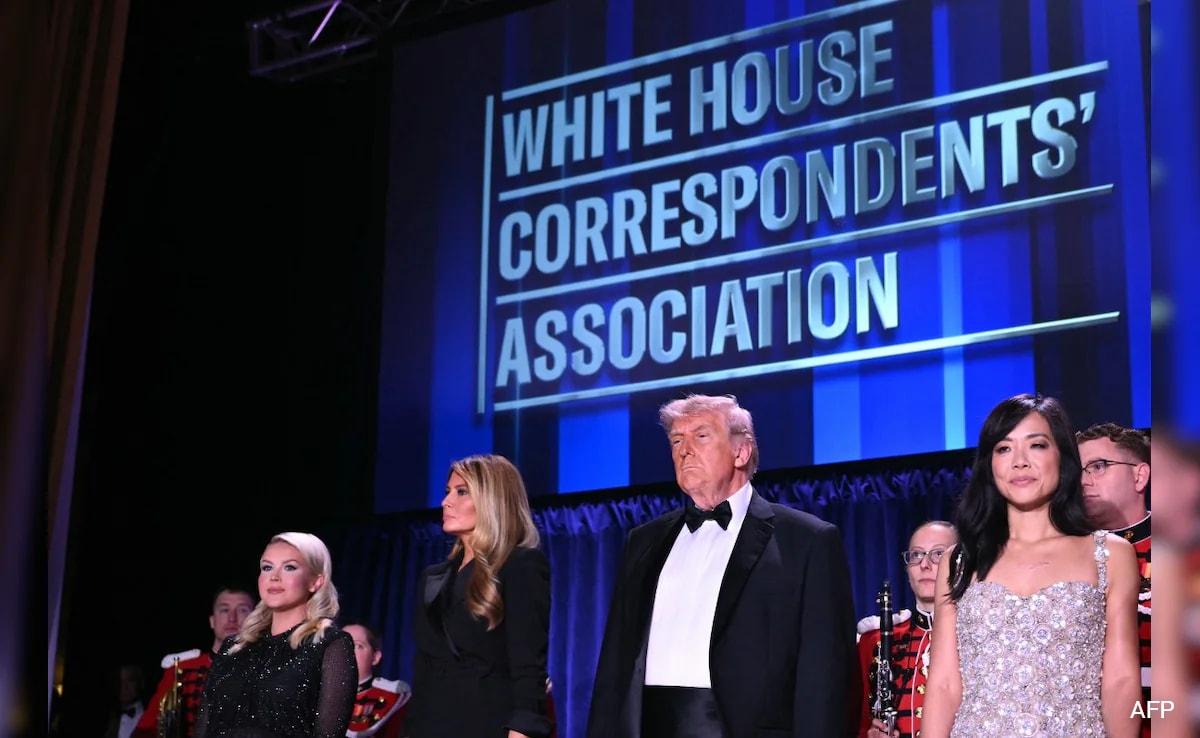
The visual of Donald Trump surrounded by a wall of tactical gear and ballistic glass isn't just a temporary precaution. It’s the new baseline. After the security breach at the dinner event, the Secret Service isn't taking chances, and they’ve basically rewritten the playbook for how a modern presidential candidate moves through the world. If you think we’re going back to the days of casual rope lines and easy access, you haven’t been paying attention to the shift in federal protective protocols.
We’re seeing a massive overhaul in how the Secret Service handles high-profile rallies. The dinner shooting changed the math. It proved that even indoor, seemingly controlled environments have "dead zones" that sophisticated bad actors can exploit. For Trump’s upcoming schedule, that means every venue is being treated like a high-security military installation.
The End of the Open Air Campaign
The era of the sprawling, open-field outdoor rally might be on life support. Following the recent incidents, the Secret Service has been pushing the Trump campaign toward indoor arenas. Why? Because you can control the roof. You can control the perimeter. You can control the air conditioning vents. In an outdoor setting, the "line of sight" problem is a nightmare that requires hundreds of extra personnel to solve.
The Secret Service’s Counter Sniper Team (CS) is now deployed in numbers we haven't seen since the post-9/11 era. They aren't just looking for shooters. They’re using advanced thermal imaging and LIDAR to map out every single window, chimney, and tree line within a thousand yards. If you’re attending a Trump event in 2026, you aren’t just walking through a metal detector. You’re being tracked by AI-driven facial recognition software the moment you park your car.
It's intense. It’s intrusive. Honestly, it’s probably the only way to keep the schedule moving.
What Heightened Security Actually Looks Like on the Ground
If you’ve been to a political event lately, you know the drill: wait in line, empty pockets, get wanded. But the new protocols go way beyond that. The "inner perimeter" has become a literal fortress. We’re talking about bullet-resistant glass panels that surround the podium on three sides. These aren't just thick windows. They’re heavy-duty transparent armor capable of stopping high-velocity rounds.
Then there’s the tech you don’t see. Signal jammers are now standard. The goal is to prevent remote-detonated devices or unauthorized drones from getting anywhere near the stage. The Secret Service has also increased its use of "plainclothes" assets—agents who look like your average rally-goer but are trained to spot behavioral anomalies before a weapon ever clears a holster.
The cost is astronomical. Local police departments are feeling the squeeze. When Trump rolls into a mid-sized city, the demand for local "overtime" officers to manage traffic and outer-perimeter patrols can bankrupt a small town’s monthly budget in forty-eight hours. Federal grants help, but the lag time for reimbursement is a serious pain point for local sheriffs.
Why the Dinner Shooting Was a Wake Up Call
The shooting at the dinner event was a failure of imagination. Security experts often talk about "complacency drift." When you do a thousand events without a hitch, people start to relax. They stop checking the credential of the guy in the catering uniform. They leave a side door propped open for a breeze.
That "drift" ended the second those shots rang out.
The Secret Service’s Internal Review found that the breach wasn't just a lack of manpower. It was a failure to coordinate with private security hired by the venue. Now, the rule is simple: the feds run everything. There is no "shared" responsibility. If you’re working the event, you’re vetted by the Secret Service, or you aren't getting in the building. Period.
The Psychological Impact on Voters
There’s a weird tension at these events now. You want to be there to support your candidate, but the presence of armored vehicles and guys in "full battle rattle" changes the vibe. It feels less like a political rally and more like a high-stakes summit. This "fortress mentality" can actually suppress turnout for some voters who don't want to deal with a four-hour security line just to hear a sixty-minute speech.
But for the Trump base, the security is a badge of honor. It reinforces the narrative that their candidate is a target because he’s disruptive. The visual of Trump speaking behind glass has become iconic in its own right—a symbol of defiance that his campaign has leaned into. They aren't hiding the security; they’re making it part of the brand.
Managing the Logistics of Protection
Think about the sheer scale of moving a former president who is also a current candidate. You have the motorcade, the advance teams, the medical staff, and the communications technicians. Every time Trump adds a stop to his itinerary, a team of twenty people has to spend three days scouted the location.
They check the local hospitals. They map out "kill zones." They even test the local cell towers to ensure the encrypted comms won't drop. It’s a logistical Herculean task that costs taxpayers millions. Some argue it’s too much. Others say you can’t put a price on the stability of the American electoral process. Regardless of where you stand, the machine is moving, and it’s getting bigger every week.
How Other Candidates Are Reacting
The security surge isn't just for Trump. While he’s the primary focus due to the recent attempts, the entire "threat environment" for 2026 has shifted. We’re seeing increased details for everyone on the ballot. The Secret Service is stretched thin. They’ve had to pull agents off financial crime investigations just to fill the shifts for protective details.
This creates a vacuum. When the elite agents are busy guarding podiums, who is chasing the cyber-criminals and the counterfeiters? The agency is currently lobbying Congress for a massive budget increase to hire and train another thousand agents. They need people who can handle the physical demands of the job while also being tech-literate enough to manage the drone-defense systems.
What You Need to Do if You Attend an Event
If you’re planning on going to an upcoming Trump rally or any major political event, you need to change your expectations. The "casual observer" days are over.
- Arrive early. And by early, I mean six hours before the doors open. The screening process is slow because it’s thorough.
- Travel light. If you don't need a bag, don't bring one. Every bag is a five-minute delay.
- Bring ID. Even if the event says "general admission," security reserves the right to vet anyone on the spot.
- Follow instructions. The agents are on edge. This isn't the time to argue about your "rights" to carry a specific sign or wear a certain type of gear.
The reality of 2026 is that political violence is no longer a "what if" scenario. It’s a "when and where" problem. The heightened security isn't just theater; it’s a direct response to a fractured political landscape where the stakes have never been higher. Whether you love the guy or hate him, the protection of the candidates is the only thing standing between a messy election and a national catastrophe.
Stay alert. Pay attention to your surroundings. The Secret Service is doing their job, but in a crowd of twenty thousand people, they can’t see everything. The best security is a crowd that’s as vigilant as the guys in the suits. Don't expect the bubble to burst anytime soon; this is the new normal for American democracy.
Check the official campaign site for updated venue rules before you head out, as requirements can change based on the specific threat level of the city. If a venue has a "no-bag" policy, they mean it. Don't be the person who gets turned away at the gate because you didn't read the fine print on the ticket.