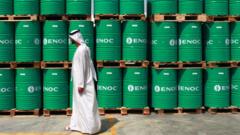
The United Arab Emirates just did the unthinkable. After nearly sixty years of helping pull the strings of the global economy from inside the OPEC boardroom, the UAE is walking out. Effective May 1, 2026, the country will officially exit both OPEC and the wider OPEC+ alliance.
It’s a massive shock to the system. You’re looking at the departure of the cartel’s third-largest producer—a country that pumps 3.2 million barrels every single day. This isn't just a minor diplomatic spat. It's a fundamental breakdown of the energy order that has dictated gas prices and geopolitical power since the 1970s. Also making news in related news: Strategic Divergence: The UAE Sovereign Incentive to Exit the OPEC Production Framework.
The Breaking Point with Saudi Arabia
For years, the UAE and Saudi Arabia have been like roommates who can’t agree on the thermostat. Riyadh wants to keep prices high by cutting production. Abu Dhabi, on the other hand, has spent billions expanding its capacity. They want to pump more, sell more, and monetize their reserves before the world pivots away from fossil fuels for good.
The tension finally snapped. While Saudi Arabia is busy trying to prop up prices to fund its "Vision 2030" megaprojects, the UAE is done waiting for permission to use its own hardware. They've been stuck with production quotas that leave a huge chunk of their 4.8 million barrel-per-day capacity sitting idle. Basically, the UAE is tired of paying for Saudi Arabia's expensive ambitions with its own lost revenue. More information on this are covered by Harvard Business Review.
Recent military friction didn't help. When Saudi airstrikes hit UAE-backed forces in Yemen late last year, the "brotherly" facade started to crumble. Now, with the Strait of Hormuz facing constant disruption from the ongoing conflict with Iran, the UAE decided it's every nation for itself.
Why This Hits Your Wallet
If you think this only matters to oil traders in suits, you're wrong. When the UAE exits, they take 3.2 million barrels of "spare capacity" with them. That’s the emergency buffer OPEC uses to stop prices from spiking during a crisis. Without that coordinated cushion, oil prices are going to get a lot more volatile.
- Uncoordinated Pricing: Without the UAE following the OPEC playbook, there’s no longer a unified floor for oil prices.
- Production Surges: Once the UAE is free from quotas, they’ll likely ramp up production to hit their 5 million barrel-per-day goal by 2027.
- Market Share Wars: If the UAE starts flooding the market to grab customers, don't expect Saudi Arabia to sit back. We could see a repeat of the 2020 price wars, but in a much more dangerous global environment.
Brent crude already jumped past $111 a barrel on the news. People are spooked because the world's most reliable "swing producer" just went rogue.
The Death of the Cartel
Let's be real: OPEC is looking increasingly toothless. Qatar left in 2019. Angola walked out in 2024. Now the UAE? The cartel is losing the very members that gave it relevance.
What we're seeing is the rise of "energy nationalism." In 2026, countries aren't interested in collective stability if it means individual stagnation. The UAE's Adnoc, led by Sultan al-Jaber, is focused on a "sovereign first" strategy. They’re betting that they can navigate the current Iran-related supply shocks better on their own than as part of a committee.
The Hidden Cost for Industry
This isn't just about the price of a gallon of gas. For industries like mining and heavy logistics, diesel usually accounts for 15% to 25% of all-in costs. When oil stays stubbornly above $110 because of this geopolitical divorce, the margins for everything from copper mining to grocery shipping start to evaporate.
If you're running a business dependent on fuel, the "OPEC discount" is officially dead. You can't rely on the cartel to stabilize the market anymore.
What Happens Next
Don't expect an immediate flood of new oil. The UAE still has to navigate the physical blockades in the Persian Gulf. However, the long-term strategy is clear. They're going to push their advantage, maximize their output, and let the rest of the cartel deal with the fallout.
- Watch the 5 million target: If the UAE hits their 2027 production goals early, it’ll force every other producer to rethink their pricing.
- Hedge your energy costs: If you're an investor or business owner, the era of "coordinated stability" is over. Expect price swings to be sharper and more frequent.
- Monitor the Saudi response: Riyadh won't take this lying down. Watch for shifts in Saudi production as they try to reassert dominance over the market.
The old world of oil is gone. The UAE just turned the lights out on their way out the door.