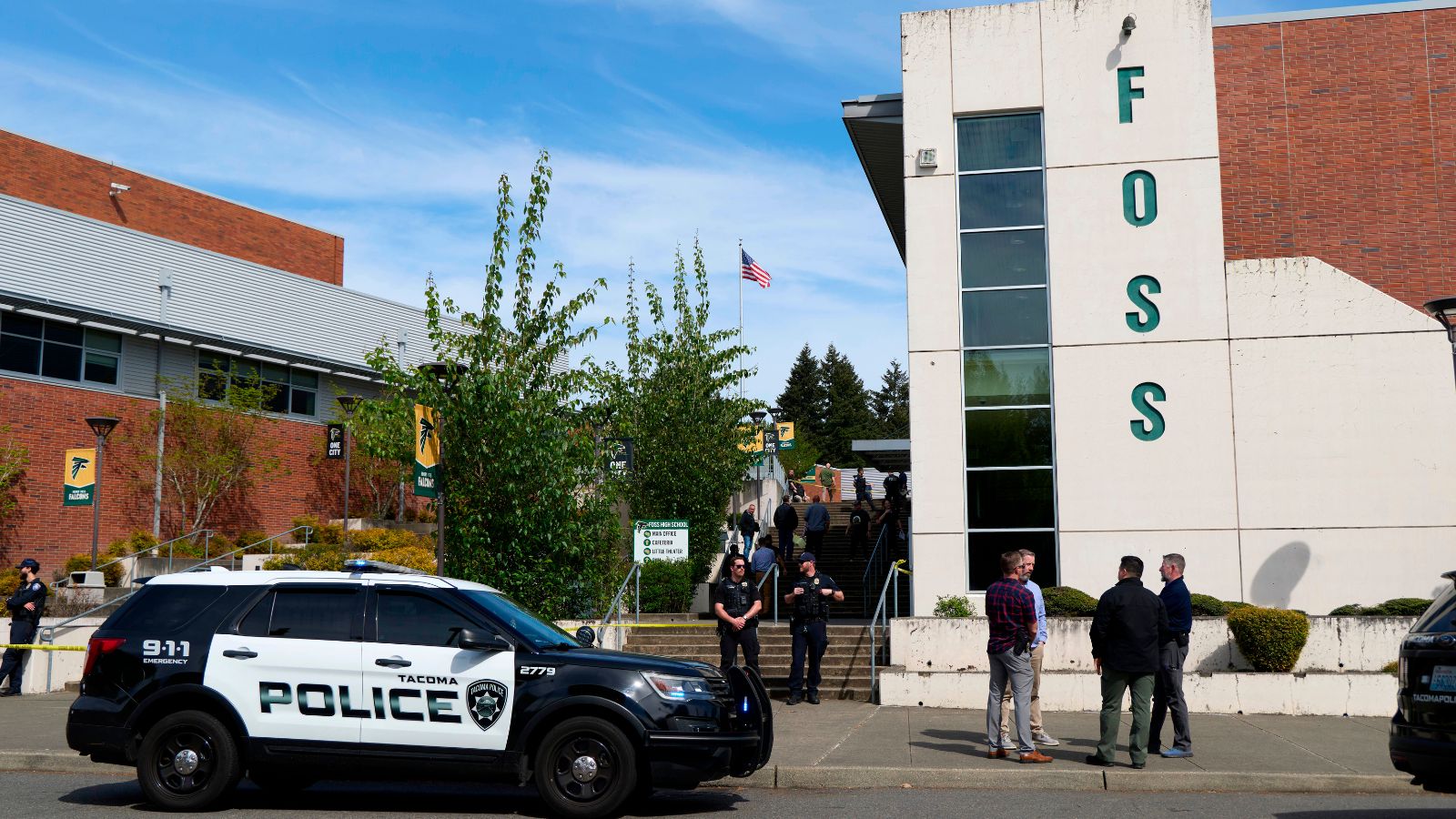
The chaos at a Washington state high school this week, where a stabbing left six people injured including the suspect, is not an isolated burst of violence. It is the predictable outcome of a system that has traded proactive intervention for reactive paperwork. Local law enforcement confirmed that the incident involved multiple victims who were treated for non-life-threatening wounds, yet the focus remains fixed on the mechanics of the attack rather than the institutional gaps that allowed a blade to enter a supposedly secure environment.
While the immediate headlines center on the number of bandages and the speed of the police response, the deeper reality involves a breakdown in school safety protocols and behavioral health monitoring. We see the same pattern repeat across the Pacific Northwest. A student shows signs of distress, the administrative machinery grinds slowly, and the eventual eruption leaves a community wondering how "safe" zones became crime scenes. For another view, check out: this related article.
Security Theatre Versus Real Protection
School districts often invest heavily in visible deterrents like cameras and locked vestibules. These measures provide a sense of comfort to parents, but they rarely stop a motivated individual who is already inside the building. In the Washington incident, the violence occurred within the school’s social fabric, proving that hardware cannot replace human intelligence.
The "security theatre" problem is rampant. Schools spend millions on tech while cutting back on the very people trained to spot trouble before it starts. Counselors are overwhelmed. Resource officers are often tied up with administrative tasks rather than patrolling hallways or building rapport with at-risk youth. When we look at the timeline of most school attacks, the red flags were visible for weeks. The failure is rarely a lack of locks; it is a lack of listening. Similar coverage regarding this has been published by Associated Press.
The Myth of the Sudden Snap
Public discourse usually frames these events as a student "snapping" without warning. This is a dangerous narrative that absolves institutions of responsibility. Investigative data on school violence shows that these incidents are almost always preceded by "leakage," where a suspect communicates their intent or shows extreme behavioral shifts.
If six people are injured in a high school hallway, we must ask what the disciplinary record of the suspect looked like six months ago. Was there a history of bullying? Were there previous threats that were filed away in a digital folder and never acted upon? When schools prioritize avoiding "litigation risks" over direct intervention, they create a vacuum where violence matures.
The Mental Health Crisis in the Classroom
Washington state has struggled with a persistent shortage of school-based mental health professionals. The ratios are often staggering, with a single counselor responsible for hundreds of students. This creates a "triage-only" environment. Only the loudest or most disruptive students get attention, while those simmering with resentment or quiet instability fall through the cracks.
The stabbing highlights the physical danger, but the underlying infection is a lack of psychiatric support. We are asking teachers to be social workers, security guards, and educators all at once. It is an impossible burden. When a student carries a weapon into a school, it is the final stage of a long process of alienation.
The Legal Hurdles of Intervention
Privacy laws, while necessary, often hamper the ability of schools and police to share information effectively. There is a "silo effect" where a therapist knows one thing, a teacher knows another, and the parents are in the dark. By the time these pieces of information are put together, the yellow tape is already up.
We need to re-examine how information flows within the educational system. Protecting a student's privacy is vital, but it should not come at the cost of the physical safety of the entire student body. The current balance is skewed, favoring administrative caution over common sense.
Rebuilding the Perimeter of Trust
Hardening schools is not just about metal detectors. It is about the social perimeter. This means creating an environment where students feel safe reporting concerns without being labeled as informants. In many high schools, the "code of silence" is stronger than any security protocol.
To fix this, the focus must shift back to the human element.
- Increased staffing of non-teaching professionals who specialize in conflict de-escalation.
- Real-time reporting systems that are actually monitored by humans, not just automated bots.
- Aggressive follow-up on every threat, no matter how minor it seems at the time.
The Washington stabbing is a loud, bloody reminder that our current approach is failing. We can keep buying more cameras, or we can start investing in the people who can actually stop a knife from ever being drawn. The choice is between the appearance of safety and the reality of it.
The six people who went to the hospital this week are victims of more than just a suspect; they are victims of a system that waited for the blood to flow before taking the threat seriously.



