Washington is currently patting itself on the back for "securing" a rare earths pipeline in South Africa. The narrative is simple: we are decoupling from China by funding Steenkampskraal and similar ventures, ignoring the diplomatic friction over Pretoria's recent international legal maneuvers. It sounds like a strategic masterstroke. It is actually a desperate, late-to-the-party gamble that ignores the brutal physics of the permanent magnet supply chain.
The US isn't "winning" a trade war here. It is subsidizing a high-risk extraction project that, even at full capacity, will barely dent the global monopoly held by Beijing. If you think digging rocks out of the ground in the Western Cape solves the magnet shortage, you don't understand how the periodic table works.
The Extraction Fallacy
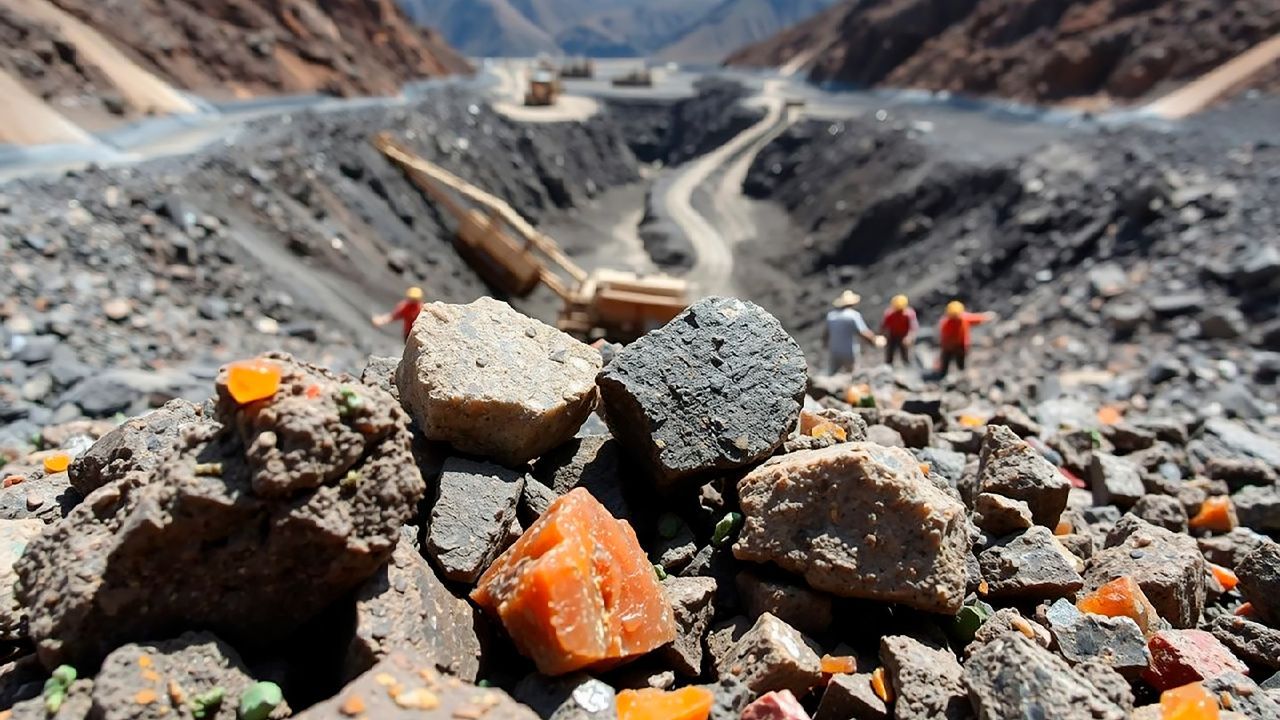
The mainstream press loves to talk about "mining" as the solution. They treat neodymium and dysprosium like gold—find it, dig it up, sell it. This is a fundamental misunderstanding of the industry. The value isn't in the dirt; it's in the separation and the metallization.
China controls 90% of the processing. When the US backs a project in South Africa, they are funding the easiest part of the process. Steenkampskraal is famous for its high grade, particularly its concentrations of Monazite. But high grade doesn't mean high margin if you have nowhere to send the ore but China for refining.
Imagine a scenario where the US spends $100 million to get South African ore out of the ground, only to realize the only facilities capable of turning that ore into high-purity oxides at scale are in Baotou. We aren't building independence; we are just providing China with more raw material to process and sell back to us at a premium. I have seen private equity firms dump nine figures into "independent" mines only to realize they are effectively just unpaid interns for the Chinese Ministry of Industry and Information Technology.
The Diplomatic Cognitive Dissonance
The US government is currently trying to play a double game that would make Machiavelli blush. On one hand, Washington is furious over South Africa’s stance at the International Court of Justice and its deepening ties with the BRICS bloc. On the other, the US Export-Import Bank is dangling carrots to secure minerals.
This isn't "pragmatic diplomacy." It’s strategic schizophrenia.
By tying US supply chain security to a nation that is actively pivoting toward a rival economic bloc, the Department of Energy is building a house on sand. You cannot "de-risk" from one adversary by outsourcing your critical infrastructure to their closest allies. Pretoria isn't going to choose Washington over Beijing when the chips are down; they’ve already shown us their hand.
The Permanent Magnet Trap
The "Rare Earths" label is a misnomer. They aren't actually rare. They are just messy and expensive to separate. What the world actually needs are sintered NdFeB (Neodymium-Iron-Boron) magnets.
To get from a South African mine to a Tesla motor, the material must go through:
- Mining and Milling: Crushing the rock.
- Cracking and Leaching: Using harsh acids to separate the minerals.
- Solvent Extraction: The "Black Box" where China dominates. This requires hundreds of stages of chemical baths to separate 17 nearly identical elements.
- Metallization: Converting oxides into metal.
- Alloying and Strip Casting: Mixing the metals.
- Magnet Manufacturing: Pressing and sintering into specific shapes.
The US backing of a South African mine addresses Step 1. It ignores Steps 3 through 6.
If we don't have the domestic or "friend-shored" capacity to handle solvent extraction without radioactive byproduct nightmares, the mine in South Africa is nothing more than a vanity project. We are obsessed with the "upstream" because it makes for good headlines. The "midstream" is where the war is won or lost, and currently, we are surrendering without a fight.
The Cost of "Clean" Rare Earths
Everyone wants "ethical" rare earths. They want the electric vehicle dream without the environmental nightmare of thorium and uranium tailings—byproducts of rare earth mining.
The dirty secret of the Steenkampskraal project and others like it is the radioactivity. Monazite is rich in rare earths, but it is also rich in Thorium. Handling this in the US is a regulatory migraine that adds 40% to the cost of production. In China, these externalities are buried, literally and figuratively.
By funding these projects abroad, the US isn't solving the environmental cost; it’s just exporting the liability. This creates a fragile supply chain. If a local South African community shuts down a mine due to groundwater concerns—a frequent occurrence in African mining—the US "strategic reserve" evaporates overnight.
Why Recycling is a Distraction
You will often hear "People Also Ask" if we can just recycle our way out of this. The answer is a brutal "No."
Current global recycling of rare earths sits at less than 1%. Why? Because the magnets in your iPhone or your hard drive are tiny, glued into complex assemblies, and cost more in labor and energy to extract than they are worth. Unless we mandate "Design for Disassembly," recycling is a feel-good story we tell ourselves to ignore the fact that we need to dig millions of tons of earth to meet 2030 targets.
The Real Play: Move the Goalposts
If I were advising the Pentagon, I’d tell them to stop chasing 20th-century extraction targets. We are trying to beat China at a game they spent forty years perfecting. We won't out-mine them, and we won't out-refine them in time to matter.
The real disruption isn't finding more Neodymium; it’s making it obsolete.
The focus should be on:
- Iron Nitride Magnets: Theoretically more powerful than Neodymium and uses zero rare earths.
- Induction Motors: Moving away from permanent magnets entirely, despite the weight and efficiency trade-offs.
- Reluctance Motors: Using the magnetic properties of steel.
Every dollar the US sends to a mine in South Africa is a dollar not spent on the materials science that would actually break the monopoly. We are subsidizing our own obsolescence.
The Geopolitical Cost of Failure
By pretending this South African deal is a win, we are signaling to the market that the "China problem" is being handled. This chills investment in radical alternatives. It creates a false sense of security.
The reality? In a conflict scenario, that South African ore will never reach an American refinery. It will stay in the ground, or it will be diverted to the highest bidder—which, based on current infrastructure, will always be China.
We are buying a seat at a table where the dealer, the cards, and the security guards all work for the competition. Stop celebrating the "backing" of foreign mines and start fearing the lack of domestic industrial chemistry. The dirt is irrelevant. The chemistry is everything.
Stop looking for more rocks. Start looking for better physics.