The air at Pui O Beach usually tastes of salt and buffalo dung. It is a thick, humid perfume that signals you have finally escaped the claustrophobia of Central. On a Tuesday in October, a local hiker named Mr. Lau stands at the edge of the campsite, squinting against the glare of the South China Sea. He has been coming here for thirty years. He remembers when the only sounds were the rhythmic thud of waves and the occasional lowing of the feral water buffalo that roam the Lantau coastline.
Now, he hears the staccato clicking of rolling suitcases on wooden boardwalks. For a more detailed analysis into similar topics, we recommend: this related article.
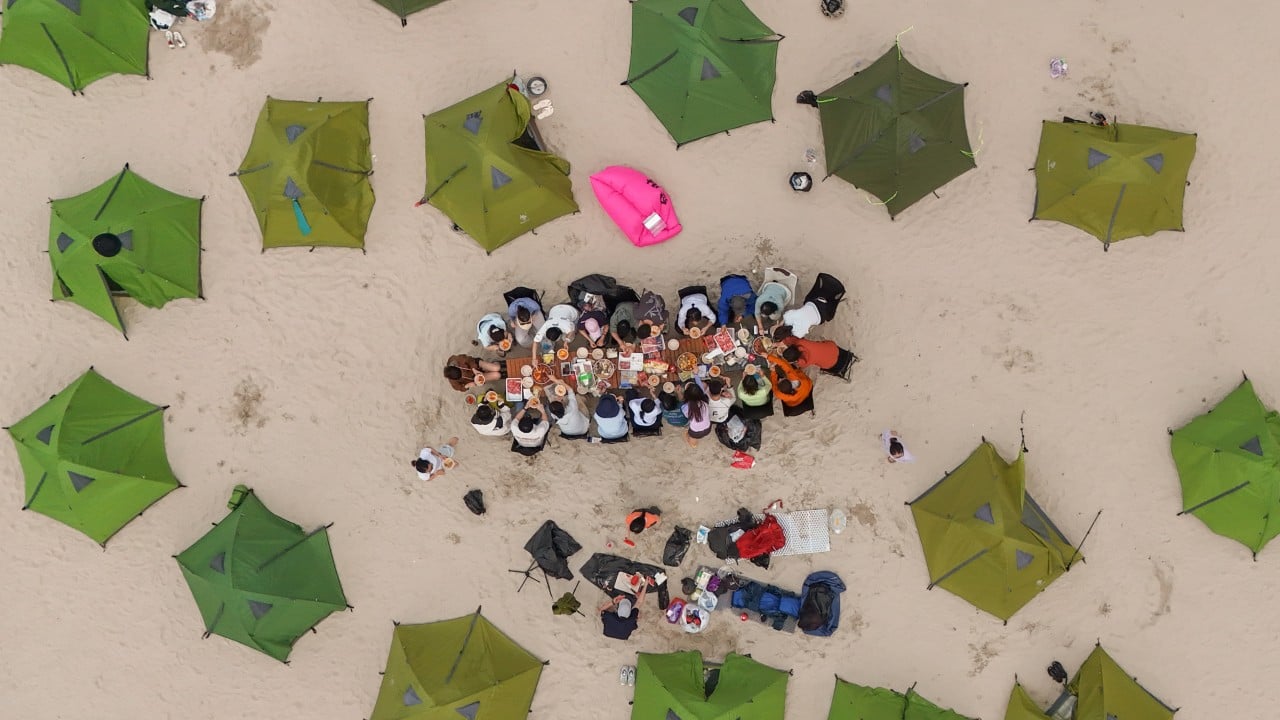
What Mr. Lau is witnessing isn't just a busy weekend. It is a precision-engineered commercial takeover. On the surface, the scene looks like a vibrant gathering of outdoor enthusiasts. Look closer. Dozens of identical high-visibility tents are pitched in perfect, military-style rows. There are no individual families fumbling with tent poles or arguing over charcoal. Instead, a few men in windbreakers move between the plots, barking orders in Mandarin, organizing "guests" who have paid for a wilderness experience they didn't realize was illegal.
The Business of Free Space
Hong Kong is a city defined by the cost of its soil. When every square inch of concrete is monetized, the few remaining patches of "free" land—the government-run campsites—become incredibly valuable assets. This is where the arbitrage begins. For additional information on this development, comprehensive coverage can also be found at AFAR.
Unlicensed mainland tour operators have turned a public service into a private goldmine. The model is elegantly simple. They advertise on social media platforms like Xiaohongshu, promising a "romantic Hong Kong island getaway" for a fraction of the cost of a hotel. For roughly 300 to 500 RMB, a traveler gets a round-trip bus ride from Shenzhen, a pre-pitched tent, and a BBQ dinner.
The problem? These operators hold no licenses. They pay no rent. They occupy the land by sending "vanguard" teams—often elderly mainlanders or hired hands—to arrive at the crack of dawn on a Thursday to claim the best spots. By the time a local family arrives on Saturday morning, the campsite is "sold out," despite the fact that public land cannot be sold.
This isn't a victimless hustle. It is a systematic extraction of public resources for private gain. When a tour group of fifty people descends on a site designed for twenty, the infrastructure groans. The public toilets, maintained by taxpayer dollars, overflow. The trash bins are swallowed by plastic waste. The water buffalo, displaced from their grazing paths, wander onto the roads.
The Ghost Guests
Consider a hypothetical traveler named Ming. Ming lives in a cramped apartment in Guangzhou and dreams of the "blue soul" of the ocean she saw in a viral video. She clicks a link, pays her deposit, and boards a coach. She is told she is part of a "private club outing" to avoid scrutiny from the Leisure and Cultural Services Department (LCSD).
When Ming arrives, she is a ghost. She isn't registered with the Hong Kong Tourism Board. She has no insurance if a storm rolls in or if she gets injured on the rocky outcrops. She is part of a shadow economy that bypasses the city’s regulatory framework entirely.
The "guides" leading these groups are equally ephemeral. They aren't licensed by the Travel Industry Authority. They don't have the training to manage a group in the wilderness. If the police arrive, the guides simply blend into the crowd, claiming they are just "a group of friends" camping together.
The scale is staggering. On peak holidays, an estimated 70% of the tents at popular sites like Pui O and Ham Tin Wan are part of these organized, unlicensed fleets. Local residents watch as their backyard is treated like a warehouse floor. The tension is palpable. It is the friction between those who view the land as a sanctuary and those who view it as a commodity to be harvested.
The Regulatory Fog
Why doesn't the law simply stop them?
The answer lies in the murky definition of "commercial activity." To prove a crime, an LCSD officer must witness money changing hands on-site. But the transactions happen in digital wallets, across the border, days before the tents are even pitched. The law was written for a time when "illegal camping" meant someone putting a tent in the wrong place, not a sophisticated cross-border logistics operation.
The government has tried to implement a booking system, but it is easily gamed. Bots or "proxy" campers can snatch up slots the second they open. It is a digital arms race where the public is losing.
Beyond the legal technicalities, there is a deeper erosion. Hong Kong’s country parks were established in the 1970s as a "green lung" for a stressed, overworked population. They were a promise: no matter how small your apartment, you own the mountains and the sea. When that space is occupied by an unlicensed business, that promise is broken.
The invisible stakes are the loss of the "commons." If we allow the most accessible parts of nature to be privatized by the loudest and fastest bidders, we lose the very thing that makes the city livable.
A Quiet Transformation
As the sun begins to set over Lantau, the organized groups start their fires. The smell of honey-glazed chicken wings fills the air. It is a scene of simulated domesticity. The "guests" take photos, post them to the same apps that brought them here, and the cycle reinforces itself.
The local buffalo, the true residents of Pui O, stand in the shadows of the tree line. They are giants of the marsh, slow and steady. They don't understand the permit systems, the digital payments, or the border politics. They only know that the grass where they used to sleep is now covered in nylon and polyester.
Mr. Lau packs his bag. He didn't find a spot to sit today. He walks back toward the bus stop, passing a row of twenty identical blue tents. A man in a headset is checking a clipboard, guiding a fresh group of tourists toward the showers.
The tide is coming in, but it isn't just water hitting the shore. It is a different kind of force, one that doesn't recede. It stays, it occupies, and it waits for the next weekend to begin again. The sand remains, but the spirit of the place is being carried away, one unauthorized booking at a time.