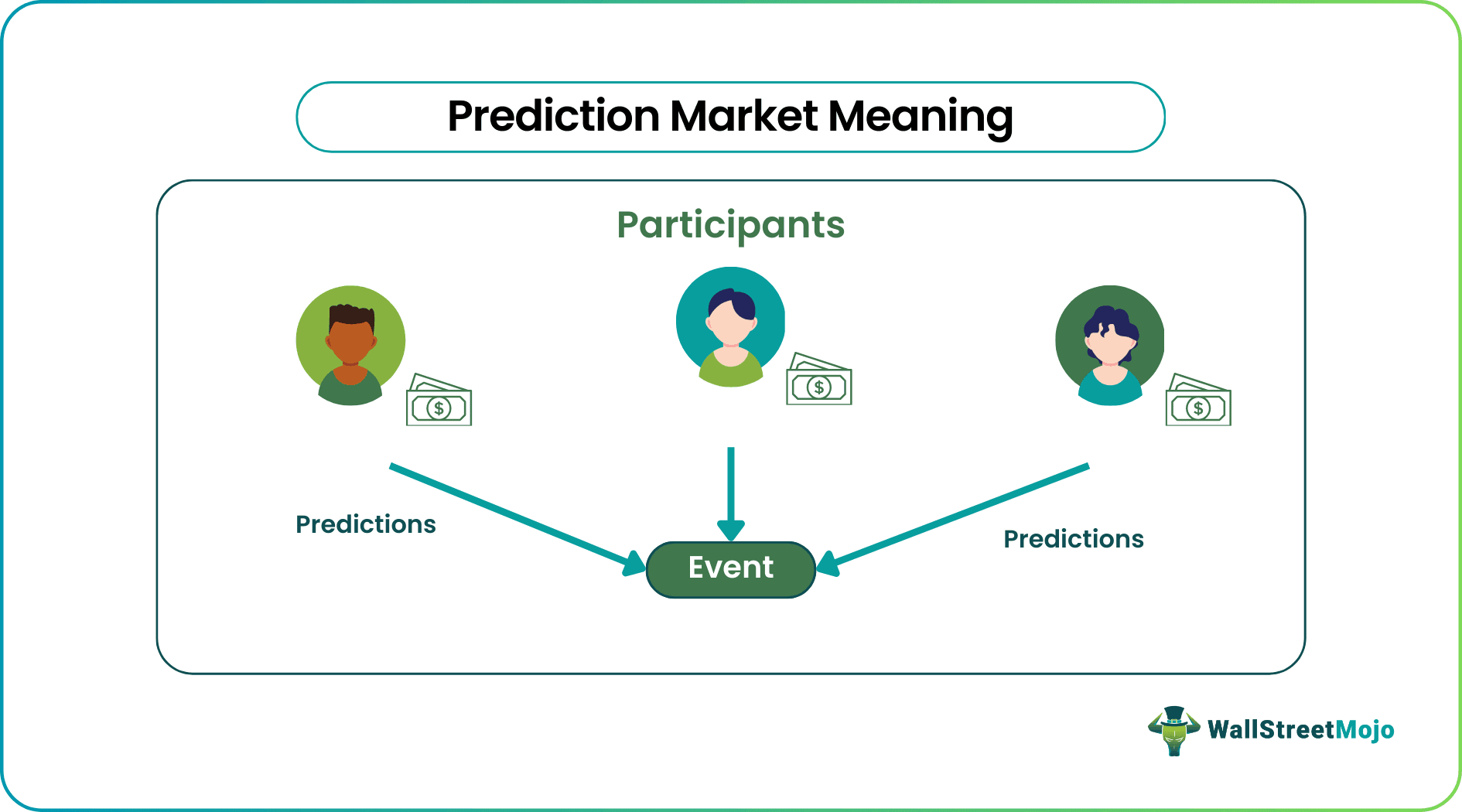
The media is currently hyperventilating over Polymarket. They call it "war betting." They frame it as a dangerous intersection of Wall Street greed and geopolitical instability. They worry that traders are "incentivized" to see conflict erupt in the Middle East or across the Taiwan Strait because there’s a payout at the end of the candle.
They are dead wrong.
What the pearl-clutchers call "scrutiny," I call a desperate attempt by legacy institutions to regain control over the narrative. For decades, we relied on "expert" pundits and state-aligned analysts to tell us the probability of war. Those people have a track record that makes a coin flip look like a stroke of genius. Prediction markets aren't a threat to global stability; they are the first honest mirror we’ve held up to it in a century.
The Myth of the "Incentivized" Conflict
The loudest argument against platforms like Polymarket is the moral hazard. The "lazy consensus" suggests that if enough money bets on a Trump victory or a specific military strike, the "market" will somehow manifest that reality.
This ignores the basic physics of capital.
If you have $500 million riding on a specific geopolitical outcome, you don't spend it trying to bribe a foreign military or rig a national election—tasks that are notoriously expensive, prone to failure, and carry a 100% chance of prison time. You spend that money on better data so you can be on the right side of the trade.
Prediction markets don't create the news; they filter the bullshit out of it. When a pundit on a 24-hour news cycle says "tensions are rising," they are selling ads. When a trader puts $10 million on "No Iranian Strike by Friday," they are selling their conviction. Only one of those people is penalized for being wrong.
Why Wall Street Is Betting on Trump’s "War News"
The specific scrutiny regarding Donald Trump’s influence on these markets reveals a profound misunderstanding of how risk is priced. Wall Street isn't "rooting" for chaos. Wall Street is hedging against it.
During the first Trump administration, the "Twitter Volatility" was a real metric. One post could swing the S&P 500 by 1%. Traditional polling and diplomatic cables couldn't keep up. Prediction markets, however, moved in real-time.
Consider the mechanics of a binary option on a platform like Polymarket. The price reflects a probability:
$$P = \frac{\text{Price of 'Yes' share}}{\text{Total share value}}$$
If a "Yes" share costs $0.65$, the market believes there is a $65%$ chance of the event occurring.
When the media sees a spike in "Trump War News" bets, they see a conspiracy. I see a sophisticated hedge. If a trader believes a specific policy shift will devalue their emerging market portfolio, they buy "Yes" shares on that policy shift. It’s not a "bet"; it’s insurance. Scrutinizing this is like investigating someone for buying fire insurance because you think it means they want their house to burn down.
The Death of the Pundit Class
We are witnessing the final days of the "Expert."
I’ve sat in rooms with "Geopolitical Risk Consultants" who charge $20,000 a day to provide vague, non-committal forecasts. They use words like "likely," "potentially," and "could." These words are shields. They allow the speaker to be wrong without ever being held accountable.
Prediction markets are the antidote to this linguistic cowardice. You cannot be "vague" on the blockchain. You are either holding a winning contract or a worthless one.
The reason the establishment hates Polymarket isn't because it’s "unregulated" or "dangerous." It’s because it proves that a group of anonymous degens and math-obsessed quant traders are consistently more accurate than the State Department.
The Signal-to-Noise Ratio
In information theory, the signal-to-noise ratio ($SNR$) is defined as:
$$SNR = \frac{P_{signal}}{P_{noise}}$$
In traditional news, the noise is deafening. Every minor diplomatic spat is treated as an existential crisis to drive clicks. In a prediction market, the $P_{noise}$ is filtered out because noise costs money. If you trade on rumors, you lose your shirt. Therefore, the price movement represents the purest signal available.
The "Manipulation" Boogeyman
The SEC and various international regulators love to throw around the word "manipulation." They argue that a single "whale" can move the odds on a prediction market to influence public opinion.
This is a fundamental misunderstanding of market liquidity.
Yes, a large buy order can temporarily spike the price. But in a transparent, liquid market, that spike creates an "arbitrage" opportunity. If the "true" probability of an event hasn't changed, but the price has been artificially inflated by a whale, every other rational actor in the market has a massive incentive to bet against that whale.
To "manipulate" a market like Polymarket, you would need to be willing to lose more money than the rest of the world is willing to gain by correcting you. It is the most expensive, least effective form of propaganda ever devised.
Stop Asking if it’s "Ethical" and Start Asking if it’s Accurate
People also ask: "Should we be allowed to profit from war?"
This is a flawed question. It assumes that by banning the market, we stop the war. We don't. We just stop ourselves from seeing it coming.
When the "War in Ukraine" markets started trending toward "Yes" in early 2022, while European leaders were still talking about "successful diplomacy," the markets were telling the truth that governments were too afraid to admit.
If you want to know what’s actually going to happen in the South China Sea or the 2024 election, stop reading editorials. Stop looking at polls that haven't updated their methodology since the 1990s.
Look at the order book.
The Cost of Being Wrong
In my years navigating venture capital and high-stakes trading, I’ve seen companies blow millions on "market research" that was essentially just a collection of polite lies. Prediction markets remove the politeness. They are brutal. They are cold. They are 100% transparent.
The downsides? They are addictive. They can be volatile. They require a level of digital literacy that the average voter doesn't possess. But those are bugs in the user, not the system.
The Regulatory Overreach
The current push to "scrutinize" these markets is a thinly veiled attempt to protect the monopoly on "Truth" held by legacy institutions. If an algorithm and a pool of global capital can predict the fallout of a trade war better than the Treasury, why do we need the Treasury's "guidance"?
Regulators aren't worried about you losing money. They’re worried about them losing relevance.
They will try to fix this by "regulating" it into a corner—imposing KYC (Know Your Customer) rules that stifle participation, limiting trade sizes, or banning certain "sensitive" topics. Every one of these interventions makes the market less accurate. A restricted market is a biased market.
The New Intelligence Era
We are moving into an era where "Intelligence" is no longer the domain of three-letter agencies. It is a decentralized, tradable commodity.
If you're still relying on "Wall Street bets" as a derogatory term, you’re stuck in 2021. The "bets" being placed now on the future of American policy and global conflict are the most sophisticated data points on the planet.
Ignore the "scrutiny." Follow the money. It’s the only thing in this world that doesn't have an ulterior motive—other than to grow.
The next time you see a headline about "Concerns over Trump War Bets," remember: the people writing that headline are terrified because for the first time in history, you can see exactly how much their opinion is worth.
Usually, it’s about $0.00.
Buy the signal. Sell the noise.
Would you like me to analyze the historical accuracy of prediction markets compared to traditional political polling data?



