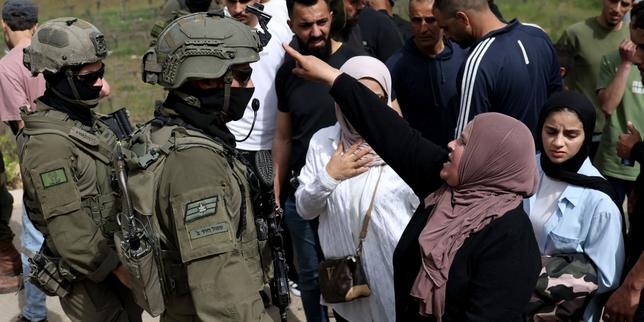
Settlement security in the West Bank isn't just about fences and cameras anymore. It's about civilian-led militias. A Palestinian man allegedly armed with a knife was recently shot and killed near a settlement. This wasn't a military operation. A local security team handled it. This shift in who pulls the trigger changes everything on the ground.
The incident happened quickly. Reports indicate the individual approached a settlement perimeter. The "defense militia" or local security squad intervened. They saw a threat. They opened fire. The man died at the scene. This isn't an isolated event. It's part of a growing trend where the line between the Israeli Defense Forces (IDF) and civilian settlers has blurred until it's almost invisible. If you found value in this article, you should look at: this related article.
Why Civilian Guards Are Taking Over West Bank Security
The West Bank is a patchwork of jurisdictions. You have Area A, B, and C. Most settlements sit in Area C. Traditionally, the IDF provided the bulk of protection. Things have shifted. Since late 2023, the Israeli government has funneled thousands of assault rifles and pieces of tactical gear to "emergency standby squads." These are residents. They aren't career soldiers. They're your neighbors who now carry Tavor rifles to the grocery store.
This privatization of force creates a massive accountability gap. If a soldier kills a civilian, there's a clear—if often criticized—military justice system. When a member of a "defense militia" does it, the legal path is murky. Are they acting as soldiers? Are they private citizens defending their homes? The distinction matters because it dictates whether international law or local criminal law applies. Usually, neither seems to stick. For another perspective on this event, see the latest coverage from The Washington Post.
The Rapid Militarization of the Settlement Movement
You can't talk about these shootings without looking at the hardware. We aren't talking about handguns for self-defense. These units receive military-grade equipment. The Ministry of National Security, led by Itamar Ben-Gvir, has been vocal about this. They want every settler armed. They've eased gun permit requirements. They've expedited the formation of these local squads.
The result is a hair-trigger environment. When you give thousands of civilians high-powered weapons and tell them they're the first line of defense against "terrorists," every suspicious movement looks like an attack. In the case of the Palestinian man killed recently, the "knife" was the justification. In many previous instances, the mere presence of a Palestinian near a settlement orchard has been enough to spark a confrontation.
The Problem With Standby Squads
Standby squads, or Kitat Konenut, have existed for decades. They were meant to hold the line for ten minutes until the army arrived. Now, they're often the only presence. Many IDF units were moved to the southern or northern borders, leaving a vacuum in the West Bank. Settler militias filled it.
These groups often lack the de-escalation training that professional soldiers—theoretically—receive. Their perspective is colored by living in the conflict. There’s no distance. There’s no "neutral" party. It’s personal. When security is personal, it’s rarely objective.
Legal Limbo and the Lack of Oversight
Who watches the watchmen in the West Bank? It’s a mess. Organizations like B'Tselem and Yesh Din have documented hundreds of cases of settler violence. Often, the soldiers stand by. Sometimes, the "settlers" are actually soldiers on reserve duty wearing a mix of civilian clothes and military vests.
This "dual role" is a nightmare for legal analysts. If a man is killed while allegedly holding a knife, the official narrative usually comes from the shooters themselves. There are rarely body cams. There’s no independent forensic team. The IDF usually issues a brief statement saying they're "looking into it." These investigations almost never lead to indictments.
Understanding the Palestinian Perspective on Armed Settlements
To a Palestinian living in the West Bank, these militias aren't "defense squads." They're an extension of the occupation. They see armed civilians blocking roads and harassing farmers. When a death occurs, it isn't seen as a security incident. It's seen as an execution.
The tension isn't just about the shooting itself. It's about the land. Every time a "buffer zone" is created around a settlement for "security," more Palestinian land becomes inaccessible. Farmers can't reach their olives. Shepherds can't graze their flocks. The gun is the tool used to enforce these invisible borders. It's a cycle that feeds itself. Security justifies the weapons, and the weapons create the friction that necessitates "security."
The International Community is Losing Patience
Don't think the rest of the world isn't watching. The U.S. and the EU have started doing something they rarely did before: sanctioning individual settlers and organizations involved in West Bank violence. These sanctions target people who "undermine peace and stability."
The killing of a man "armed with a knife" by a civilian militia fits right into this global debate. Is it self-defense? Or is it an extrajudicial killing? When the state outsources its monopoly on violence to its most ideologically driven citizens, it loses its claim to being a neutral arbiter of law.
Moving Beyond the Official Narrative
We need to stop taking "allegedly armed with a knife" as a complete sentence. We need to ask questions. Was there a warning shot? Was the threat immediate? Could the individual have been detained? In a professional military setting, these are standard queries. In the world of West Bank militias, they're often treated as treasonous.
The reality on the ground is that the West Bank is becoming a wild west. There's no clear authority. There's only the person with the faster draw. This recent death won't be the last. It's a symptom of a system that has decided that more guns in more hands will somehow lead to more peace. History suggests otherwise.
If you're following these developments, look past the headlines. Watch the funding. Watch the policy shifts in the Israeli Ministry of National Security. Note how often "civilian guards" are mentioned in military reports. That’s where the real story lives. The next step is demanding transparent investigations into every civilian-led shooting. Without a clear legal boundary, the violence will only scale up.