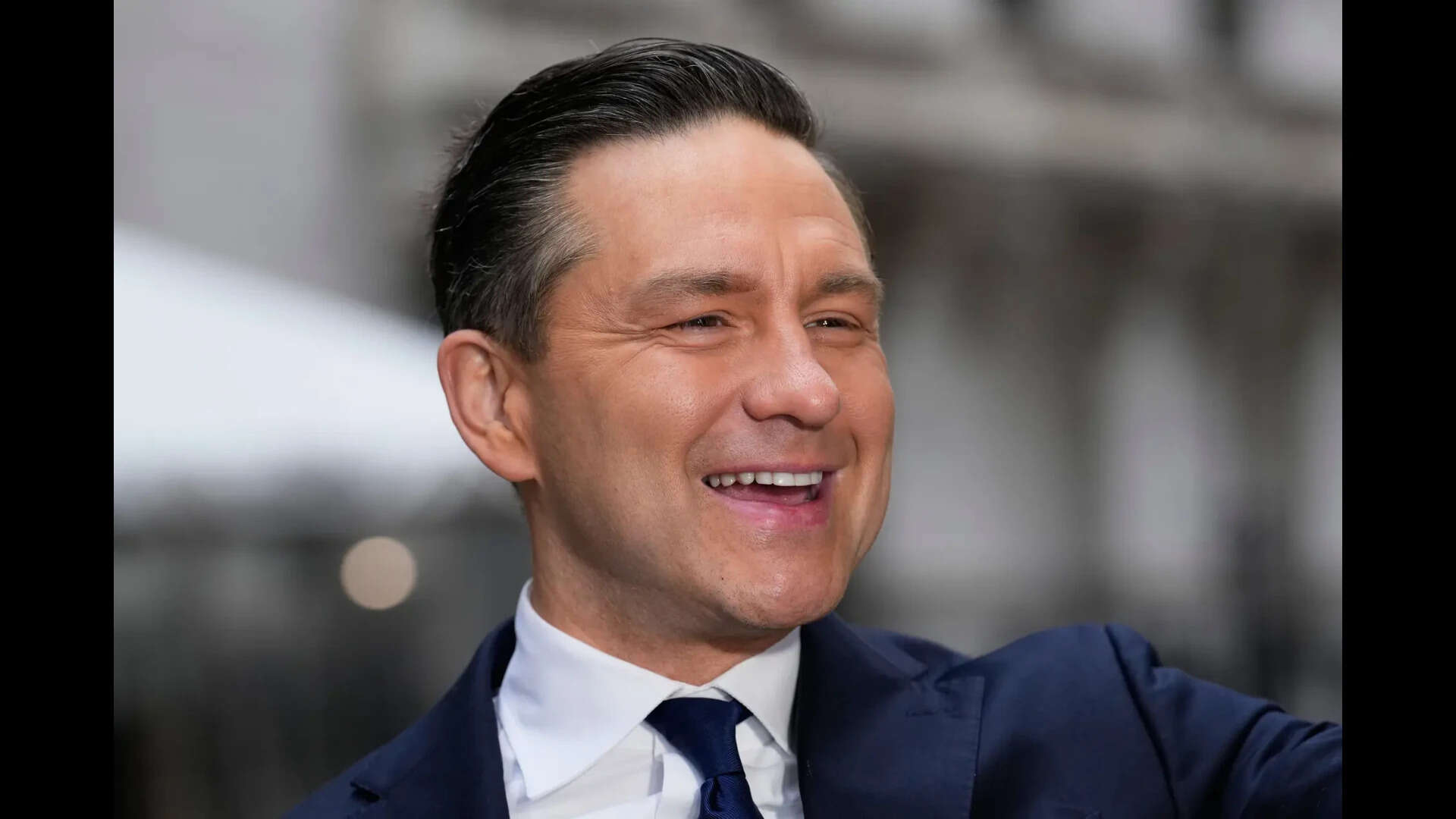
Pierre Poilievre just performed a masterclass in political theater on the Joe Rogan Experience, but he didn't actually answer the question. When Donald Trump joked about Canada being the 51st state, and Poilievre responded with a firm "never," both men were playing to a gallery that doesn't understand how modern borders actually function.
The media is obsessed with the optics of sovereignty. They want to talk about flags, national anthems, and the "separatist" threat in Alberta. It’s a distraction. While politicians posture about keeping Canada whole, the economic and regulatory reality is that the border is already becoming a mere suggestion.
The "lazy consensus" suggests that Canada is a distinct entity holding back the tide of American influence. The truth? Canada isn't being annexed by force; it is being integrated by spreadsheet.
The Sovereignty Myth and the Alberta Red Herring
Poilievre’s dismissal of Alberta separation as a "fringe" idea is technically correct but intellectually dishonest. He knows that Alberta won't leave because it has nowhere to go. An independent Alberta would be a landlocked petro-state surrounded by a hostile federal government and a dominant southern neighbor.
The real story isn't about Alberta leaving Canada. It’s about the fact that Alberta’s economy is more tightly coupled with Texas and the Gulf Coast than it is with Ontario or Quebec. When we talk about "Canadian unity," we are using 19th-century language to describe a 21st-century supply chain.
- Trade Dependency: Over 75% of Canadian exports go to the U.S.
- Energy Infrastructure: Pipelines don't care about the 49th parallel; they care about refineries in the Midwest.
- Capital Flows: The TSX is essentially a satellite office for New York venture capital.
By focusing on the "51st state" joke, the media avoids the uncomfortable conversation about how little "sovereignty" Canada actually possesses when it comes to monetary policy, defense, or industrial strategy. We aren't being colonized; we are being synchronized.
The Rogan Effect: Why the Truth Is Hidden in Jests
Donald Trump’s comment wasn't a policy proposal. It was a power move. By framing Canada as a failing enterprise that might need "acquisition," he exposed the vulnerability of the Canadian brand. Poilievre had to shut it down to protect his "Canada First" credentials, but his rebuttal was pure PR.
If you look at the North American power grid or the integrated automotive sector, you don't see two countries. You see a single, massive economic engine where the "border" is mostly a place where you pay a carbon tax or wait for a customs broker.
I’ve seen executives spend millions trying to navigate "Canadian-specific" regulations only to realize that the Canadian government eventually adopts the U.S. standard anyway. Why? Because resisting the gravity of the world’s largest economy is a recipe for bankruptcy.
Dismantling the "People Also Ask" Delusions
Does Alberta want to join the U.S.?
The premise is flawed. Albertans don't want to be Americans; they want American market access without Canadian federal interference. Joining the Union would trade Ottawa’s bureaucracy for Washington’s—a lateral move at best. The goal is economic autonomy, not a change in citizenship.
Is Canada’s sovereignty at risk?
Sovereignty isn't lost in a war. It’s lost in the fine print of trade agreements and the harmonization of banking regulations. When the Bank of Canada is forced to shadow the Federal Reserve to keep the loonie from crashing, "sovereignty" becomes a decorative term.
Why did Poilievre go on Rogan?
It wasn't to talk to Canadians. It was to signal to global investors that Canada is "under new management." He used the 51st state joke as a foil to look strong, but the subtext was clear: "We are open for business, and we will be the most reliable partner the U.S. has."
The Cost of the "Canada is Different" Lie
The insistence that Canada is fundamentally different from the U.S. is costing the average citizen a fortune. We protect industries like dairy and telecommunications under the guise of "cultural sovereignty" or "national interest."
In reality, we are just protecting oligopolies.
- Telecomm: Canadians pay some of the highest wireless rates in the world to protect "Canadian" companies that offer inferior service.
- Aviation: We block foreign competition to save an airline that treats its passengers like cargo.
- Banking: We maintain a "Big Five" fortress that stifles fintech innovation.
The contrarian view is simple: If Canada actually wanted to remain sovereign, it would stop being a protectionist museum and start being a competitive powerhouse. You don't stay independent by being a high-priced vassal state; you stay independent by being indispensable.
The Integration Reality
Imagine a scenario where the border actually vanished. The immediate result wouldn't be the erasure of Canadian identity. It would be the immediate collapse of the Canadian cost-of-living crisis. Competition would flood the market, prices would normalize, and the productivity gap—the dirty secret of the Canadian economy—would be forced to close.
Poilievre’s "Common Sense" platform is actually a stealth mission to align Canada more closely with American-style deregulation while keeping the maple leaf on the door. He isn't fighting the 51st state; he's preparing Canada to be the most efficient subsidiary in the corporate portfolio.
Stop Asking if Canada Will Join the U.S.
The question is wrong. We are already joined at the hip, the heart, and the wallet. The "51st state" talk is a ghost story told by nationalists to keep people from noticing that our policy decisions are increasingly made in boardrooms in Manhattan and D.C.
Canada’s challenge isn't preventing a merger. The merger happened decades ago. The challenge is surviving it without losing the ability to negotiate the terms of our own employment.
Quit worrying about Trump’s jokes or Poilievre’s soundbites. Watch the capital flows. Watch the regulatory alignment. Watch the migration of talent.
The border is a line on a map. The economy is a force of nature. If you’re waiting for the "annexation" to begin, you’ve already missed the ceremony.
Buy the asset, not the flag.