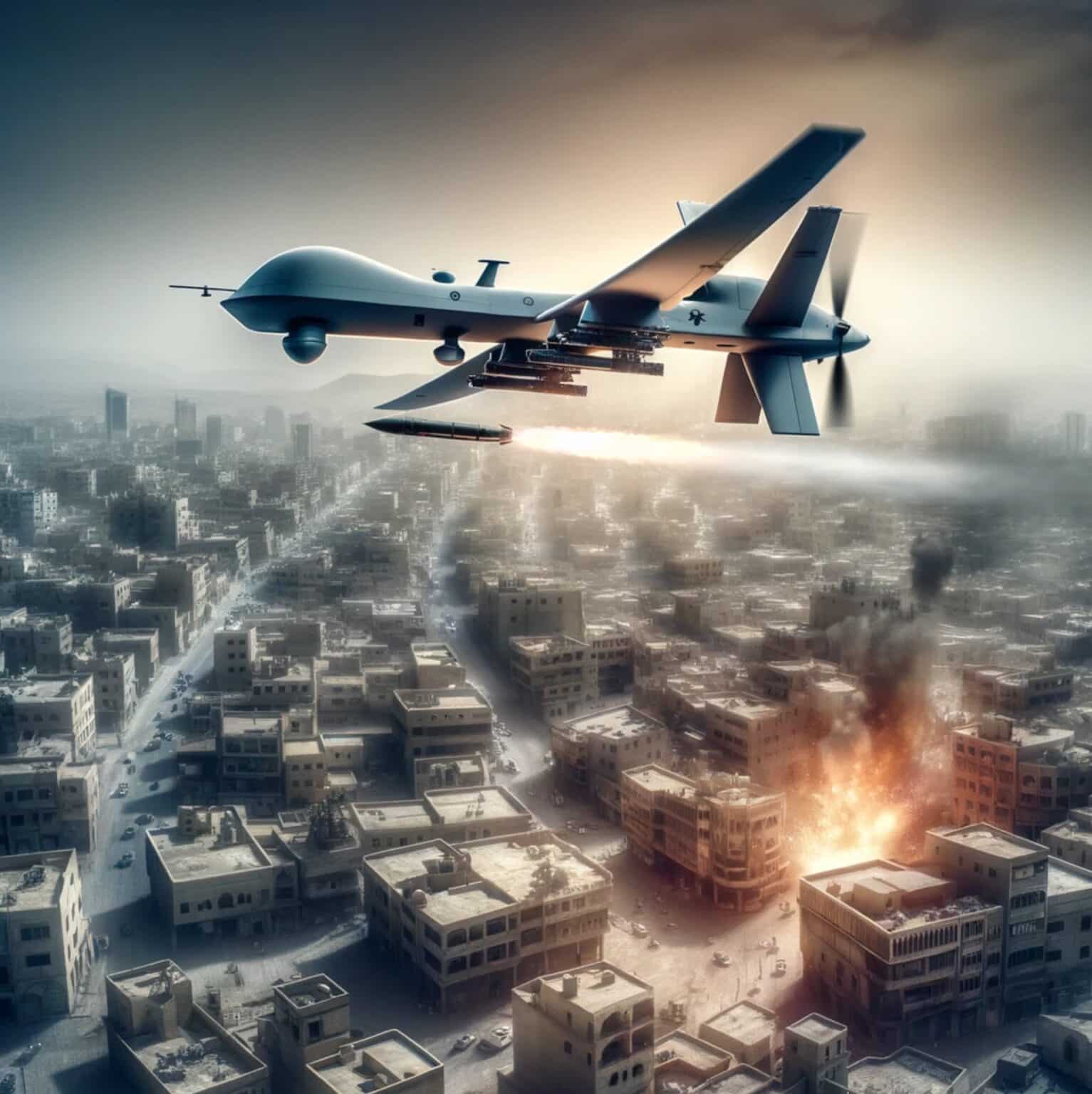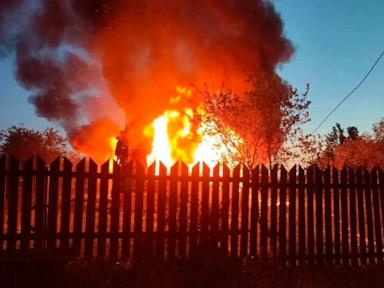
Cross-border drone strikes executed by Ukrainian forces against Russian targets represent a fundamental shift in asymmetric warfare, moving from tactical disruptions to a calculated strategy of systemic friction. When regional authorities report isolated incidents—such as the strikes killing four and wounding twelve individuals across Belgorod, Bryansk, and Kursk—conventional media focuses on the immediate human toll. A strategic analysis requires looking past the localized trauma to examine the underlying operational calculus. These operations do not aim for territorial conquest; they exploit the cost-asymmetry curve of modern air defense to degrade Russia’s domestic stability, strain logistics, and force the redeployment of high-value defensive assets away from the front lines.
To understand the strategic utility of these long-range strikes, one must analyze the interaction between three operational variables: targeting economics, air defense saturation thresholds, and the psychological friction generated within the target state's logistics hubs.
The Microeconomics of Asymmetric Attrition
The core framework governing Ukraine's deep-strike strategy is the cost-imbalance ratio between the offensive weapon and the defensive countermeasure. Conventional military doctrine dictates that a defender must protect 100% of high-value assets, whereas an attacker needs to succeed only occasionally to achieve a strategic effect. In the context of drone warfare, this dynamic is amplified by orders of magnitude.
The Cost Function of Air Defense Saturation
The financial and material consumption rate heavily favors the attacker. Ukraine primarily utilizes low-cost, long-range uncrewed aerial vehicles (UAVs) compiled from commercial-off-the-shelf components, carbon-fiber frames, and localized guidance systems.
- Attacker Unit Cost: A typical long-range strike drone costs between $20,000 and $50,000 to manufacture.
- Defender Unit Cost: The kinetic interceptors required to down these platforms—such as missiles fired from Pantsir-S1, Tor-M2, or S-400 systems—range from $100,000 to over $1,000,000 per engagement.
When Russia fires a million-dollar interceptor to destroy a $30,000 drone, Ukraine achieves an economic victory regardless of whether the drone hits its physical target. This creates a structural deficit in Russia’s air defense stockpile. Because global manufacturing capacities for complex surface-to-air missiles (SAMs) face strict supply chain bottlenecks, Ukraine’s production rate of low-tier attrition assets outpaces Russia’s capacity to replenish precision interceptors.
Asset Degradation and Maintenance Cycles
Beyond the immediate missile expenditure, the continuous operation of radar systems and missile launchers introduces severe mechanical friction. Russian air defense crews must maintain 24/7 readiness across thousands of square kilometers.
This operational tempo accelerates the Mean Time Between Failures (MTBF) for critical radar components, search systems, and vehicular platforms. By forcing Russian systems to remain permanently active, Ukraine induces systemic wear-and-tear that cannot be easily repaired under international sanctions blocking access to advanced Western microelectronics.
The Three Pillars of Targeted Disruption
The tactical execution of cross-border strikes targets specific nodes to yield distinct strategic outcomes. Rather than launching haphazard attacks, Ukraine focuses its deployments on three distinct target profiles.
[Target Profiles]
 ├── Logistics and Supply Hubs (Rail networks, fuel depots, assembly points)
 ├── Economic Infrastructure (Refineries, processing plants, export terminals)
 ├── Command and Force Protection (Airfields, radar installations, garrison points)
1. Logistics and Supply Chain Interdiction
The strikes in border regions like Belgorod directly intersect with the logistical lifelines of the Russian military. Western military districts act as the primary staging grounds, ammunition dumps, and hospital hubs for the ongoing offensive in eastern Ukraine.
When a drone strikes a logistical node, it forces a complete halt in local rail and road transport. The immediate casualties often include specialized personnel—mechanics, engineers, and logistics coordinators—whose replacement cost is significantly higher than that of standard infantry. The resulting delays cascade down the supply chain, leaving frontline units short on fuel, ammunition, and rations during critical operational windows.
2. The Redistribution of Air Defense Infrastructure
Russia possesses a finite number of advanced air defense systems. Prior to the escalation of deep-theater drone strikes, these assets were heavily concentrated along the active front lines to deny Ukrainian air power operational freedom, and around critical strategic sites like Moscow and St. Petersburg.
By systematically striking secondary and tertiary targets in Bryansk, Kursk, and Krasnodar, Ukraine introduces a severe optimization dilemma for Russian high command. To protect provincial infrastructure, oil refineries, and regional administrative centers, Russia must pull Pantsir and Tor systems away from the active combat zone.
This creates gaps in short-range air defense coverage along the front line. Ukrainian reconnaissance and strike drones can then exploit these gaps to target Russian artillery, electronic warfare units, and armored vehicles with much higher success rates.
3. Domestic Friction and Political Cost
Autocratic governance models rely on an implicit social contract: the population yields political autonomy in exchange for security and stability. Constant, unpredictable drone strikes inside Russian territory break this illusion of absolute security.
The civilian casualties and injuries reported in these border sectors act as a force multiplier for domestic instability. Every strike requires regional governors to implement states of emergency, evacuate settlements, and divert local economic resources toward reconstruction and compensation. This turns the conflict from a distant state enterprise into an immediate, localized risk for the Russian populace, complicating domestic mobilization and conscription efforts.
Methodological Limitations and Strategic Risks
A rigorous evaluation of Ukraine's drone campaign reveals critical constraints that prevent it from becoming a decisive, standalone tool for victory.
The Problem of Scale and Mass
While asymmetric strikes inflict real friction, they lack the raw kinetic mass required to alter territorial control. A payload carried by a long-range UAV typically varies between 20 and 50 kilograms of high explosives. In comparison, a single standard artillery barrage or a FAB-500 glide bomb delivers far greater destructive energy.
Ukraine cannot manufacture or launch drones in the quantities necessary to achieve total structural destruction of Russia’s industrial base. Consequently, these strikes function exclusively as an attrition mechanism rather than an offensive breakthrough enabler.
Electronic Warfare Adaptability
The electromagnetic spectrum remains a highly fluid environment. Russia maintains some of the most sophisticated electronic warfare (EW) architectures globally. Systems like the Pole-21 and Krasukha-4 can jam Global Navigation Satellite System (GNSS) signals across entire border sectors.
Ukrainian Drone Deployment -> Russian EW Detection -> Spoofing/Jamming Active -> Flight Path Deviation -> Suboptimal Target Impact
As Russian EW adaptations mature, the circular error probable (CEP) of Ukrainian drones increases. Drones diverted from their primary military or industrial targets by electronic countermeasures often crash into civilian residential zones. While this still inflicts economic and psychological costs, it fails to achieve the primary military objective of degrading Russia's offensive capacity.
The Airfield Targeting Vector: A Case Study in Material Attrition
The most operationally significant application of this drone strategy is not the striking of border cities, but the targeting of military airfields deep within Russian territory, such as those in Voronezh, Lipetsk, and Rostov.
Russian tactical aviation relies heavily on Sukhoi Su-34 and Su-35 aircraft to launch long-range glide bombs against Ukrainian defensive lines. These aircraft must park, refuel, and rearm at established airbases within a 300-kilometer radius of the border. Because Russia lacks sufficient hardened aircraft shelters (HAS) at its forward operating bases, these multi-million-dollar airframes sit exposed on open tarmacs.
A coordinated strike using dozens of low-cost drones equipped with cluster munitions can damage or destroy multiple aircraft simultaneously. Shrapnel punctures soft skin surfaces, ruins jet engines, and ignites fuel infrastructure.
The strategic dividend of a single successful airfield strike eclipses months of localized border skirmishes. It permanently removes irreplaceable aviation platforms from the Russian order of battle and forces tactical aircraft to base further inland, increasing flight times, reducing fuel efficiency, and decreasing the daily sortie rate over the front lines.
Tactical Playbook: Maximizing Deep-Theater Drone ROI
To maintain the operational viability of this asymmetric campaign, Ukraine must transition from sporadic regional harassment to a synchronized, high-density targeting model. The future utility of these strikes depends on executing a three-part operational adjustments playbook.
First, strike packages must utilize mixed-payload swarms. Launching homogenous groups of drones allows Russian air defense radars to easily classify and prioritize targets. By mixing low-cost decoy drones that mimic the radar cross-section of larger platforms with low-altitude, terrain-following strike variants, Ukraine can intentionally trigger Russian air defense systems into wasting their remaining missile inventories on valueless targets, clearing a path for the primary munitions.
Second, targeting priorities must shift strictly toward the Russian energy-logistics nexus. While striking regional administrative buildings carries symbolic weight, targeting electrical substations feeding railway networks and oil-fractionation towers yields tangible economic paralysis. Disrupted rail lines stall the movement of heavy armor, while damaged fractionation towers cannot be replaced without Western engineering components, creating a long-term drag on Russia's state revenue.
Finally, guidance mechanisms must evolve past static GPS coordinates, which are highly vulnerable to electronic jamming. Integrating low-power, edge-AI computer vision for the terminal homing phase allows drones to recognize target silhouettes autonomously even when completely cut off from satellite communications. This modification ensures high accuracy in heavily contested electronic environments, securing the maximum possible material destruction per dollar spent on production.