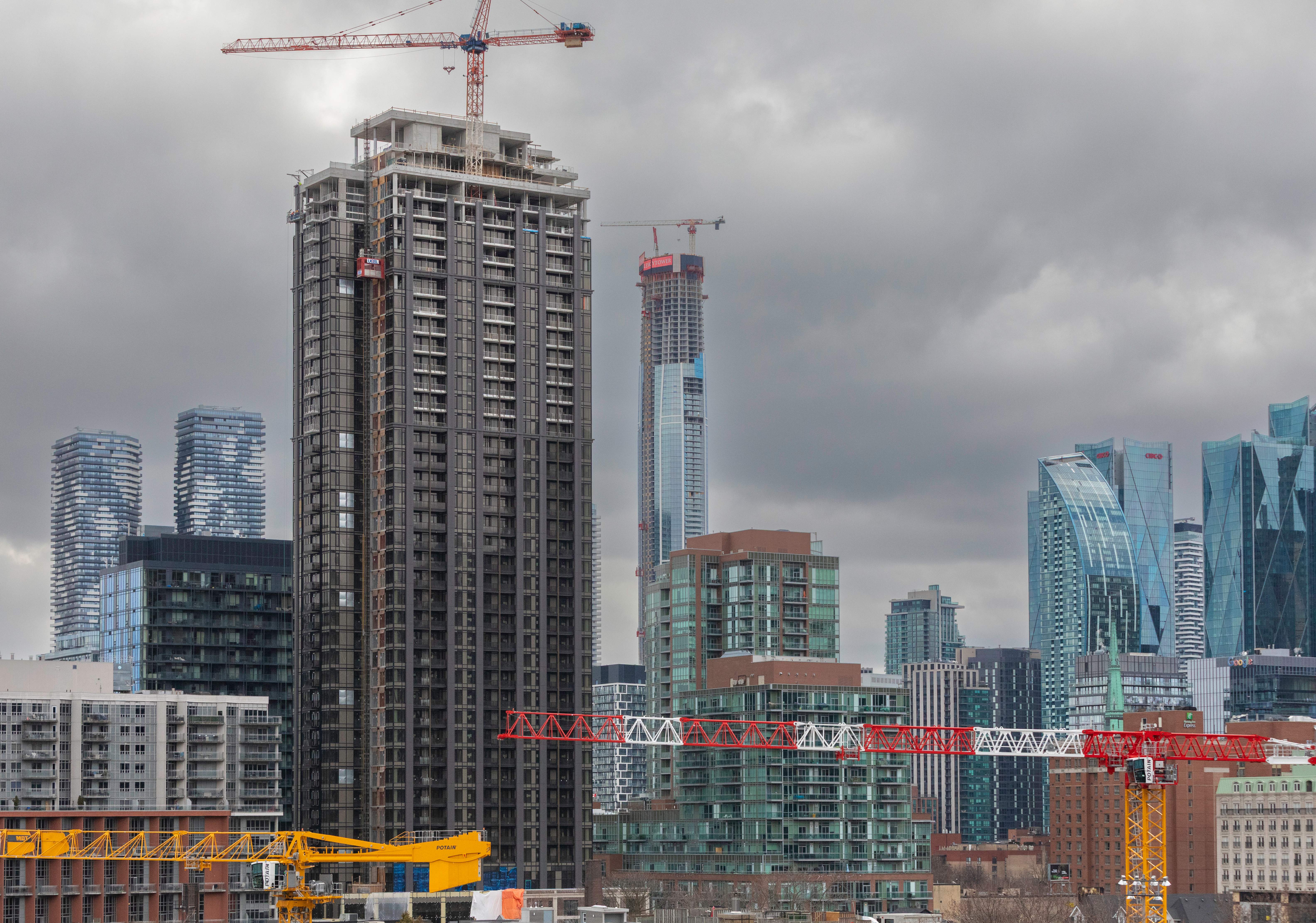
The Ontario government is moving to temporarily waive the provincial portion of the Harmonized Sales Tax (HST) on new housing starts, a move designed to shock a stagnant construction industry back to life. It sounds like a victory for the middle class. On paper, removing an 8% tax burden from a $800,000 home represents a $64,000 sticker-price reduction. However, a deep dive into the mechanics of Ontario’s real estate market reveals that this one-year tax holiday is less about making homes affordable for families and more about preventing a total collapse of the high-rise development pipeline. Developers are currently sitting on thousands of approved units they cannot afford to build, and this policy is the emergency oxygen mask being lowered from the cockpit.
The math of the modern build is broken. For the better part of three years, the industry has been trapped in a pincer movement of high interest rates and exploding material costs. When you add the layer of government taxes—which can account for nearly 30% of the price of a new home in the Greater Toronto Area—the numbers simply do not "pencil." If it costs a developer $1,100 per square foot to build and market a condo, but the market will only pay $1,050, the project dies in the boardroom. Ford’s plan to pause the HST is a direct attempt to bridge that specific $50 gap.
The Developer Paradox
Critics often argue that tax breaks for new builds are nothing more than a gift to wealthy developers. This perspective ignores the reality of project financing. Most large-scale residential projects require 70% to 80% of units to be pre-sold before a bank will release the construction loan. Buyers have disappeared because the combination of high prices and high mortgage rates makes the monthly carry impossible.
By removing the provincial HST, the government isn't necessarily putting money in a developer's pocket. They are trying to lower the "break-even" point. If the developer can lower the asking price because the tax burden is gone, they might finally hit that 80% pre-sale threshold. This isn't about profit margins. It's about liquidity. Without this intervention, we are looking at a three-to-five-year "supply hole" where nothing new gets finished because nothing new was started in 2025 or 2026.
The One Year Trap
The most contentious part of the proposal is the one-year duration. Construction is not a fast industry. You cannot decide to build a 40-story tower today and have shovels in the ground by next month. The permitting process alone in municipalities like Mississauga or Toronto can take years. A one-year waiver creates a frantic "gold rush" mentality that may backfire.
- Labor Shortages: Every developer will try to break ground simultaneously to qualify for the tax window. This will drive up the cost of skilled trades—plumbers, electricians, and framers—potentially neutralizing the 8% savings offered by the tax break.
- Artificial Deadlines: Short-term tax policy often leads to rushed work. If a project must reach a certain stage of completion to qualify for the rebate, there is a massive incentive to cut corners or bypass rigorous quality checks.
- The Cliff: What happens in month 13? If the tax returns, demand will crater again, creating a boom-bust cycle that prevents long-term stability in the housing market.
The Missing Federal Piece
Ontario is pulling its lever, but the provincial HST is only part of the equation. The federal government holds the larger share of the tax. While Ottawa has signaled a willingness to waive the GST on purpose-built rentals, they have been far more hesitant to do the same for ownership housing. This creates a fractured policy environment. A buyer looking at a new condo still faces a significant federal tax bite, even if the provincial portion is gone.
True affordability requires a synchronized retreat from the "housing as a cash cow" model that all three levels of government have embraced for decades. Municipalities have doubled and tripled development charges. The federal government uses the GST to pad the treasury. The province uses the HST. You cannot tax a product like a luxury good and then wonder why it is no longer a basic necessity.
Land Values and the Absorption Problem
There is a dark side to these incentives that rarely makes the front page. When the government lowers the tax burden on a piece of land, the value of that land often rises to meet the new margin. If a developer knows they can save $50,000 in taxes, they might be willing to pay $40,000 more for the raw land.
This is known as the "absorption effect." Incentives meant for the end-user frequently get absorbed by the layers of the supply chain before the homebuyer ever sees a contract. Unless there are strict price controls—which the Ford government has shown zero interest in implementing—there is no guarantee that a single cent of the HST waiver will result in a lower purchase price for a young family. It is just as likely to be absorbed by land speculators and rising material costs.
The Infrastructure Gap
Even if the tax break works and starts a construction frenzy, Ontario faces a secondary crisis: we are building houses where there is no capacity to support them. Sewage treatment plants, electrical grids, and transit lines are at their limits. By incentivizing a massive spike in starts over a 12-month period, the province is putting immense pressure on municipal infrastructure that is already underfunded.
Many towns have implemented "allocation caps," meaning even if a developer has the money and the tax break, the city won't let them build because the pipes aren't big enough. A tax break doesn't fix a lack of sewers. If the Ford government wants to move the needle, they need to pair tax relief with massive, direct investment in the "boring" infrastructure that actually allows a neighborhood to exist.
The Credibility Gap
We have seen versions of this before. Whether it was the expansion of the Greenbelt or the shifting rules around developer handshakes, the public is rightfully skeptical of any housing policy that arrives as a "quick fix." The housing crisis was thirty years in the making. It was built on a foundation of low interest rates, NIMBYism, and a transition of housing from a shelter into a speculative financial asset.
A one-year tax holiday is a tactical maneuver, not a strategic overhaul. It addresses the "symptom" (high prices and low starts) without touching the "disease" (the financialization of residential real estate). To truly fix the market, we would need to see a permanent removal of HST on all primary residences, a total ban on corporate ownership of single-family homes, and a massive re-investment in social housing.
Instead, we are getting a temporary discount. It’s better than nothing, but we shouldn’t mistake a coupon for a cure. The industry will take the win, the developers will secure their loans, and the provincial government will claim they are doing everything possible. Meanwhile, the actual cost of living continues its upward trajectory, barely slowed by a temporary adjustment to a tax code that was never designed for a crisis of this magnitude.
Check the fine print of your purchase agreement before you celebrate. If the developer has an "adjustment clause" regarding taxes, that $64,000 "savings" might already be earmarked for something else.