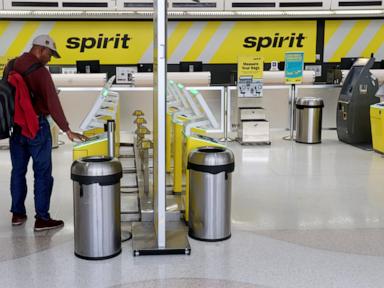
The fluorescent lights of Terminal 4 never sleep, but around 2:00 AM, they seem to hum a little louder, casting a sterile, unforgiving glow on the faces of the exhausted.
Consider a hypothetical traveler named Maria. She is sitting on an overturned suitcase near the baggage claim, her phone battery hovering at four percent. Next to her, her seven-year-old son is asleep on a pile of oversized sweatshirts. Maria had saved for eleven months to buy two tickets from Chicago to Fort Lauderdale. It wasn’t a luxury vacation; it was a chance for her son to see his grandmother before a major surgery. She paid $118 round-trip, total.
Then came the text message. Canceled. No crew. No backup planes. No options.
For over a decade, ultra-low-cost carriers—most notably Spirit Airlines—operated as the chaotic, unloved, yet deeply essential safety valve of American travel. They were the punchline of late-night talk show jokes. They charged you for water. They measured your carry-on bag in a metal box that felt designed to humiliate you.
But they did something miraculous: they made flight democratic. They allowed people who earned minimum wage to cross the country in three hours instead of three days.
Now, that safety valve is broken. As Spirit struggles with severe financial headwinds, engine recalls, and the fallout of a blocked merger, the airline is slashing routes and scaling back capacity. The industry term for this is "capacity discipline."
The human term for it is isolation.
The Great Shrinking Safety Valve
To understand how we got here, we have to look past the yellow airplanes and look at the brutal math of modern aviation.
Ultra-low-cost airlines rely on a simple premise: keep the planes in the air constantly, pack them to the absolute limit, and unbundle every single service. You pay for the seat. If you want a seatbelt extension, a soda, or the right to put a backpack in the overhead bin, you pay extra.
It was an uncomfortable, transactional relationship, but it worked because it drove down fares across the entire industry. Economists call this the "Spirit Effect." When a budget carrier enters a market, the legacy airlines—the Deltas, Uniteds, and Americans of the world—are forced to lower their own prices to compete. They introduced "Basic Economy" purely to stop budget airlines from stealing their budget-conscious customers.
But the ecosystem has shifted.
A massive recall of Pratt & Whitney Geared Turbofan engines grounded dozens of Spirit’s Airbus planes. Imagine running a delivery business where a third of your trucks are suddenly locked in a garage for months because of a manufacturing defect you didn’t cause. That is the reality the carrier faced.
At the same time, operating costs skyrocketed. Pilot wages went up—rightfully so—and fuel prices remained volatile. The budget model only works when costs are razor-thin. When those costs rise, the math collapses.
When Spirit announced it was cutting dozens of routes out of major hubs this summer, it didn't just mean fewer yellow planes in the sky. It meant the permanent erasure of the price floor.
The Invisible Cost of "Upgrading"
With the budget alternative crippled, travelers are being pushed toward the legacy carriers. The temptation is to think, Good, now people will get better service.
But that ignores the financial reality of the American household.
If you look at the numbers for a standard domestic flight this summer, the gap is staggering. Where a budget carrier might have charged $65 for a one-way ticket to a vacation destination, the legacy equivalents are frequently double or triple that price for prime summer slots.
For a family of four, that isn't a minor inconvenience. It is a mathematical impossibility. It is the difference between a summer memory and a week spent inside a hot apartment.
Let us trace what happens when competition vanishes in a specific market. Take a route like Myrtle Beach to Detroit. For years, budget airlines dominated these secondary leisure markets. They flew vacationers directly, cheaply, and frequently.
When a low-cost carrier pulls out of an airport like that, the legacy airlines don’t just step in and offer the same flights at the same prices. They don’t have to. Instead, the route often disappears entirely, replaced by multi-stop itineraries that route travelers through massive hubs like Atlanta or Charlotte.
The trip takes twice as long. It costs twice as much.
The industry insists that the market is normalizing, that consumers are demanding a more premium experience. They point to the high sales of first-class seats and premium economy upgrades as proof that Americans want comfort.
But that data is skewed by the affluent. It completely ignores the silent majority who are simply priced out of the sky.
The Myth of the Easy Alternative
Many industry analysts point to other low-cost options. "Just fly Southwest," they say. Or Frontier. Or Allegiant.
But the budget airline sector is not a monolith, and swapping one for another is rarely seamless.
Southwest Airlines, while historically a disruptor, no longer operates on an ultra-low-cost model. Their bags fly free, their seats have decent legroom, but their base fares have crept steadily upward to match the legacy airlines on many major routes. They are a major carrier dressed in a casual shirt.
Frontier Airlines is attempting to adapt, but they are rewriting their own playbook. They are shifting away from the major hubs where they used to battle Spirit head-to-head, focusing instead on underserved markets and changing how they bundle their fees.
Allegiant operates on a completely different philosophy. They don't want to fly you from Chicago to Los Angeles. They want to fly you from Rockford, Illinois, to Punta Gorda, Florida, twice a week. If your flight gets canceled on a Tuesday, the next available plane might not be until Friday.
For the traveler who needs to get from Point A to Point B for a specific weekend event—a wedding, a funeral, a brief custody visit—these alternatives are a mirage.
The reality is that the ultra-cheap, highly connected network that defined the 2010s is disintegrating.
The Sunset of the Impulse Trip
There was a time, not long ago, when college students, young couples, and blue-collar workers could open an app on a Thursday evening and decide to spend the weekend in a city a thousand miles away. It cost less than a nice dinner out.
That era changed the geography of our relationships. It allowed long-distance couples to survive. It allowed immigrants to visit their hometowns more than once a decade. It allowed people to explore a country that often feels too vast to navigate without a massive bank account.
We are entering a period of forced immobility for a significant portion of the population.
The travel industry is celebrating record revenues and high passenger volumes, but those numbers mask a deeper divide. The sky is becoming exclusive again. It is returning to the era of the mid-twentieth century, a time when flying was a luxury event for the wealthy, and everyone else took the bus.
Back at the terminal, Maria’s phone finally dies. The screen goes black, cutting off the useless automated chat assistant that was offering her a $10 voucher for an airport restaurant that closed three hours ago.
She looks at her sleeping son. She looks at the departure board, which has turned into a sea of red text and delayed times. She will eventually buy a ticket on another airline for the next morning. It will cost her $340—money meant for her electricity bill next month. She will pay it because her mother is waiting, and because family isn't something you budget away.
The planes will keep taking off. The legacy carriers will report stellar quarterly earnings to their shareholders, boasting about increased yields and premium seat monetization. The travel blogs will review the latest business class pods with their lie-flat seats and artisanal champagne.
But down on the ground, the world is getting wider again, the distances are growing longer, and the cost of staying connected is becoming a price that millions simply cannot afford to pay.