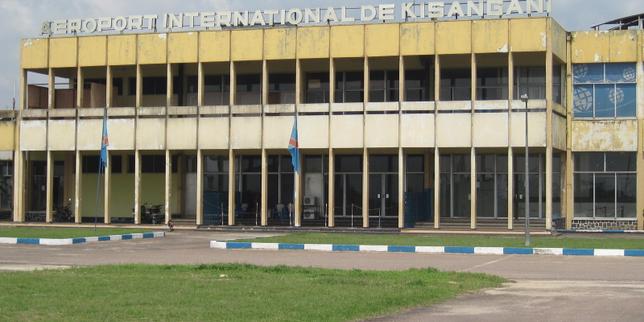
The pre-dawn silence at Goma International Airport ended not with the roar of a jet engine, but with the high-pitched whine of a commercial motor modified for murder. When the M23 rebels launched their latest drone strike against the North Kivu capital, they didn't just damage a few aircraft or pockmark a runway. They signaled the definitive collapse of traditional territorial defense in the Democratic Republic of Congo. For years, the Congolese military (FARDC) and their UN counterparts relied on the geography of the Kivu mountains and a monopoly on airpower to maintain a fragile status quo. That monopoly is dead.
This isn't a skirmish over a hilltop anymore. It is a technical evolution that the Kinshasa government is nowhere near ready to handle. While the international community focuses on the diplomatic back-and-forth between Kinshasa and Kigali, the tactical reality on the ground has shifted toward low-cost, high-impact remote warfare. These aren't the multimillion-dollar Predators seen in Middle Eastern theaters. These are off-the-shelf units, modified with 3D-printed release mechanisms and mortar shells, capable of bypassing the heavy artillery and infantry lines that have defined this conflict for three decades.
The Asymmetric Nightmare over North Kivu
The strike on Goma’s airport exposes a glaring hole in the regional security net. Military analysts have long tracked the M23’s transition from a ragtag bush insurgency into a sophisticated paramilitary force, but the integration of unmanned aerial systems (UAS) changes the math for every civilian and soldier in the region. When an insurgent group can strike a strategic transport hub from miles away with a device that costs less than a used Toyota, the concept of a "secure zone" becomes a fantasy.
Goma is a logistical bottleneck. It is the lungs of Eastern Congo, breathing in aid and breathing out the minerals that power the global tech economy. By targeting the airport, M23 isn't just trying to hit a plane; they are testing the FARDC’s ability to protect the only reliable entry point for reinforcements and supplies. The psychological impact outweighs the physical debris. If the airport isn't safe, the city isn't safe. If the city isn't safe, the entire eastern province is effectively severed from the central government’s control.
Hardware of the Insurgency
How did a rebel group acquire the technical bypass to leapfrog over conventional defenses? The answer lies in the democratization of terror tech. We are seeing a "Ukraine effect" in Central Africa. The rapid innovation in small-scale drone tactics seen in Eastern Europe has provided a blueprint for non-state actors globally.
The M23 has moved beyond simple reconnaissance. They are now employing "loitering munitions"—cheap drones that can hover over a target until a high-value opportunity appears. Defending against this requires sophisticated electronic warfare suites, signal jammers, and point-defense systems that the FARDC simply does not possess in any meaningful quantity. Even the SAMIM (Southern African Development Community Mission in DRC) forces find themselves outpaced by the agility of these small-unit tactics.
The Failure of the Conventional Shield
For decades, the strategy in the DRC has been "static defense." You hold the town, you hold the road, you hold the airport. But you cannot hold the sky against a swarm. The United Nations mission, MONUSCO, has spent billions on a peacekeeping infrastructure designed for the 20th century. They have heavy white SUVs and armored personnel carriers. These are useless against a plastic drone flying at 500 feet, guided by a pilot sitting in a forest thicket five miles away.
The irony is thick. The very minerals being fought over in the hills around Goma—cobalt, tantalum, tin—are the essential components of the batteries and circuit boards that make these drones possible. The ground is being reclaimed by the very technology it helped birth.
Why Air Superiority is a Myth
Kinshasa recently touted its purchase of Chinese-made CH-4 combat drones. On paper, these should give the government the edge. They are large, can carry heavy payloads, and stay airborne for hours. However, in the dense, mountainous terrain of North Kivu, these "big" drones are often less effective than the rebels' "small" ones. Large drones require runways, massive logistical tails, and clear skies. The M23’s hobbyist drones require a backpack and a cleared patch of dirt.
Furthermore, the M23 has demonstrated an uncanny ability to suppress the government's aerial advantages. There are credible reports of sophisticated man-portable air-defense systems (MANPADS) being used to keep FARDC helicopters at bay. When you combine ground-to-air missiles with offensive drone strikes, you have effectively created a "no-fly zone" for the government over its own territory.
The Kigali Connection and the Denial Game
You cannot discuss M23’s technical prowess without looking at the border. The Congolese government and UN experts have repeatedly pointed the finger at Rwanda, alleging direct support for the rebels. Kigali denies this with practiced regularity. Yet, the sudden appearance of advanced jamming equipment and coordinated drone strikes suggests a level of state-sponsored training and procurement that a rebel group doesn't just stumble upon in the jungle.
This isn't just a local feud. It is a proxy war that has entered the digital age. If a neighboring state is providing the telemetry data and the hardware, the conflict is no longer an internal Congolese matter. It is an interstate aggression masked by the deniability of a proxy force. The international community’s refusal to impose hard costs for this technical proliferation has only emboldened the actors involved.
The Human Cost of Precision
While the headlines focus on the airport, the real terror is felt in the camps for internally displaced persons (IDPs) surrounding Goma. These camps, like Lushagala, are now within the flight path of these drones. The "precision" of a modified hobby drone is a myth; they are often used as terror weapons, dropped blindly to cause panic.
When a mortar shell falls from the sky into a crowded market or a displacement camp, there is no siren. There is no warning. The psychological toll on a population that has already endured thirty years of war is immeasurable. The drone is the ultimate weapon of the bully—it allows for killing without the risk of looking your victim in the eye.
A Military in Disarray
The FARDC’s response has been characterized by a mix of desperation and incompetence. Instead of modernizing their electronic warfare capabilities, the government has turned to "Wazalendo" (patriot) armed groups—local militias that are often as much a threat to the civilian population as the M23. Arming more people on the ground does nothing to address a threat coming from the air.
The military command in Kinshasa is often disconnected from the reality in Goma. Corruption eats away at the procurement budgets. Money meant for anti-drone tech often ends up in offshore accounts or diverted to political campaigns. The soldiers on the front lines are left to watch the skies with nothing but small arms fire, which is about as effective against a drone as a flyswatter against a thunderstorm.
The Tech Gap
To fix this, the DRC needs a total overhaul of its border security and an immediate investment in passive defense systems. This includes:
- Aeroscope-style detection: Technology that can identify drone signals and locate the pilot.
- Directed Energy Weapons: While expensive, these are the only long-term solution for neutralizing low-cost swarms.
- Hardened Infrastructure: The airport in Goma needs drone-resistant hangars and shielded fuel storage, not just more soldiers at the gate.
The likelihood of this happening is slim. The state is too fractured, and the bureaucracy is too slow.
The Mineral Trap
The world wants Congo’s minerals but doesn't want Congo’s problems. We see the supply chain as a spreadsheet, ignoring the fact that the lithium in our pockets might have been extracted under the shadow of a rebel drone. The companies operating in the region—the miners, the refiners, the logistics giants—have a vested interest in a "controlled" level of instability. It keeps the prices volatile and the oversight weak.
But the drone strikes on Goma threaten that very extraction. If the M23 can shut down the airport at will, they can shut down the export routes. They are holding the global tech industry’s raw materials hostage with the very technology that industry produced. It is a feedback loop of the most violent kind.
The Strategic Shift
We have to stop looking at the M23 as a remnant of old wars. They are a vanguard of a new type of conflict. In this landscape, territory is secondary to the ability to disrupt. You don't need to occupy the airport if you can make it unusable. You don't need to defeat the army if you can make their high-priced equipment irrelevant.
The FARDC and its allies are playing a game of checkers while the M23, backed by sophisticated regional interests, is playing a game of 3D chess with remote-controlled pieces. The international response has been to call for "restraint." Restraint is a hollow word when the bombs are falling from a clear blue sky.
The strike on Goma wasn't a one-off event. It was a proof of concept. The M23 now knows they can hit the most sensitive targets in Eastern Congo with impunity. They have proven that the government’s "fortress" is a house of cards with an open roof. As long as the border remains porous and the technology remains accessible, the skies over North Kivu will belong to whoever has the most batteries and the least conscience.
Kinshasa needs to stop looking for a diplomatic exit and start looking at its own sky. The era of the "boots on the ground" monopoly is over; the future of the Congo will be decided by who controls the air, and right now, that isn't the Congolese state. Reach out to your local defense ministry contacts and ask why the "peacekeeping" budget doesn't include a single signal jammer.