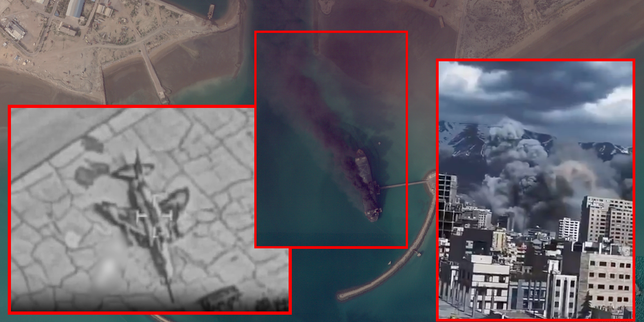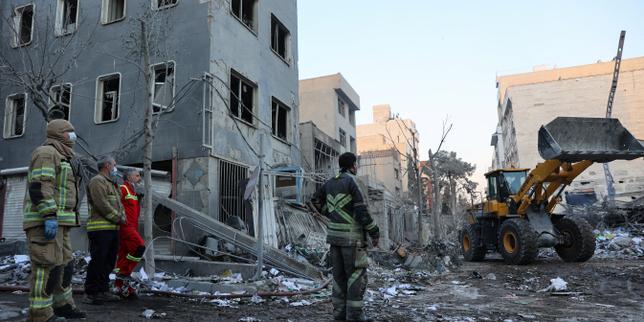
The sirens in Tehran aren't just a local alarm anymore. They’re the soundtrack to a fundamental shift in how global power is projected in the Middle East. When the Israeli Air Force launched its latest wave of strikes against military targets in the Iranian capital, it wasn't just a tactical move. It was a loud, clear signal that the old rules of "shadow wars" are officially dead. We’re now in an era of direct, high-stakes confrontation.
If you’ve been following the headlines, you know the situation is fluid. But the real story isn't just about the explosions. It's about the political positioning happening behind the scenes in Washington. Marco Rubio, now a central figure in American foreign policy, isn't pulling his punches. His warning that the "most severe strikes" from the United States are still on the horizon suggests that the Israeli action might just be the opening act of a much larger production.
Why the Tehran strikes change everything
For decades, Israel and Iran fought through proxies. It was a game of chess played with Hezbollah in Lebanon, Hamas in Gaza, and various militias in Syria. That game ended the moment Israeli jets flew directly into Iranian airspace to hit Teshark and other sensitive military installations.
This latest operation targeted drone manufacturing sites and missile storage facilities. These aren't random choices. Israel is systematically dismantling the infrastructure that Iran uses to project power across the region. By hitting Tehran directly, Israel is telling the Iranian leadership that their sovereign soil is no longer a sanctuary. It's a high-stakes gamble.
The Iranian response has been a mix of downplaying the damage and promising "crushing" retaliation. Honestly, they’re in a tough spot. If they don't respond, they look weak to their internal hardliners and regional allies. If they do respond, they risk a full-scale war that their struggling economy and aging air defenses might not handle.
The Rubio factor and the American shadow
While Israeli pilots were over Tehran, the rhetoric in Washington took a sharp, aggressive turn. Marco Rubio’s statement about "the most severe strikes" yet to come from the U.S. isn't just tough talk for a domestic audience. It represents a pivot in American strategy.
For a long time, the U.S. tried to play the role of the "restrainer." The goal was to keep Israel's response proportional to avoid a regional conflagration. That's changing. The current sentiment in the halls of power suggests that the U.S. is preparing for direct kinetic action if Iran crosses certain "red lines," specifically regarding its nuclear program or any direct attack on American assets in the Gulf.
You have to look at the timing. These strikes happened while the U.S. is reinforcing its carrier strike groups in the Mediterranean and the Red Sea. This isn't just a show of support for Israel. It’s a preparation for a multi-front conflict. Rubio’s comments imply that the U.S. has a target list of its own, likely focusing on the Islamic Revolutionary Guard Corps (IRGC) infrastructure and leadership.
What the media is missing about the timing
Most pundits focus on the immediate "tit-for-tat." They’re missing the seasonal and political window here. Winter is coming, and with it, shifts in energy demands and naval maneuverability in the Strait of Hormuz. Iran knows that its biggest leverage is the global oil price. If they can choke the Strait, they can cause global economic chaos.
Israel and the U.S. are moving now to preempt that leverage. By hitting the missile batteries that protect the Iranian coast, they’re making it clear that any attempt to close the Strait will be met with immediate and overwhelming force. It's about taking the board pieces away before the opponent can even move them.
The failure of regional diplomacy
Let’s be real for a second. The diplomatic efforts from European and Gulf nations have basically hit a brick wall. Nobody wants a big war, but nobody has a plan to stop it that doesn't involve one side surrendering its core strategic goals.
The "red lines" have been blurred so many times they don't mean much anymore. Iran's enrichment of uranium continues. Israel's determination to stop a nuclear-armed Iran is absolute. When diplomacy fails, the military takes over the conversation. That's exactly what we’re seeing in Tehran right now. The rockets are doing the talking because the diplomats ran out of things to say.
Strategic consequences for the IRGC
The IRGC is the backbone of the Iranian state. They control the economy, the internal security, and the foreign operations. These strikes specifically hit their "prestige" projects. Losing drone factories isn't just a military setback; it's a blow to their brand.
They’ve spent years telling the Iranian public that they are an untouchable regional superpower. When Israeli missiles hit targets within earshot of the Supreme Leader’s residence, that narrative crumbles. We might see an internal shift in power within Iran as different factions argue over how to handle this humiliation. Some will want to double down on aggression, while others might quietly push for a strategic retreat to preserve the regime's survival.
The role of advanced technology
One thing that stands out in this latest round is the apparent ease with which the Israeli Air Force bypassed Iranian S-300 and other air defense systems. This suggests a massive gap in electronic warfare capabilities. Israel didn't just drop bombs; they likely blinded the entire Iranian radar network before the first jet even crossed the border.
This tech gap is why Rubio’s warning carries so much weight. If Israel can do this, imagine what the full weight of the U.S. military—with its stealth B-21s and massive cyber capabilities—would look like. The "severe strikes" Rubio mentioned wouldn't just be about hitting a few warehouses. They would be about decapitating the command and control structure of the entire Iranian military.
Misconceptions about the "limited" nature of these strikes
Don't buy into the idea that these are "limited" or "precision" strikes meant to avoid escalation. Every missile that hits Tehran is an escalation. We’re in a cycle where each move is designed to be slightly more painful than the last.
People often think these events are isolated. They aren't. They’re part of a long-term campaign to reshape the Middle East. The goal for Israel and its backers is a "New Middle East" where Iran is no longer a regional hegemon. This isn't a weekend operation. It's a years-long strategy coming to a head.
What to watch for in the next 48 hours
The immediate aftermath of these strikes will tell us everything we need to know about the next six months. If Iran responds with a massive ballistic missile barrage, we’re in a hot war. If they respond through their proxies—Hezbollah or the Houthis—it means they’re still trying to avoid a direct confrontation with the U.S.
Watch the price of Brent crude. Watch the movements of the U.S. Fifth Fleet. Most importantly, listen to the language coming out of the White House and the State Department. If they start using phrases like "proactive defense" or "necessary measures to ensure regional stability," it’s a sign that Rubio’s "severe strikes" are moving from the warning stage to the execution stage.
Preparing for the fallout
The reality is that we are closer to a general regional war than we have been in decades. This isn't fear-mongering; it's a sober assessment of the military posture of all involved parties. The buffer zones are gone. The "proxies" are becoming secondary to the main players.
If you have interests in the region or rely on global supply chains, now is the time to assess your risk. The volatility isn't going away. It's becoming the new baseline.
Monitor official government travel advisories and keep an eye on independent military analysts who track satellite imagery. The state-run media on both sides will be filled with propaganda. Look at the damage assessments from neutral sources to see how effective the strikes actually were. Follow the movements of commercial shipping in the Persian Gulf. If tankers start diverting, the market knows something we don't. Stay informed and stay skeptical of "calm" official statements. The situation is moving faster than the news cycle can keep up with.