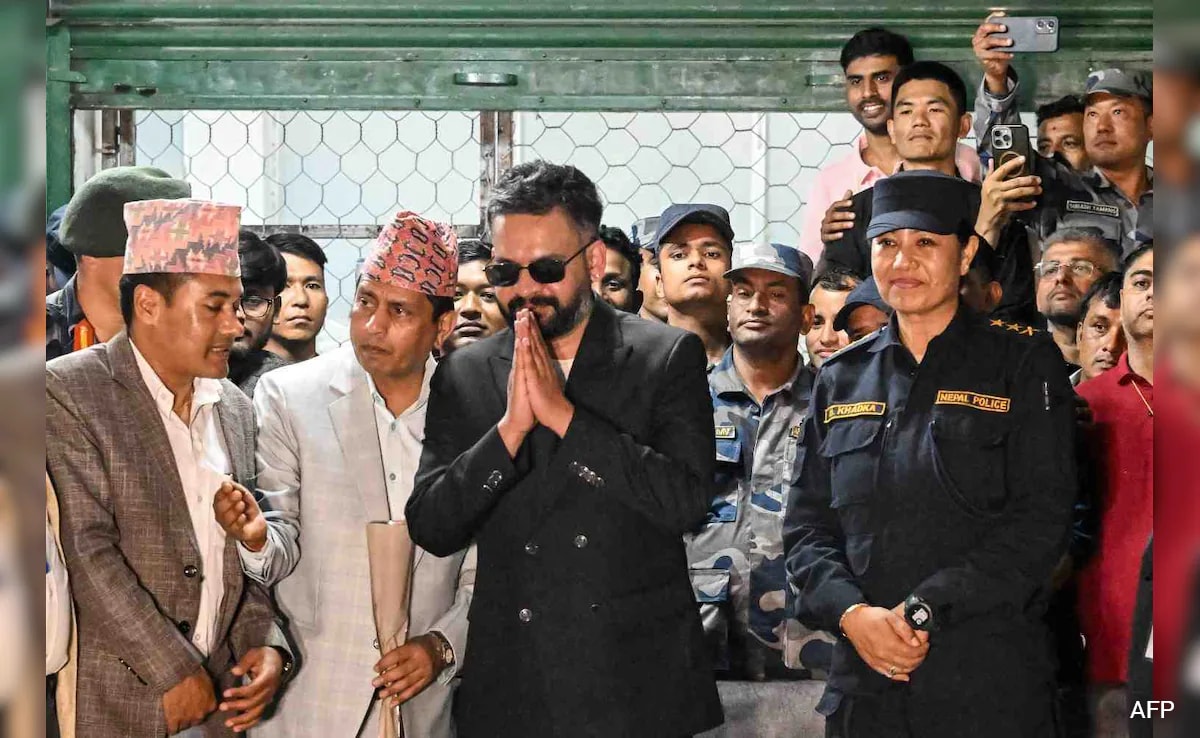
The media loves a "rags to riches" or "engineer turned savior" trope. They see Balendra Shah, the Mayor of Kathmandu, and they vomit out the same tired narrative: an outsider with a catchy rap career and a Bengaluru education somehow stumbled into the Singha Durbar periphery by sheer force of personality. They call it a miracle. They call it the "Balen Effect."
They are wrong.
Balen Shah isn't a political fluke. He is a high-performance algorithmic response to a systemic failure. If you are looking at his rise through the lens of traditional South Asian politics—dynasties, grassroots organizing, and backroom deals—you are looking at a 2026 problem with a 1990s map. The real story isn't about his "untold" journey; it’s about the brutal application of structural engineering to a decaying civic body.
The Bengaluru Myth and the Reality of Technical Arrogance
Most profiles obsess over his time in Bengaluru, suggesting that seeing a "Silicon Valley of India" inspired him to fix Kathmandu. This is lazy correlation. Thousands of Nepalese students study in India; most return to either join the bureaucracy or complain about it on Facebook.
What the "insiders" miss is the specific psychological shift that occurs when a structural engineer looks at a city. To a career politician, a city is a collection of vote banks. To Balen, Kathmandu is a series of failed load-bearing walls and clogged drainage systems.
I have seen dozens of "technocrats" try to enter politics and fail because they try to be politicians. They soften their edges. They try to build "synergy" (a word that should be banned from the English language) with the old guard. Balen did the opposite. He used his technical background not as a resume builder, but as a weapon. He treated the municipal corporation like a construction site where the previous contractor had been stealing the rebar for thirty years.
When he ordered the demolition of illegal structures in the basements of commercial buildings, the "experts" cried about due process. Balen looked at the blueprints. If the permit said "parking" and the reality was "retail shop," the structural integrity of the city’s traffic flow was compromised. It wasn't a political move; it was a corrective maintenance order.
Stop Asking if He is a "Good Leader"
People also ask: "Can Balen Shah change Nepal's national politics?"
This is the wrong question. It assumes that "leadership" is the missing ingredient in Nepal. It isn’t. Competence is.
Nepal has plenty of leaders. It has revolutionary icons, seasoned diplomats, and fierce orators. What it lacks is a person who understands the flow rate of a sewage pipe or the legal nuances of land encroachment without needing a committee to explain it to them.
The "Balen Phenomenon" is actually a rejection of the "leader" archetype. His supporters don't want a father figure; they want a project manager. They want someone who realizes that a city is a machine, and currently, the gears are filled with the sand of corruption. When he wears his signature black sunglasses, he isn't just emulating a rapper; he is signaling a refusal to engage in the "eye contact" politics of the old era—the nods, the winks, the unspoken agreements.
The Digital Fortress vs. The Street Pavement
The competitor piece suggests his social media savvy was his greatest asset. Again, they’re missing the nuance.
Social media didn't just "spread his message." It acted as a decentralized intelligence network. While traditional parties were busy printing brochures and hiring buses for rallies, Balen’s campaign utilized a feedback loop that functioned like a real-time stress test.
He didn't "leverage" (another pathetic buzzword) his followers; he outsourced the monitoring of the city to them. Every citizen with a smartphone became a site inspector. This created a level of accountability that the traditional media—often tied to political funding—could never provide.
Why the Traditional Elite Are Terrified
The panic in the traditional parties—the NC, the UML, the Maoists—isn't because Balen is popular. It’s because he is legally literate.
Most populist outsiders get crushed because they don't know how the machinery works. They get bogged down in litigation. Balen’s background in structural engineering and his team's obsessive focus on municipal bylaws meant that when he struck, he struck with the law as his shield.
Take the Tukucha River restoration project. It wasn't just about the environment. It was a direct challenge to the "untouchable" elite who had built over the river decades ago. By digging up those hidden corridors, he wasn't just uncovering a waterway; he was exposing the literal foundations of corruption.
The Dark Side of the Engineer-Dictator
Let’s be honest: there is a downside to this approach that the fanboys ignore.
The "engineer’s mindset" can be terrifyingly cold. When you view a city as a system to be optimized, humans often become "variables" or "obstructions." The clearance of street vendors is the perfect example. From a flow-efficiency standpoint, they are obstacles. From a human standpoint, they are the poorest members of society trying to survive.
Balen’s approach lacks the "soft" politics of social safety nets. He is a surgeon who doesn't believe in anesthesia. He will cut out the tumor, but he doesn't care if the patient screams. This is the brutal truth of his administration: efficiency often comes at the cost of empathy. If you want the trains to run on time, you have to be comfortable with the person who gets kicked off the platform for being late.
The Failure of the "Untold Story"
The media wants to tell you about his family, his rap lyrics, and his "humble" beginnings. They want to humanize him because a humanized Balen is less threatening to the status quo. If he’s just a "talented kid," he can be co-opted.
But Balen isn't a kid. He’s 35, he’s educated, and he’s angry in a way that is disciplined. His "untold story" isn't about Nepal’s political power; it’s about the obsolescence of the current political class.
The old guard thinks they are in a boxing match. Balen is playing a game of Tetris, and he’s clearing the lines faster than they can drop the blocks.
Practical Advice for the "Next Balen"
If you’re a professional sitting in an office in London, New York, or Bengaluru, thinking you can "save" your home city with your degree: stop.
- Degrees are useless without the grit to be hated. Balen didn't win because he's an engineer; he won because he was willing to be the "villain" to the powerful.
- Master the bylaws. Don't talk about "vision." Talk about Section 4, Paragraph 2 of the Building Code. That is where the power hides.
- Ignore the media. The moment you start trying to sound like a "leader" in a profile piece, you’ve lost. Stay a technician.
The Structural Collapse of the Old Guard
The obsession with Balen's Bengaluru education misses the point of why it matters. It gave him a perspective on urban scale that Kathmandu’s lifelong residents lack. When you see what a city can look like—even with all of Bengaluru's own flaws—you stop accepting "it’s always been this way" as an answer.
The political parties in Nepal are currently trying to "rebrand" to compete with him. They are putting up younger candidates. They are using more TikTok. They are failing.
You cannot fix a structural failure with a fresh coat of paint. The traditional parties are built on patronage. Balen is built on performance. Those two systems cannot coexist. One will eventually cannibalize the other.
The real "untold story" isn't about a rapper who became Mayor. It’s about the death of the charismatic orator and the birth of the civic executioner.
Stop looking for the next "Balen Shah" in the music industry. Look for him in the blueprints of the city's failed infrastructure. Look for the person who is more interested in the diameter of a pipe than the length of a victory speech.
The era of the "leader" is over. The era of the "urban technician" has begun.
Apply the logic. Clear the debris. Don't apologize for the noise.