The assumption that a second Trump administration can replicate the "Maximum Pressure" campaign of 2018 with identical results ignores fundamental shifts in the global energy market, the erosion of Western sanctions efficacy, and the structural evolution of Iran’s "Resistance Economy." A peace deal or a grand bargain is not a matter of personality or "the art of the deal" but a function of power projection versus economic endurance. To understand the viability of a diplomatic breakthrough, one must analyze the three structural pillars currently defining the U.S.-Iran friction point: the sanctions-bypass architecture, the regional kinetic equilibrium, and the nuclear breakout timeline.
The Sanctions Evasion Infrastructure and the China Factor
The primary mechanism of the 2018-2020 sanctions campaign was the weaponization of the SWIFT banking system and the credible threat of secondary sanctions against any entity purchasing Iranian crude. This relied on a unipolar financial world that has since fractured.
The emergence of the "Ghost Fleet"—a decentralized network of aging tankers operating under flags of convenience—has decoupled Iranian oil exports from traditional maritime monitoring. Currently, Iranian crude exports to China have stabilized at levels exceeding 1.2 million barrels per day. This trade is largely settled in Renminbi through small, "teacup" refineries in China that have no exposure to the U.S. financial system. Because these entities do not hold U.S. assets or conduct transactions in dollars, the threat of secondary sanctions is effectively neutralized.
The cost function of enforcing a total blockade today is significantly higher than in 2018. Any attempt to physically intercept tankers or sanction major Chinese financial institutions would introduce a systemic risk to global supply chains and risk an escalatory trade war with Beijing. For a second Trump administration, the "peace deal" is not just a negotiation with Tehran; it is a negotiation with the logistics of Chinese energy security.
The Kinetic Threshold and Regional Deterrence
Iran has shifted its defense posture from passive endurance to "Active Deterrence." The 2023-2024 regional escalations demonstrated that Tehran can now activate a multi-front "Ring of Fire" via the Axis of Resistance. This creates a strategic bottleneck for U.S. policy.
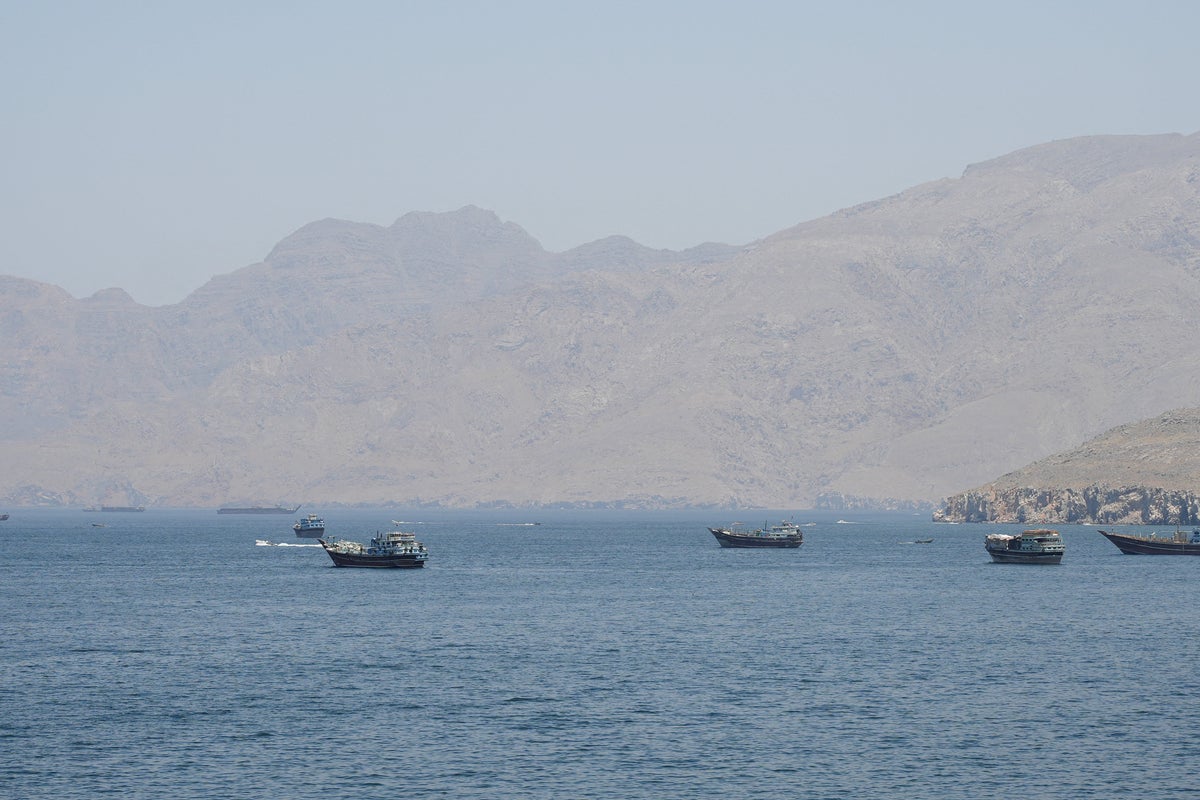
- The Strait of Hormuz Variable: Approximately 20% of the world’s total oil consumption passes through this chokepoint. Iran’s capability to disrupt this flow through drone swarms, limpet mines, and fast-attack craft remains a potent tool of economic leverage.
- The Proxy Cost Asymmetry: The cost of a single Houthi drone or Hezbollah rocket is negligible compared to the interceptors used by U.S. and allied integrated air defense systems (IADS).
- The Abraham Accords Limitation: While normalization between Israel and Arab states was a cornerstone of the first Trump term, these states are now wary of being the front line in a direct U.S.-Iran conflict. Saudi Arabia and the UAE have pursued de-escalation with Tehran (brokered by China) to protect their own infrastructure projects, such as Vision 2030.
The strategic reality is that the U.S. no longer possesses the regional consensus required for a high-intensity pressure campaign without risking the very stability it seeks to preserve.
Nuclear Breakout and the Shrinking Window of Diplomacy
The technical landscape of Iran’s nuclear program has undergone a qualitative shift. In 2018, Iran was constrained by the limits of the JCPOA. Today, the "breakout time"—the duration required to produce enough weapons-grade uranium (WGU) for a single nuclear device—has decreased from months to weeks, and in some assessments, days.
This creates a "Decision Paradox" for the U.S. executive branch. High-level enrichment (60% U-235) provides Iran with a permanent technological "gain" that cannot be easily reversed by a signature on a page. Unlike 2016, where centrifuges could be mothballed, the current knowledge base regarding advanced IR-6 centrifuges is internalized.
Any peace deal negotiated now must account for this "irreversible knowledge." The U.S. demand for "Zero Enrichment" is no longer a technical possibility without a total regime collapse or a full-scale kinetic intervention. Consequently, any "deal" Trump pursues will likely have to accept a higher baseline of Iranian nuclear capability than he was willing to accept in his first term.
The Resistance Economy and Internal Resilience
The Iranian domestic economy has undergone a forced evolution. While inflation remains high and the Rial has depreciated significantly, the "Resistance Economy" framework has reduced dependence on Western imports.
- Import Substitution: Iran has developed domestic manufacturing sectors for consumer goods and industrial components that were previously imported.
- Eastern Pivot: Trade volume with Russia and Central Asian states has increased, creating a land-based trade corridor that is immune to naval blockades.
- Fiscal Hardening: The Iranian government has adjusted its budget to be less reliant on oil revenues, shifting toward taxation and domestic bond markets.
These factors suggest that the "pain threshold" required to force Tehran to the table has increased. The 2018 strategy relied on the belief that economic collapse was imminent; the 2026 reality is that the Iranian state has proven it can survive under high-intensity sanctions indefinitely, albeit at a lower standard of living.
The Strategic Recommendation
A successful U.S. strategy cannot rely on the binary of "total victory" or "appeasement." The structural constraints dictate a move toward Transactional De-escalation.
Instead of a comprehensive treaty (which would fail in the U.S. Senate), the administration should pursue a series of executive-level "Understandings." These would trade specific, verifiable freezes in enrichment and missile range for targeted sanctions waivers on Iranian frozen assets and non-oil trade. This avoids the political cost of a formal deal while neutralizing the immediate threat of a nuclear breakout.
The primary objective should be the "Externalization of the Iran Problem"—de-linking the U.S. military presence from Middle Eastern security by forcing regional players to manage their own balance of power. This requires maintaining the threat of force as a psychological tool while pragmatically accepting that the "maximum" in Maximum Pressure has already been reached. The path to a deal lies not in more sanctions, but in the credible demonstration that the U.S. is willing to pivot its focus entirely to the Indo-Pacific, leaving Iran to face a consolidated, albeit cautious, regional bloc without the safety net of American distraction.