You think your vote is a simple calculation. You show up, pick a name, and the person with the most support wins. That’s how it works in a healthy democracy, but it isn’t how it works in most of the United States. Politicians have figured out how to choose their voters before the voters ever get a chance to choose them. This is the dark art of gerrymandering. It’s a process where district lines are manipulated to give one party an unfair advantage, and it’s why so many elections feel like a foregone conclusion.
The math is simple but the impact is devastating. When districts are drawn to be "safe" for one party, the general election becomes a formality. The real competition happens in the primaries, which often push candidates to the extreme ends of the spectrum. You end up with a polarized government that can’t agree on the time of day, let alone complex policy. It’s a rigged system, and it’s happening in plain sight every ten years.
The Weird History of the Salamander
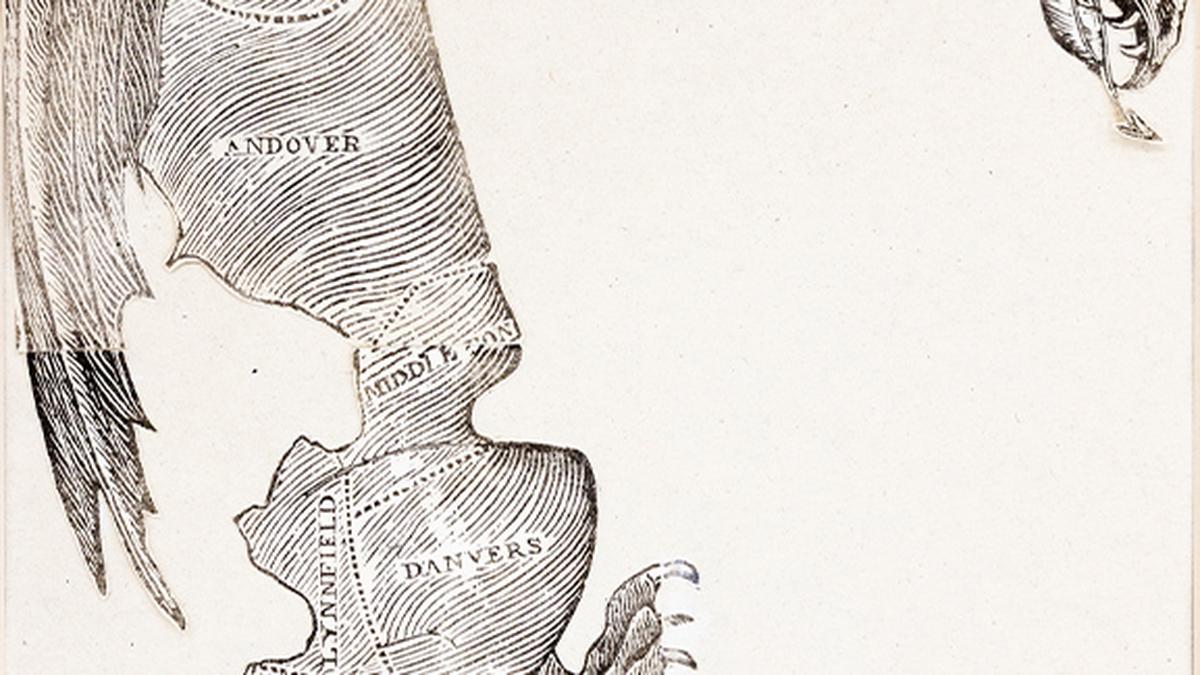
The term sounds like something out of a fantasy novel, but it’s actually a 19th-century political insult. Back in 1812, Massachusetts Governor Elbridge Gerry signed a bill that created a partisan district shaped like a mythological creature. A local newspaper illustrator added wings, claws, and a head to the map, calling it a "Gerry-mander." The name stuck. It was a joke then, but nobody is laughing now.
Gerrymandering isn't just a relic of the 1800s. It has evolved into a high-tech weapon. While Elbridge Gerry used a pen and a physical map, modern political consultants use sophisticated algorithms and massive databases of consumer behavior. They know what you buy, what you watch, and exactly how you’re likely to vote. They use this data to draw lines with surgical precision.
In the past, you might have seen "bizarrely shaped" districts as the only giveaway. Today, the lines can look perfectly normal to the naked eye while still being ruthlessly effective. It’s about the data underneath the map.
Packing and Cracking Explained
If you want to understand how this actually works, you need to know the two primary tactics: packing and cracking. These aren't just industry jargon. They are the tools used to neutralize your political influence.
Packing involves shoving as many voters of the opposing party into a single district as possible. Sure, that party will win that one seat by a landslide—maybe 90% of the vote—but their influence is "wasted" there. They can't help win any surrounding districts.
Cracking is the opposite. It’s when you take a concentrated group of opposing voters and split them across several districts. By spreading them thin, you ensure they never have enough numbers to reach a majority. Their voices are effectively drowned out by the dominant party in every single one of those fragmented areas.
Take a city like Austin, Texas, as a real-world example. For years, the city was "cracked" into several different congressional districts that stretched out into far-flung rural areas. This diluted the urban vote, making it nearly impossible for the city's residents to elect a representative who actually reflected their local interests. It’s a classic move. It works because it’s hard for the average person to visualize the theft of their representation.
Why Both Sides Do It
Don't let anyone tell you this is a one-party problem. It’s a power problem. While Republicans were famously effective at "Project REDMAP" in 2010—using state legislature wins to control the redistricting process across the country—Democrats have played the same game in states like Illinois and Maryland.
When a party holds the pen, they draw themselves into safety. It’s human nature. If you could guarantee your job security for the next decade just by shifting a line two blocks to the left, you’d probably do it too. This is why "bipartisan" solutions often fail. The people in charge of fixing the system are the ones who benefit most from its current broken state.
The result is a lack of accountability. If a representative knows their district is +20 for their party, they don't have to listen to you. They only have to worry about a challenge from someone even more radical within their own party. This creates a "race to the bottom" where compromise is seen as a weakness and common-sense legislation goes to die.
The Efficiency Gap and Modern Metrics
We used to judge gerrymandering by how "ugly" the districts looked. If it looked like a Rorschach test, it was probably a gerrymander. But modern political science uses something called the Efficiency Gap. This is a formula that counts "wasted votes" for each party. A wasted vote is any vote cast for a losing candidate or any vote cast for a winning candidate beyond what they needed to win (the 50% + 1 mark).
When one party has significantly more wasted votes than the other across a whole state, that’s a red flag for a gerrymander. In 2012, for example, Democratic candidates for the U.S. House in Pennsylvania won about half of the statewide vote, but only five of the state's 18 seats. The maps were so skewed that the will of the voters was effectively inverted.
The Supreme Court has been frustratingly inconsistent on this. In cases like Rucho v. Common Cause, the Court essentially said that while partisan gerrymandering is "unjust," it’s a political question that federal courts can’t fix. They basically threw their hands up and told voters to fix it themselves. That’s a tall order when the system is designed to prevent you from doing exactly that.
Is There a Way Out?
If the courts won't help and the politicians won't change, what's left? The most successful reform has come through Independent Redistricting Commissions.
States like Michigan, California, and Arizona have taken the power away from the legislature and given it to citizens. These commissions are usually made up of an equal number of Democrats, Republicans, and Independents. They are required to draw districts that are compact, keep "communities of interest" together, and don't favor one party over another.
In Michigan, voters passed a ballot initiative in 2018 to create one of these commissions. The first maps they drew for the 2022 elections resulted in some of the most competitive races the state had seen in decades. Suddenly, politicians had to actually talk to people on the other side of the aisle. They had to earn votes instead of just inheriting them.
What You Can Do Right Now
The next round of redistricting won't happen until after the 2030 Census, but the groundwork is being laid today. Every local election for a state representative or a state senator matters because these are the people who will likely hold the pen.
Stop focusing only on the White House. The real power over your daily life—and the future of your vote—resides in your state capital. If your state allows ballot initiatives, look for organizations pushing for independent commissions. If it doesn't, put pressure on your representatives to support transparency in the map-making process.
Demand that your districts are drawn based on geography and community, not on voter registration data. When politicians are forced to compete in fair districts, the quality of our candidates goes up and the temperature of our national discourse goes down. It isn't just about party lines. It’s about making sure that when you show up to the polls, your choice actually means something. Check your current district lines on sites like Princeton Gerrymandering Project to see how your area stacks up. Knowledge is the only way to fight back against a system designed to keep you in the dark.