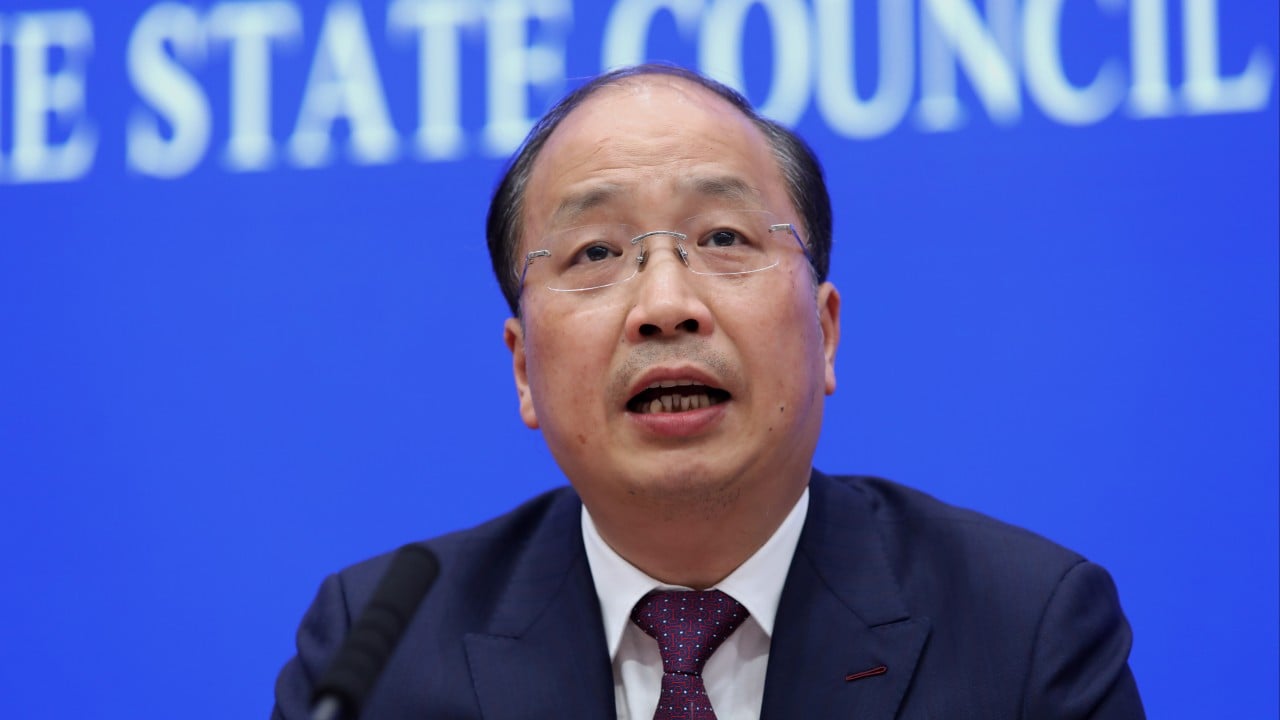
The floor of the Shanghai Stock Exchange doesn’t sound like money anymore. It sounds like a low-frequency hum, the collective anxiety of millions of retail investors staring at glowing red numbers on their smartphones. In the middle of this digital storm stood Yi Huiman. For years, he was the man who held the umbrella. As the chairman of the China Securities Regulatory Commission (CSRC), his signature could validate a billion-dollar dream or crush a startup before it drew its first breath.
But the umbrella has folded.
Yi Huiman is no longer the arbiter of value. He is the subject of a trial. The charges—bribery and the abuse of power—read like a standard post-mortem of a fallen official, but the reality is far more visceral. To understand why a man at the pinnacle of the world’s second-largest economy would trade his legacy for a ledger of illicit favors, you have to understand the intoxicating, corrosive nature of being the gatekeeper.
The Architect of the Invisible Hand
Imagine a hypothetical investor named Mr. Chen. He represents the "leeks"—the self-deprecating term Chinese retail investors use for themselves, referring to how they are periodically harvested by the market. Mr. Chen doesn't have a Bloomberg terminal. He has his life savings and a belief that the system is curated by a steady hand. When the CSRC announces a new IPO or a crackdown on "malicious short-selling," Mr. Chen sees it as a move toward stability.
Yi Huiman was the face of that stability. He rose through the ranks of the Industrial and Commercial Bank of China, a veteran of the state-owned banking machine. He was supposed to be the "technocrat's technocrat." When he took over the CSRC in 2019, he was tasked with a Herculean feat: modernizing a market that often felt like a casino while maintaining the iron grip of state control.
The power he wielded was absolute. In a Western market, a listing is largely a matter of meeting disclosure requirements. In Yi’s world, it was an audience with the king. The power to greenlight an Initial Public Offering (IPO) is the power to create instant billionaires. When one man controls the portal through which wealth enters the world, the air around him begins to warp.
The Weight of the Secret Ledger
The fall didn't happen in a vacuum. It was a slow erosion. The prosecution's case paints a picture of a man who turned the regulatory mechanism into a private toll booth. This is the "human element" that dry news reports often miss: the sheer exhaustion of being constantly surrounded by people who want something from you.
Every dinner invitation is a transaction. Every polite request for "guidance" on a pending application is a test of resolve. For a man like Yi, the line between "serving the economy" and "favoring a friend" likely didn't blur overnight. It likely started with a single exception. A "robust" company that just needed a little nudge through the bureaucratic thicket. A friend of a colleague who promised that their success would be good for the country.
But the ledger always demands a balance.
When a regulator takes a bribe, they aren't just stealing money. They are stealing the one thing a market cannot function without: trust. Every time Yi allegedly bypassed a rule for a price, he was thinning the ice under the feet of millions of people like Mr. Chen. The "invisible stakes" here aren't just the millions of yuan found in offshore accounts or hidden safes. The stakes are the credibility of the entire Chinese financial experiment.
The Mechanics of the Breach
To grasp the complexity of the abuse of power, consider how a listing actually works under a merit-based system versus a discretionary one.
- The Application: A company submits thousands of pages of audits.
- The Review: Junior regulators flag inconsistencies.
- The Approval: The leadership signs off on the final "go-live" date.
In a corrupted version of this timeline, the "Review" stage becomes a theater of the absurd. Inconvenient truths about debt or flagging revenue are smoothed over. The "Approval" becomes a gift.
The prosecution argues that Yi utilized his position to facilitate these gifts. He didn't just look the other way; he actively cleared the path. This isn't just a business story. It’s a story about the fragility of systems. We like to think that global finance is a series of cold algorithms and ironclad laws. It isn't. It is a series of rooms where people make decisions. If the person in the room can be bought, the algorithm doesn't matter.
The Silence of the Aftermath
There is a specific kind of silence that follows the downfall of a high-ranking official in Beijing. It is the sound of names being scrubbed from websites and former associates reconsidering their phone logs. For Yi, the transition from the boardroom to the interrogation room must have been a violent shift in gravity.
The trial is a signal. It is meant to tell the "leeks" that the garden is being weeded. But for the average investor, the damage is already visible in the charts. When the person meant to catch the fraudsters is himself a participant in the fraud, the very concept of a "fair price" evaporates.
Consider the psychological toll on the thousands of CSRC employees who worked under him. They were the ones grinding through the data, believing they were building a world-class financial hub. To discover their leader was allegedly trading their hard work for personal gain is a betrayal that no amount of market "recovery" can easily fix.
The Mirror of the Market
We often treat corruption as a glitch in the software. We think if we just find the right person—the most "robust" or "pivotal" leader—the problem will vanish. But the story of Yi Huiman suggests something more uncomfortable. The problem isn't just the man; it's the proximity of absolute regulatory power to absolute wealth.
The trial will likely be swift. The evidence will be presented, the confession will be televised or transcribed, and the sentence will be heavy. But as Yi sits in the dock, he isn't just a man facing the consequences of his actions. He is a mirror. He reflects a system that tried to marry the volatility of capitalism with the rigidity of an autocracy, only to find that the human element—greed, fear, and the desire for status—is the one variable that cannot be regulated.
The red numbers on the screens in Shanghai continue to flicker. Mr. Chen continues to watch his phone, hoping for a bounce. He doesn't know Yi Huiman personally, and he will never step inside the courtroom where the trial takes place. But every time he hesitates to click "buy," he is reacting to the ghost of a gatekeeper who decided that the rules were for everyone else.
The umbrella is gone, and for now, everyone is getting wet.