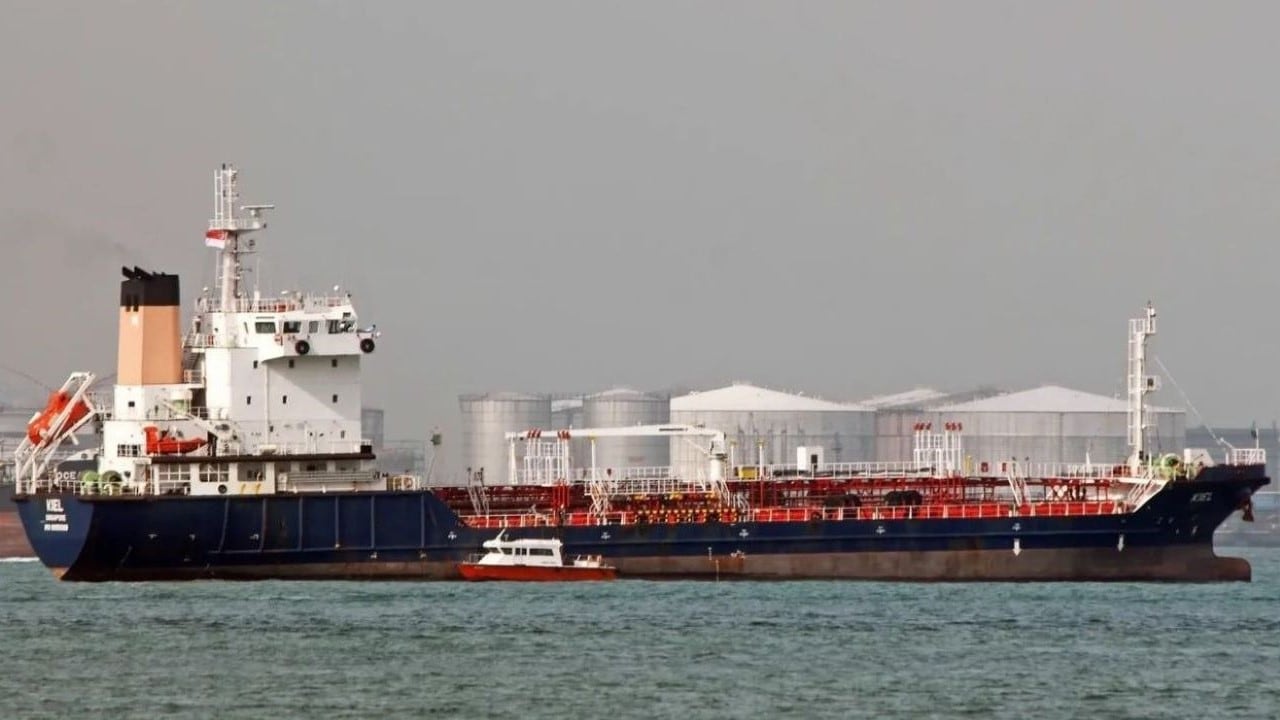
Somewhere in the sprawling maze of the Port of Ningbo, a dockworker named Chen watches a massive tanker sit idle. Usually, this time of year, the air is thick with the smell of sulfur and the rhythmic mechanical roar of pumps forcing millions of gallons of diesel into the bellies of ships bound for Australia, Vietnam, and the Philippines. Today, there is a strange, heavy silence. The hoses are coiled. The manifests are blank.
Beijing has whispered a command, and the world’s energy flow just hit a brick wall. Meanwhile, you can find other events here: Structural Accountability in Utility Governance: The Deconstruction of Southern California Edison Executive Compensation.
The Chinese government recently issued an order to its top state-refining giants—Sinopec and PetroChina—to hit the brakes on exports of gasoline and diesel. On paper, it looks like a standard regulatory adjustment, a dry line of text in a trade journal. In reality, it is a tectonic shift. China is choosing to hoard its lifeblood.
Consider the sheer scale of this decision. China isn't just a participant in the global fuel market; it is the lung of the Asian industrial machine. When it exhales fuel, prices across the Pacific drop, trucks in Brisbane keep moving, and factories in Hanoi stay powered. When it holds its breath, the rest of the world starts to turn blue. To explore the complete picture, check out the excellent analysis by The Wall Street Journal.
The Internal Fever
Why would a nation known for its aggressive export dominance suddenly pull back? The answer lies in a mounting domestic anxiety.
Beijing is looking at its own backyard and seeing a flickering engine. The post-lockdown recovery hasn't been the smooth takeoff the CCP promised. Instead, it has been a jagged, sputtering climb. To keep the gears turning at home, the government needs every drop of fuel it can get. They are terrified of a shortage. They remember the coal crisis that darkened entire provinces a few years ago. They won't let that happen with oil.
This isn't just about economics. It is about social stability. A truck driver in Sichuan who can't afford diesel is a disgruntled citizen. A farmer in Heilongjiang whose tractor sits empty during harvest is a liability. By cutting off exports, China is effectively building a moat around its own energy reserves. It is a "China First" policy written in refined petroleum.
The immediate consequence is a tightening of the global noose.
The Invisible Ripples
Think of the global diesel market like a massive, interconnected plumbing system. For years, China acted as an overflow valve. When global demand spiked, China ramped up its refineries—which have more capacity than almost anyone else on earth—and flooded the market.
Now, that valve is shut.
Imagine a small freight company in the Midwest of the United States or a construction firm in Western Australia. They don't buy "Chinese diesel" directly. But they buy from a global pool that just lost a significant contributor. When the supply drops, the price of every gallon on the planet feels the upward pressure.
Suddenly, shipping a pallet of electronics becomes five percent more expensive. Then ten. That cost doesn't vanish. It gets tucked into the price of the laptop you buy next month. It gets added to the grocery bill. We are watching the birth of a new inflationary pulse, triggered not by a war or a pipeline explosion, but by a quiet bureaucratic memo in Beijing.
The Refinery Trap
There is a deeper irony at play. China has spent the last decade building the most sophisticated refinery infrastructure in the world. They have "teapot" refineries and state-owned behemoths that can crack crude oil into specialized products with surgical precision.
But a refinery is a hungry beast. It cannot easily be turned off and on like a light switch.
If these companies cannot export their excess, they have to slow down production. This creates a strange paradox: China has the capacity to fuel the world, but it is choosing to let its machines sit at half-speed. This isn't just a loss of revenue for the companies; it is a loss of momentum for the global energy transition.
While the West talks about "de-risking" and moving away from Chinese manufacturing, the reality of the energy market shows just how intertwined we remain. You cannot simply decouple from the world’s largest refiner without feeling the burn at the pump.
The Winter Gamble
The timing is what makes this truly precarious. We are heading into the months where heating demand begins to loom over the Northern Hemisphere. Diesel and heating oil are cousins. When diesel supply shrinks, the entire middle-distillate market goes into a frenzy.
The Chinese leadership is betting that by stockpiling now, they can insulate themselves from whatever volatility the winter brings. It is a defensive crouch. They are watching the Middle East with a wary eye. They are watching the ongoing attrition in Ukraine. They see a world where energy is no longer a commodity to be traded freely, but a weapon to be guarded.
For the rest of us, the message is clear. The era of cheap, reliable, and abundant fuel flowing out of the East is over, at least for this season.
We often talk about "the market" as if it were a sentient, rational force. It isn't. It is a collection of human fears and political calculations. Today, the fear of an empty tank in Shanghai outweighs the desire for profit in the global market.
The tanker in Ningbo is still sitting there. Its crew is waiting. The rest of the world is waiting too, watching the price tickers climb, realizing that the invisible strings of the global economy are being pulled tight by a hand we cannot see and a logic we cannot influence.
A single command in a Beijing office has more power over the price of a gallon of milk in a suburban grocery store than any central bank or corporate CEO. We are living in the shadow of the great dry spigot.
The silence at the docks is the loudest sound in the world.