The kettle whistles in a small kitchen in Buenos Aires, a sound that has repeated every afternoon for eighteen thousand days. Enriqueta is eighty-four now. Her hands, mapped with blue veins and the liver spots of time, move with a practiced, robotic grace as she pours the water. She sets two cups on the table. She has done this since 1976. One cup is for her. The other is for a ghost.
This is not a ghost story in the way Hollywood defines them. There are no rattling chains or translucent figures. Instead, there is the heavy, suffocating weight of an empty chair. In March 1976, Argentina’s world fractured. A military junta seized power, initiating a period of state-sponsored terror that would claim an estimated 30,000 lives. They called it the National Reorganization Process. The world came to know it as the Dirty War.
For Enriqueta and thousands of families like hers, the war never ended. It simply stalled in a permanent, agonizing present tense.
The Architecture of Absence
When a person dies, there is a body. There is a ritual. There is a stone in the ground where you can go to scream or whisper or plant marigolds. Death is a period at the end of a sentence. But to be "disappeared"—desaparecido—is an ellipsis. It is a sentence that never ends, a question mark carved into the soul of a nation.
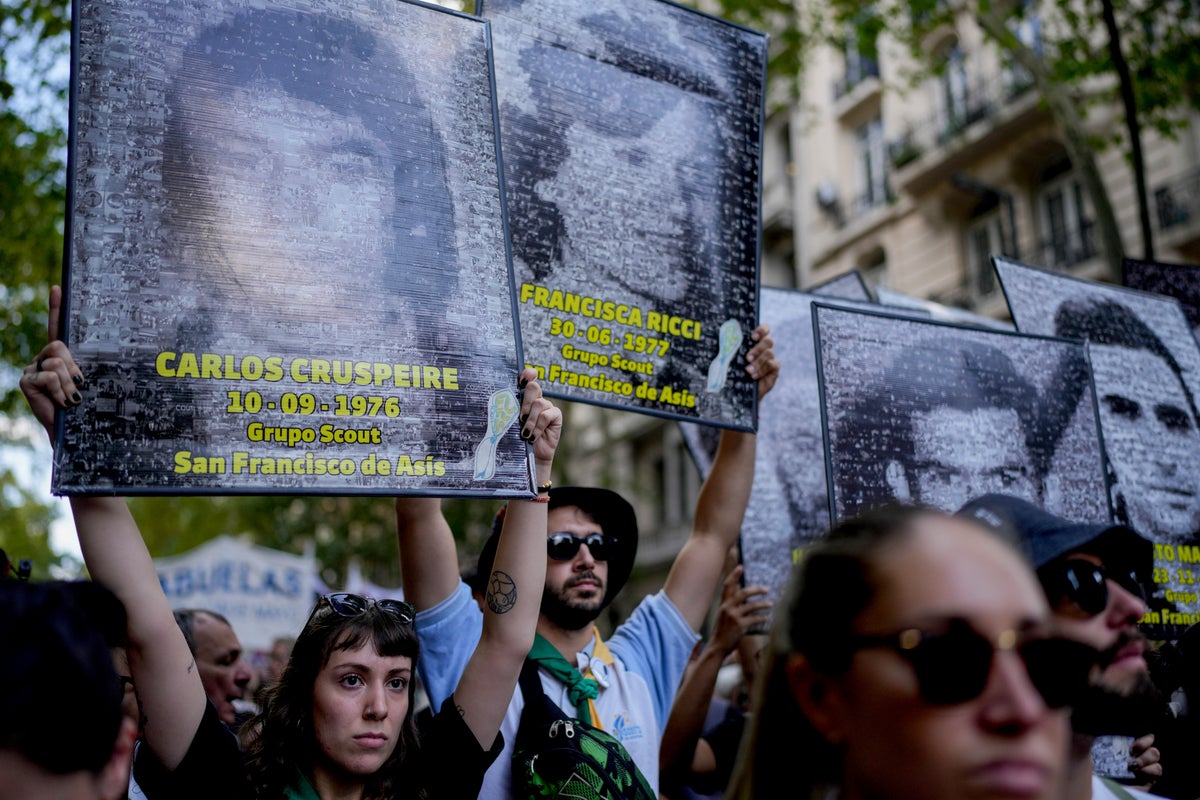
The mechanics of the coup were surgical and cold. They took people from their beds, from their offices, from the cafes where they argued about poetry and politics. Then, the trail went cold. The government denied everything. The mothers went to the Plaza de Mayo, wearing white headscarves made from the cloth of their children’s diapers, demanding to know where their babies were.
Fifty years later, they are still asking.
The legal term for this is "ambiguous loss." It is a psychological state where a loved one is physically absent but psychologically present. There is no closure because there is no proof. Without a body, the mind refuses to move through the stages of grief. It stays looped in the first stage: denial, fueled by a microscopic, jagged sliver of hope. Maybe they are in a prison. Maybe they lost their memory. Maybe they are living a different life in another country.
These "maybes" are a slow-acting poison.
The Biology of the Unknown
We often think of history as something found in dusty textbooks, but the coup lives in the marrow of the survivors. Science tells us that trauma of this magnitude doesn't stay with the person who experienced it. It travels. Through a process called epigenetics, the chemical markers of extreme stress can be passed down to children and grandchildren.
The 30,000 who vanished left a hole in the gene pool. But they also left a legacy of hyper-vigilance. In Argentina, you see it in the way people look over their shoulders. You see it in the way a grandmother clutches her grandson’s hand just a little too tight when a green Ford Falcon—the preferred vehicle of the junta’s death squads—idles at a red light.
Consider the "Stolen Babies." During the dictatorship, pregnant women were kept alive only until they gave birth in clandestine detention centers. The infants were then handed over to military families or "politically reliable" couples, their identities scrubbed clean.
The Grandmothers of the Plaza de Mayo have spent decades hunting for these children using DNA testing. They have found over 130 of them. Imagine waking up at age forty to discover that the people you called Mom and Dad were the ones who oversaw the murder of your biological parents. Your entire life, your name, your birthday—all of it is a fiction.
The stake isn't just a political record. It is the very definition of who a person is.
The Bureaucracy of Forgetting
Governments love to move on. They talk about "national healing" and "looking toward the future." They pass amnesty laws and "Full Stop" decrees. They suggest that after half a century, the folders should be closed.
But justice has a different clock.
The trials of the junta members have been a long, stuttering process of stops and starts. Some generals died in luxury. Others died in prison. But for the families, a court sentence isn't the same as an answer. A judge can provide a conviction, but a judge cannot provide a location.
The families are trapped in a race against the calendar. The witnesses are dying. The torturers are dying. The mothers, the original warriors of the Plaza, are fading away, their headscarves now worn by daughters and granddaughters who have inherited a battle they never asked for.
Why does it still matter? Because a society that buries its past without examining it is building its house on a mass grave. The soil is unstable. The ghosts will eventually demand to be heard.
The Weight of the Second Cup
Back in that small kitchen, Enriqueta sips her tea. She watches the news, where politicians argue about inflation and trade deals. They look so young to her. They speak as if the world began ten years ago.
She remembers the night her son was taken. She remembers the sound of the door splintering. She remembers the smell of the damp night air that rushed into the hallway. Most of all, she remembers his jacket, still hanging on the peg by the door, holding the shape of his shoulders for weeks until the dust finally made it collapse.
The "human element" is a phrase used by journalists to make a story relatable. But for the people of Argentina, the human element is the only thing that is real. The statistics—the 30,000, the 500 stolen babies, the 50 years—are just numbers. The reality is the silence. It is the way a room feels when someone who should be there isn't.
We like to believe that time heals all wounds. It is a comfortable lie. Time only heals the wounds that are allowed to close. For the families of the disappeared, the wound is kept perpetually open by the lack of a final word. It is a raw, red gap in the history of a family and a country.
The kettle is cold now. Enriqueta picks up the second cup, the one that was never touched. She carries it to the sink. She washes it carefully, drying it with a soft cloth before placing it back in the cupboard.
She will take it out again tomorrow.
She will keep taking it out until the wood of the cupboard wears thin or until someone finally tells her where the body of her son lies. Until then, the coup is not history. It is a Tuesday afternoon. It is the steam rising from a pot. It is the quiet, steady heartbeat of a mother who refuses to let the world forget a name.
The sun sets over Buenos Aires, casting long, distorted shadows across the cobblestones of the Plaza de Mayo. The shadows stretch out, reaching for things they can no longer touch, lingering in the twilight long after the light has failed.