The sky over Berlin is rarely silent. It is filled with the low hum of commercial airliners, the frantic chirping of starlings in the Tiergarten, and the occasional roar of a rainstorm sweeping in from the North Sea. But there is a new kind of silence hanging over the continent now. It is the silence of a mathematical certainty.
When news broke that Iran had successfully launched a missile capable of traveling 4,000 kilometers, the technical specifications felt like just another data point in a decade defined by noise. 4,000 kilometers. It is a clean, round number. It fits neatly into a spreadsheet. But maps are not spreadsheets. Maps are where we live.
If you take a compass and place the needle in Tehran, then stretch the pencil 4,000 kilometers away, the circle doesn't just graze the edges of the Middle East. It swings wide. It crosses the Mediterranean. It swallows Athens. It glides over the Alps. It settles comfortably over the cafes of Paris and the rain-slicked streets of London.
The distance between a threat and a reality just collapsed.
The Anatomy of a Long Shadow
Imagine a technician in a sterile facility tucked into the jagged mountains of the Iranian interior. He isn't thinking about geopolitics or the price of Brent crude. He is thinking about heat shields. He is thinking about the terrifying friction of a nose cone re-entering the atmosphere at several times the speed of sound.
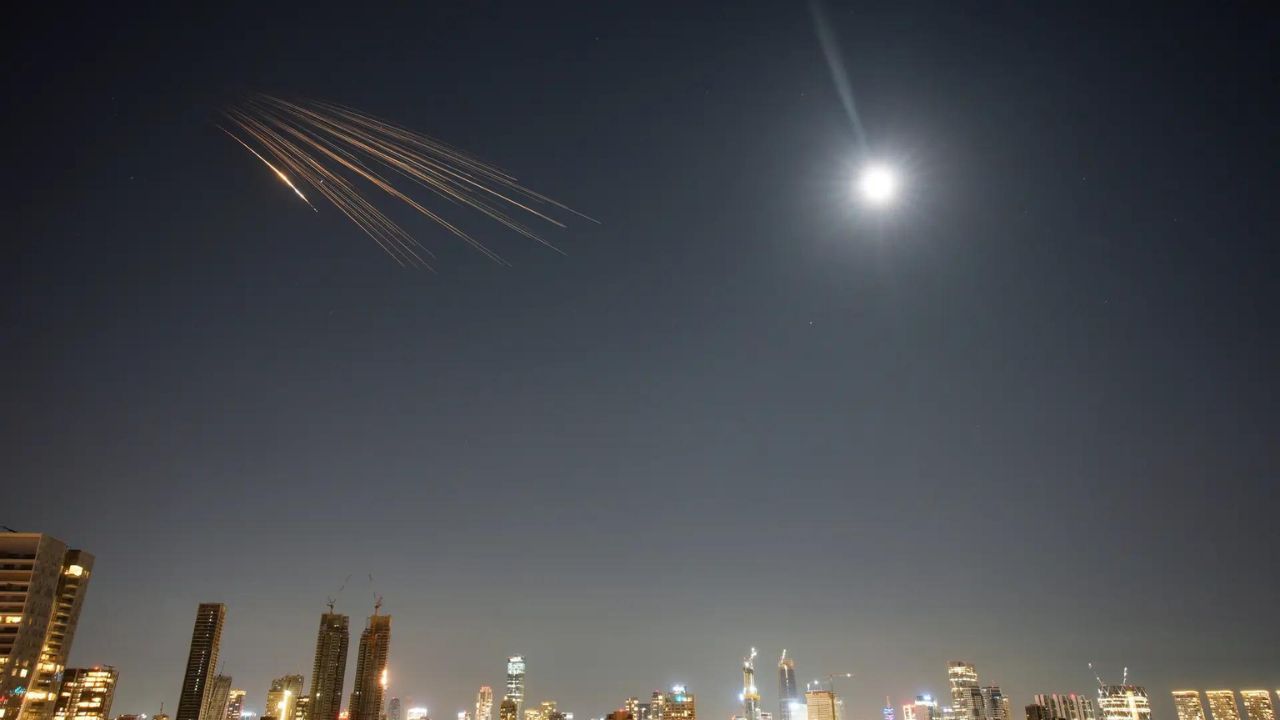
To reach a city 4,000 kilometers away, a missile cannot simply fly straight. It must leave us. It punches through the troposphere, shedding its boosters like spent skin, until it reaches the cold, black vacuum of space. For a few minutes, the weapon becomes a satellite of destruction, silent and untouchable, tracing a parabolic curve that is as beautiful as it is lethal.
The Israeli Ministry of Defense didn't just release a report; they sounded a bell that many in Europe have tried to ignore. For years, the conversation around Iranian ballistics was framed as a regional concern—a private feud between neighbors. That luxury is gone. When a flight path can bridge the gap between the Persian Gulf and the English Channel, the "neighborhood" has expanded to include the entire Western world.
This isn't about a single test or a specific warhead. It is about the mastery of physics. To push a payload that far requires a sophisticated understanding of multi-stage separation and liquid-fuel stability. Each kilometer added to the range is a testament to an engineering program that has been operating under the radar, moving steadily while the world's eyes were fixed on nuclear centrifuges.
The Weight of 2,500 Miles
Consider a woman sitting in a flat in London’s South Kensington. She is scrolling through her phone, perhaps worried about the rising cost of heating or the delay on the District Line. The idea that a missile launched from a desert she has never visited could reach her rooftop in less than twenty minutes is not just frightening—it is absurd. It feels like science fiction.
But the physics of 4,000 kilometers makes it science fact.
The world used to be big. Oceans were barriers. Mountain ranges were fortresses. Today, geography is being dismantled by the solid-fuel engine. We are witnessing the death of distance. This technological leap changes the very nature of leverage. Diplomacy is often just a polite word for the management of fear, and a 4,000-kilometer reach is a very loud way of speaking without saying a word.
Why go this far?
Military strategists often speak of "strategic depth." If you can hit your enemy's ally, you aren't just fighting one nation; you are holding a continent hostage. By demonstrating this range, Iran isn't just threatening a strike; they are redefining the borders of their influence. They are telling Europe that the safety of the North Atlantic Treaty is no longer a matter of distance.
The Calculus of Calibration
There is a specific kind of dread that comes with precision. If the missile were erratic, if it were prone to tumbling out of the sky over an empty desert, the world might breathe easier. But the reports from Israeli intelligence suggest a level of calibration that should give every defense minister in the West pause.
In the old days of the Cold War, we lived under the "Balance of Terror." We knew where the lines were drawn. We knew the silos in Siberia and the bunkers in North Dakota. Today, the lines are blurred. The technology has leaked. It has evolved. It has become more portable, more concealable, and much more reach-intensive.
The math behind a 4,000-kilometer flight is brutal.
- The Ascent: The first sixty seconds are a violent struggle against gravity, burning through tons of propellant to reach the thin air.
- The Mid-Course: The longest phase, where the missile coasts through the vacuum, invisible to most traditional radar systems until it begins its descent.
- The Re-entry: The final, terrifying plunge where the air becomes like a wall of fire, testing the limits of carbon-fiber composites and guidance fins.
If you are standing on the ground in Berlin, you would never see it coming. There would be no sirens, no long buildup. Just a sudden, shattering arrival of a force that started its journey on the other side of the planet.
The Ghost in the Machine
We often talk about these developments as if they are inevitable, as if technology has a mind of its own. It doesn't. This is the result of thousands of hours of human labor, of billions of dollars diverted from hospitals and schools into the pursuit of a longer reach. It is a choice.
The real tragedy of the 4,000-kilometer missile isn't the explosion at the end of the line. It is the atmosphere of suspicion it creates today. It forces every nation in its path to rethink their sovereignty. It forces the installation of interceptor batteries in quiet countrysides. It turns the sky, which should be a symbol of freedom and connection, into a vector for anxiety.
Europe has spent the last few decades trying to move past the era of existential threats. The walls came down. The borders opened. The idea was that trade and culture would make the tools of war obsolete. But the tools of war have simply grown longer arms. They can now reach over the trade routes and past the cultural exchanges.
The New Map
Take a moment to look at a globe, not a flat map, but a real, spherical representation of our home. Look at the curve of the earth. From a certain height, the distance between Tehran and Paris looks like a tiny stitch on a baseball. We are all much closer than we like to admit.
The 4,000-kilometer mark is a psychological threshold. It is the moment when a regional power decides it wants a global seat at the table. It is an announcement that the "far away" no longer exists.
We are living in the age of the long arc. We are the generation that has to figure out how to live under a sky that is no longer empty. The silence over London and Berlin is still there, for now. But it is a heavier silence. It is a silence that knows exactly how far the fire can travel.
The starlings still chirp in the Tiergarten, and the rain still slicks the streets of Paris. Life goes on, as it must. But somewhere, high above the clouds, the math has changed, and the world has become very, very small.
A single point on a map in the desert now connects directly to the heart of Europe, tied together by a thread of steel and fire that spans 2,500 miles of air.