The Arithmetic of the Morning Commute
Elias wakes up at 4:15 AM in a small suburb outside of Des Moines. The house is cold. He doesn’t turn the heat up because the bill last month looked like a mortgage payment. He drinks his coffee black—no sugar, no cream, just fuel—and walks out to a rusted Ford F-150 that has seen better decades.
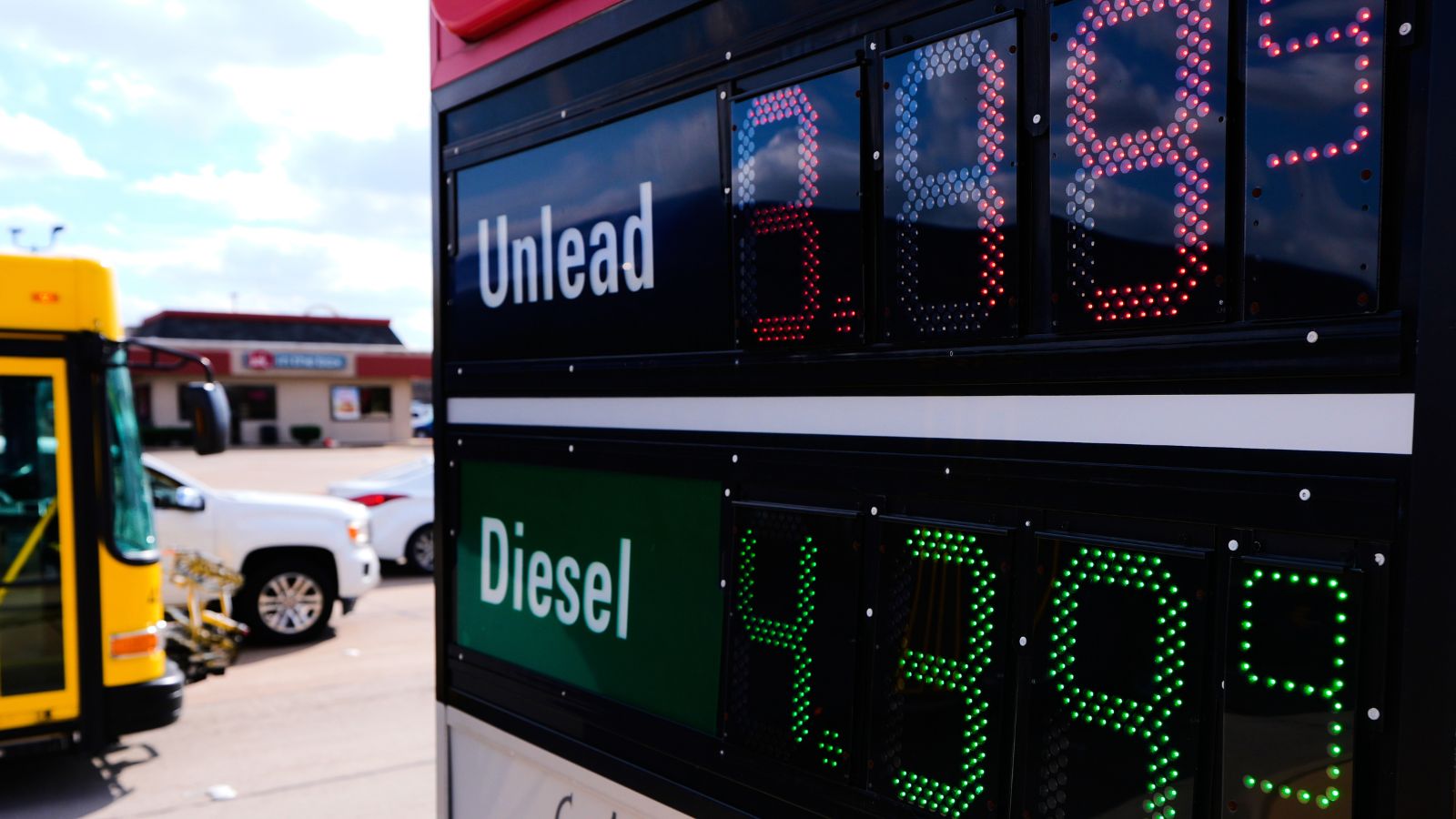
When Elias sticks the nozzle into his truck, he isn’t thinking about geopolitical strategy. He isn't thinking about the diplomatic nuances of the Middle East or the fine print of Treasury Department memos. He is looking at the numbers on the pump. They spin like a slot machine that never pays out.
$3.89. $3.95. $4.10.
For Elias, these aren't just digits. They are the difference between buying his daughter the "good" soccer cleats or the plastic ones that fall apart in three weeks. They are the reason he’s skipped lunch three times this week.
When the price of oil surges, it isn't an abstract economic event. It is a quiet, suffocating pressure applied to the windpipes of millions of families. It is a tax on existing.
This week, the White House decided to push back.
The Lever in the Oval Office
Politics is often described as a game of chess, but when it comes to the global oil market, it’s more like high-stakes poker where the cards are made of TNT.
Donald Trump has built a brand on the idea of "America First," a philosophy that usually demands strict, uncompromising walls—both literal and economic. For years, the rhetoric surrounding oil-producing nations like Iran or Venezuela has been one of "Maximum Pressure." The goal was simple: choke off their revenue, isolate them from the world, and force a change in behavior.
But the world is an interconnected web of pipes and tankers. When you choke a major producer, you don't just hurt their generals; you tighten the supply for everyone. Economics is a stubborn beast. If there is less oil on the market, the price goes up.
Faced with a domestic outcry over the "cost of living crisis," the administration has performed a tactical pivot. They have begun waiving certain oil-related sanctions.
To the purists, this looks like a retreat. To the strategist, it’s an admission of a hard truth: You cannot fight inflation while simultaneously keeping a lid on the world’s energy supply.
Consider the "Global Price Surge." It sounds like a natural disaster, something like a hurricane or a drought. It isn't. It is the result of human decisions. When the supply of crude oil drops by even two or three percent, the ripples are felt in every corner of the globe. A factory in Ohio pays more for electricity. A shipping company in Rotterdam raises its freight rates. A father in Des Moines stares at a gas pump and feels a pit in his stomach.
The Ghost of 1973
History has a long memory. Those who remember the 1970s recall the lines at the gas stations that stretched for blocks. They remember the "Odd-Even" days when you could only get fuel if your license plate ended in the right number.
That era taught us a lesson we keep trying to forget: Energy is the blood of civilization. If it stops flowing, the body goes into shock.
By waiving these sanctions, the Trump administration is attempting to perform a blood transfusion. By allowing more "adversarial" oil to hit the market—even in limited, controlled bursts—they are betting that a lower price at the pump is worth more than the ideological purity of a total embargo.
It is a gamble.
If the administration relaxes the grip too much, they risk emboldening regimes they’ve spent years trying to dismantle. If they don't relax it enough, they risk a middle-class revolt at the ballot box.
The Secret Life of a Barrel
What exactly is a "waived sanction"?
In the dry language of the Federal Register, it’s a "National Security Waiver." In reality, it’s a hall pass. It tells a specific company or a specific country: For the next six months, we will look the other way while you buy this oil. It’s a pressure valve.
The global oil market consumes roughly 100 million barrels of oil every single day. Most people think of oil as "gasoline," but it is so much more. It is the plastic in your keyboard. It is the asphalt on the road. It is the fertilizer that grows the corn in Elias’s Iowa fields.
When the price of a barrel jumps from $70 to $90, the entire world gets more expensive. Not just the commute. Everything. The loaf of bread costs ten cents more because the truck that delivered it paid more for diesel. The plastic bag that holds the bread costs more because the feedstock is petroleum-based.
The decision to waive sanctions is an attempt to force those numbers back down. It’s a recognition that the "Invisible Hand" of the market is currently grabbing the American consumer by the throat.
The Risk of the Short Game
There is a danger in this kind of pragmatism.
Critics argue that by easing sanctions, the U.S. is effectively subsidizing the very threats it claims to be fighting. It’s a valid fear. Every dollar spent on an Iranian or Venezuelan barrel is a dollar that could, theoretically, be used to fund a proxy war or a crackdown on dissidents.
But for the person sitting in the Oval Office, the perspective is different. They aren't looking at a map of the world; they are looking at a spreadsheet of swing-state polling.
They see that "Energy Costs" is consistently the number one concern for voters. They see that when people feel poor, they want change. And nothing makes a person feel poorer than watching $80 vanish into their fuel tank every four days.
The administration is trying to thread a needle. They want to maintain the image of the "Tough Guy" while acting with the caution of a central banker. It is a dance between the "Strength" the base demands and the "Stability" the economy requires.
The Human Cost of a Cent
Let’s go back to Elias.
If these waived sanctions work, the price of gas might drop by thirty cents over the next month. To a billionaire, thirty cents is a rounding error. It is invisible.
To Elias, thirty cents a gallon on a twenty-five-gallon tank is $7.50 a week. Over a month, that’s $30.
Thirty dollars is a new pair of soccer socks and a pizza on Friday night. It is the difference between a child feeling like their family is "making it" and a child noticing the stress lines on their father’s forehead.
The tragedy of modern economics is that we discuss these shifts as if they are weather patterns. We talk about "market volatility" and "supply-side pressures." We rarely talk about the psychological weight of precariousness.
When the government moves to "curb the global price surge," they are trying to buy back a sense of security for people who feel like the ground is shifting beneath their feet. They are trying to stop the bleeding.
Whether this maneuver will actually stabilize the market long-term is anyone’s guess. The oil market is notoriously fickle. A single drone strike, a pipeline leak, or a change in the weather can erase a month of diplomatic maneuvering in an afternoon.
But for now, the signal has been sent. The gates are being opened, just a crack.
The trucks are idling. The tankers are waiting in the harbors of the Persian Gulf and the Caribbean. The paperwork is being signed in windowless rooms in D.C.
Somewhere in Iowa, a man wakes up, checks the news on his phone, and hopes that today, for once, the numbers at the station will start with a lower digit. He doesn’t care about the geopolitics. He doesn’t care who gets the credit or who takes the blame. He just wants to be able to breathe.
The nozzle clicks. The tank is full. Elias pulls out of the station and merges into the pre-dawn traffic, one of a million tail-lights glowing in the dark, all of them fueled by a world that is far more fragile than we dare to admit.