The sun over Abu Dhabi doesn't rise so much as it claims the sky. At 10:00 AM in the Musaffah industrial district, the light is already a physical weight, pressing down on the silver curves of fuel tankers and the dusty shoulders of the men who move them. On a typical Monday, the air smells of brine, hot asphalt, and the sharp, metallic tang of petroleum. It is a place of rhythmic, industrial labor—the heartbeat of a nation’s logistics.
Then came the hum.
It wasn't a sound anyone expected in a city built on the promise of absolute safety. It was a high-pitched, mosquito-like whine that cut through the baritone rumble of heavy machinery. For a brief, suspended moment, the workers at the ADNOC fuel depot looked up. They saw small, dark shapes carved against the blue.
Then the world turned white.
The Anatomy of a Shadow
When we talk about drone warfare, we often treat it like a video game or a distant headline from a forgotten border. We use clinical terms like "unmanned aerial vehicles" or "kinetic impact." But stand near a fuel tank when it ignited by a loitering munition, and those words evaporate.
The blast at the Musaffah terminal wasn't just an explosion; it was a breach of a silent contract. The UAE has long been an island of crystalline stability in a region often defined by its opposite. People move there for the peace. They build lives under the assumption that the sky is a ceiling, not a doorway for fire.
Three petroleum tankers crumpled. The fire was a roaring, angry orange that defied the midday sun. In that instant, the geopolitical tensions of the Middle East—the long-simmering friction between Houthi rebels in Yemen and the Saudi-led coalition—ceased to be a matter of policy papers and became a matter of heat and shrapnel.
Three lives ended in that fire. Two Indian nationals and one Pakistani. These weren't "operators" or "strategic assets." They were men who sent money home to villages thousands of miles away. They were the human cost of a conflict they likely didn't choose to understand.
The Invisible War on the Everyday
We have entered an era where the front line of a war is wherever a $500 motor and a GPS chip can reach.
Consider the mathematics of this terror. A traditional air defense system is a masterpiece of engineering. It involves radar arrays the size of houses and interceptor missiles that cost millions of dollars. They are designed to stop jets. They are designed to stop ballistic missiles that arc through the stratosphere like falling stars.
They are not always calibrated for the "small."
A drone is a ghost. It flies low, hugging the heat-haze of the desert floor. It moves slowly enough to be mistaken for a bird by older radar logic. It is the democratization of destruction. When the Houthis claimed responsibility for the attack, they weren't just claiming a tactical victory; they were claiming the power to reach across hundreds of miles of sand and sea to touch a specific, vulnerable point on a map.
The Musaffah terminal isn't a military base. It’s an artery. It moves the fuel that powers the generators, the cars, the very metabolism of the city. To strike it is to say: "You are not as far away from us as you think."
The Stillness After the Storm
In the hours that followed, the official statements began to trickle out. They spoke of resilience. They spoke of the minimal impact on operations. And they were right, technically. The tanks were replaced. The logistics lines recalibrated. The global oil market, ever-sensitive, barely flinched after the initial shock.
But the silence in the district that evening was different.
The heat had faded, as it always does in the desert. The emergency lights from the fire trucks and police units cast long, rhythmic pulses across the sand. The air was thick with the scent of burnt rubber and foam.
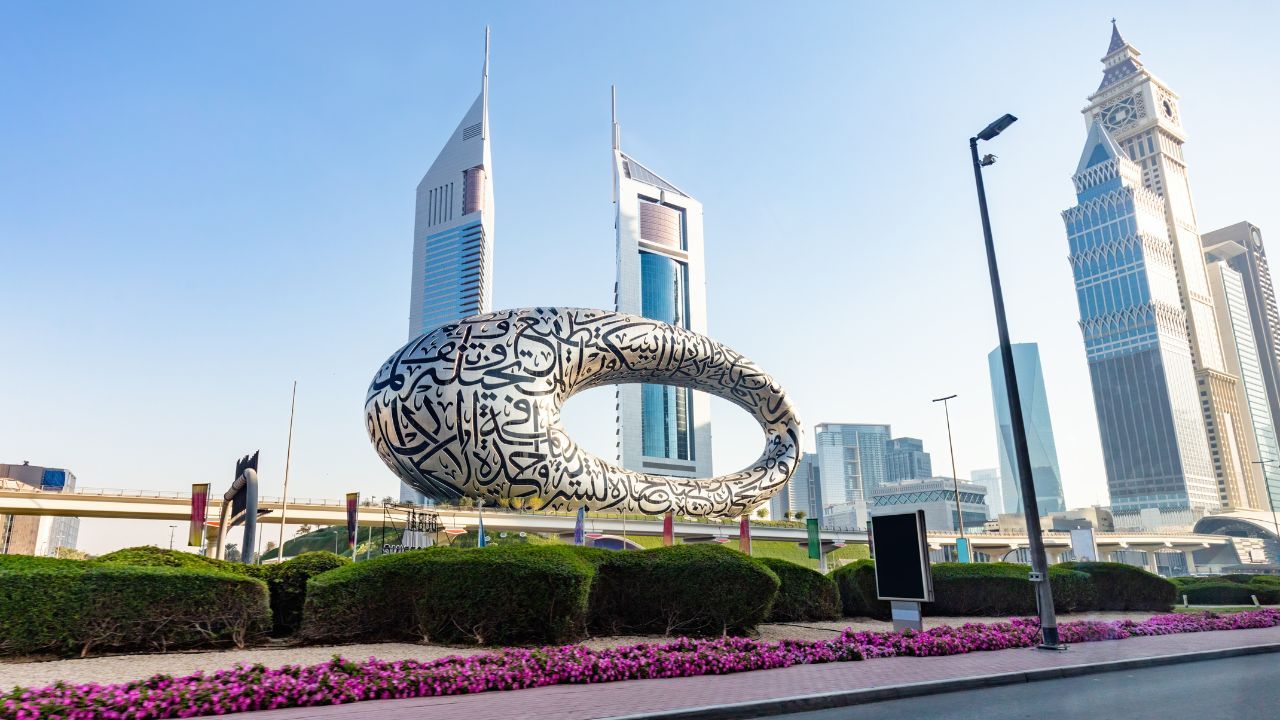
We often imagine that a crisis is a thunderclap that changes the course of a nation. But more often, it is a tremor that reveals the fragility of the foundation. The UAE is a place of dizzying height and ambition. It is a place of glass towers and Mars missions. Yet, in the shadow of a fuel tank, the world saw how a small, buzzing shape could challenge the peace of a superpower.
The true story of the Musaffah attack isn't found in the charred metal of the tankers. It’s found in the eyes of the driver who sat in his cab a few hundred yards away, watching the sky and wondering if the hum was coming back. It’s found in the quiet, desperate prayers of families in India and Pakistan who received a phone call they never expected from a place they thought was safe.
The horizon in Abu Dhabi is clear today. The towers of the city still pierce the sky, and the fuel still flows. But there is a new, invisible layer to the atmosphere. It is the awareness that the modern world is a web of incredible complexity and terrifying vulnerability. The sky is no longer just a ceiling.
It is a window that doesn't always stay closed.
The sun went down on Musaffah that night, painting the desert in a deep, bruising purple. The city lights flickered on, one by one, a defiant constellation in the dark. But the hum, even in its absence, remained in the back of the mind—a reminder that in the age of the invisible, even the most solid structures are only as safe as the air around them.