The air in Washington doesn't just get cold; it turns heavy. On the night the orders were signed, the humidity of the Potomac seemed to freeze into a static charge that you could feel on the back of your neck. Inside the Situation Room, the world shrinks to the size of a polished mahogany table and a glow of digital maps. When a President speaks of "intolerable threats," the words don't stay in the room. They travel at Mach 3. They vibrate through the decks of carriers in the Persian Gulf and echo in the headsets of pilots breathing bottled oxygen over the Zagros Mountains.
We often talk about geopolitics as if it were a game of chess played with wooden pieces. It isn't. It is a story of adrenaline, steel, and the terrifying weight of a single decision. The ongoing military operations against the Iranian regime aren't just entries in a ledger of foreign policy. They are a seismic shift in how the West views the threshold of safety. For years, the red lines were drawn in disappearing ink. Now, they are being etched in fire. Don't forget to check out our earlier coverage on this related article.
Consider a young sonar technician on a destroyer in the Strait of Hormuz. For him, the "sinister regime" isn't a talking point. It is a blip on a screen. It is the rhythmic pulse of a fast-attack craft closing the distance. He doesn't see the grand strategy; he sees the green phosphor of his monitor and feels the vibration of the ship's engines beneath his boots. This is where the abstract concept of a "threat" meets the reality of human skin and bone. When the command comes to neutralize a target, it isn't a political victory. It is a moment of violent, necessary clarity.
The rhetoric coming from the White House characterizes the Iranian leadership not merely as a rival, but as a "sick" entity. This choice of language is deliberate. It moves the conversation away from traditional diplomacy and into the realm of a moral crusade. To call a regime sick is to imply that it cannot be bargained with, only cured or excised. This isn't the language of the Cold War, where two superpowers stared each other down with a grim, mutual respect for their shared destruction. This is something more visceral. It is the language of an ultimatum. If you want more about the background of this, NBC News provides an in-depth breakdown.
But what does this look like on the ground in Tehran? Imagine a father walking home in the twilight, hearing the distant, low-frequency rumble of a drone he cannot see. He isn't a strategist. He is a man worried about the price of bread and whether the schools will be open tomorrow. To him, the "intolerable threat" feels like a shadow that has finally touched the earth. The invisible stakes of this conflict aren't just about nuclear centrifuges or regional hegemony; they are about the psychological fabric of millions of people who are waiting for the other shoe to drop.
The logic behind the escalation is grounded in a hard-learned lesson of history: silence is often interpreted as permission. For decades, the shadow war between Washington and Tehran was fought in the margins—a cyberattack here, a maritime skirmish there, a proxy battle in a third country. But shadows grow long when the sun sets. The administration’s current stance is based on the deduction that the "long game" has failed. The statistics of intercepted shipments, the data on ballistic missile ranges, and the intelligence reports on drone manufacturing facilities all pointed to a single, inevitable conclusion. The threat was no longer coming; it had arrived.
Precision is the word of the day. We are told that these strikes are surgical, designed to minimize "collateral" damage—a sterile word for the messy reality of war. But even the most sophisticated GPS-guided munition cannot account for the ripples it creates. When a command center is vaporized, the signal it sent isn't just stopped; it is replaced by a vacuum. In that vacuum, fear rushes in. The goal is to dismantle a "sinister" infrastructure, yet the byproduct is an atmosphere where nobody knows where the new boundaries lie.
There is a specific kind of silence that follows a missile strike. It is a heavy, ringing quiet that sits in the ears long after the blast wave has passed. In those seconds, the politics of the "sick regime" and the "intolerable threat" vanish. There is only the smell of scorched earth and the sudden, sharp realization that the world has changed. The strategy being deployed now is an attempt to force that realization onto a leadership that has spent forty years betting on American hesitation.
The gamble is massive. By moving from containment to active dismantling, the administration is betting that the regime will fracture rather than fuse. It is a test of structural integrity. If you hit a piece of tempered glass with a hammer, it might shatter into a thousand harmless crumbs, or it might stay whole and simply vibrate with a new, dangerous energy. We are currently watching the hammer fall in slow motion.
Wait for the sunrise. That is when the true cost becomes visible. Not just the physical rubble, but the shifted alliances and the hardened hearts. The rhetoric focuses on the "sinister" nature of the adversary to justify the severity of the response, but the response itself becomes a new reality that everyone—allies, enemies, and the millions of people caught in the middle—must now inhabit.
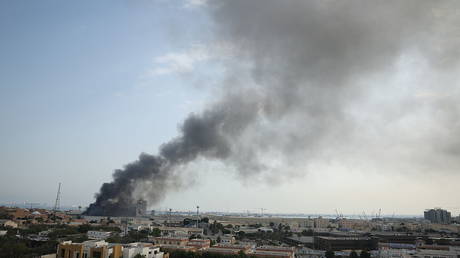
The pilots return to their carriers. The technicians dim their screens. The officials in the Situation Room go home to sleep in the quiet suburbs of Virginia. But thousands of miles away, the sky stays a different color. The smoke doesn't clear as fast as the news cycle moves. The invisible stakes have become visible, written in the glow of burning oil and the silence of a city waiting for the next siren. We are no longer talking about what might happen. We are living through what is happening. The line has been crossed, and the ink is still wet.
Somewhere in the darkness of a basement in a suburb of Isfahan, a child asks why the windows are rattling. There is no answer that involves geopolitical strategy or the dismantling of sinister regimes that will make sense to a six-year-old. There is only the hand of a parent over a mouth, a held breath, and the distant, rhythmic thud of a world being remade by force.