The current volatility in Israeli domestic politics is not a product of personality clashes but the result of a profound structural misalignment between parliamentary coalition math and a polarized electorate. Benjamin Netanyahu’s survival strategy relies on a narrow-base coalition that prioritizes ideological rigidity over broad consensus, creating a vacuum that the opposition is now attempting to fill through a process of strategic consolidation. To understand the viability of this opposition front, one must analyze the three distinct friction points currently defining the Israeli political theater: the erosion of the security-state consensus, the fiscal burden of sectoral exemptions, and the legal-constitutional tension between the executive and judicial branches.
The Triad of Opposition Integration
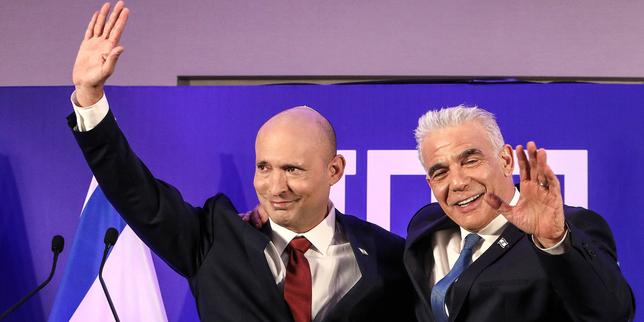
The movement to "close ranks" against the current administration is not a monolith; it is a temporary alignment of disparate actors whose interests only overlap in their desire to reset the executive leadership. This coalition of convenience operates across three distinct vectors:
1. The Security-Pragmatist Vector
Led primarily by figures with deep ties to the security establishment (the "defense hawks"), this group views the current government’s management of regional conflicts as an existential risk. Their critique is operational rather than ideological. They argue that the infusion of far-right messianism into the cabinet—specifically within the ministries of Finance and National Security—distorts the traditional military doctrine of "clear, hold, and build." This group seeks a return to a "Security-First" paradigm where strategic decisions are insulated from coalition blackmail.
2. The Liberal-Democratic Vector
This segment focuses on the institutional integrity of the state. Their primary concern is the preservation of the High Court of Justice’s power to exercise judicial review. For these actors, the opposition's unity is a defensive measure against "regime change" from within. They view the government’s legislative agenda as an attempt to remove the "Reasonableness Standard," which serves as the final check on arbitrary executive appointments.
3. The Socio-Economic Vector
This group targets the internal contradictions of the government’s fiscal policy. The friction here is centered on the Haredi (ultra-Orthodox) enlistment crisis and the associated state subsidies. The opposition leverages the "Equality of Burden" argument to peel off moderate voters who feel the middle-class tax base is disproportionately funding a sector that does not participate in the labor market or the military.
The Mechanics of Coalition Stability versus Opposition Elasticity
Netanyahu’s government maintains stability through a "Locked-In" mechanism. Because his partners—the Religious Zionist and Haredi parties—have no viable alternative partners in an opposition-led government, they are incentivized to remain loyal despite internal disputes. This creates a high threshold for any "no-confidence" motion.
The opposition, conversely, suffers from "High Elasticity." It spans the spectrum from the far-left and Arab-led parties to former Likud members and secular right-wingers. The challenge of "closing ranks" is the math of the 61-seat threshold. To reach this number, the opposition must solve the Arab Party Participation Paradox:
- Including Arab parties (Ra'am or Hadash-Ta'al) provides the necessary numbers but alienates right-leaning voters within the opposition (such as supporters of Gideon Sa’ar or Avigdor Liberman).
- Excluding Arab parties ensures ideological purity for the center-right but makes reaching 61 seats mathematically impossible under current polling distributions.
The current strategy involves a two-stage consolidation. Stage one is the synchronization of protest movements and parliamentary voting blocks to maximize friction within the cabinet. Stage two is the creation of a "Unified Technical Bloc" that agrees on a single objective: dissolving the Knesset and moving to early elections, thereby bypassing the need for a long-term policy agreement.
The Cost Function of Continued Polarized Governance
The prolonged political stalemate imposes a measurable "Polarization Premium" on the Israeli economy and state apparatus. This is not a vague social cost; it manifests in specific, quantifiable bottlenecks:
- Credit Rating Volatility: Major agencies (Moody’s, S&P) have explicitly cited social instability and the weakening of institutional checks as factors in Israel’s credit outlook. This increases the cost of sovereign debt, reducing the capital available for defense and infrastructure.
- Operational Friction in the IDF: The debate over judicial reform and the subsequent protests reached the core of the military reserve system. The "volunteering" status of elite pilots and intelligence officers became a bargaining chip, creating a readiness gap that the opposition argues invited external aggression.
- Brain Drain and Capital Flight: The high-tech sector, which accounts for roughly 50% of Israeli exports, is highly mobile. Uncertainty regarding the legal environment triggers a shift in intellectual property registration and venture capital flow to more predictable jurisdictions.
The "Day After" Problem as a Strategic Constraint
The primary weakness of the opposition's "closed ranks" is the absence of a shared vision for the Palestinian theater and internal religious-state relations. Netanyahu successfully exploits this by framing the opposition as a "left-wing" entity that will compromise on core security issues.
To counter this, the opposition has moved toward a "Managerialist Approach." Instead of debating the "Final Status" of the territories—a topic guaranteed to fracture their unity—they focus on "Civilian Governance." This involves a shift from ideological grandstanding to the practical administration of a multi-ethnic, multi-religious state. However, this managerialism is often perceived as a lack of conviction by the more ideological segments of the electorate.
Quantitative Analysis of Public Sentiment Shifts
Current data suggests that the shift in public opinion is driven more by "Competence Fatigue" than by a sudden pivot to liberal values. The following variables are the leading indicators of whether the opposition’s consolidation will translate into electoral victory:
- The "Center-Right Pivot": Approximately 10-15% of the electorate identifies as "Soft Right." These voters previously supported Likud but are deterred by the current coalition's fiscal handouts to non-productive sectors. The opposition’s success depends entirely on capturing this demographic.
- Turnout Disparity: In previous cycles, Haredi and settler-bloc turnout was consistently higher than secular-liberal turnout in the Tel Aviv periphery. The "closing of ranks" aims to close this "Enthusiasm Gap" by framing the election as an existential battle for the "Soul of the State."
The Strategic Path Toward a Post-Netanyahu Realignment
For the opposition to move from a defensive posture to a governing one, they must transition from "Anti-Bibi" rhetoric to a "National Reconstruction" framework. This requires the formalization of a National Unity pact that includes a moratorium on divisive constitutional changes for a set period (e.g., four years).
The strategic play is not to defeat the Likud party—which remains a powerhouse of the Israeli right—but to make the current coalition's "Price of Governance" too high for the moderate elements within the Likud itself. When the cost of maintaining the alliance with the far-right exceeds the benefit of holding power, the internal collapse of the coalition becomes inevitable.
The opposition’s current maneuvers suggest they are waiting for a "Trigger Event"—likely a budget crisis or a Supreme Court ruling on Haredi enlistment—to force a choice upon the Likud’s backbenchers. The consolidation of the opposition is less about presenting a unified front to the voters and more about presenting a credible alternative to the Likud’s "Soft Right" who are looking for an exit strategy from the current radical-right alignment.
The survival of the current government depends on its ability to maintain a siege mentality among its base. The opposition’s counter-move is to de-escalate the rhetoric while tightening the legislative and legal noose. The endgame will be determined not by who has the louder protest, but by who manages the inevitable economic and security trade-offs of 2026 more effectively. The opposition has identified that in a high-inflation, high-threat environment, the public's appetite for ideological experimentation is rapidly diminishing in favor of boring, predictable, and functional governance.