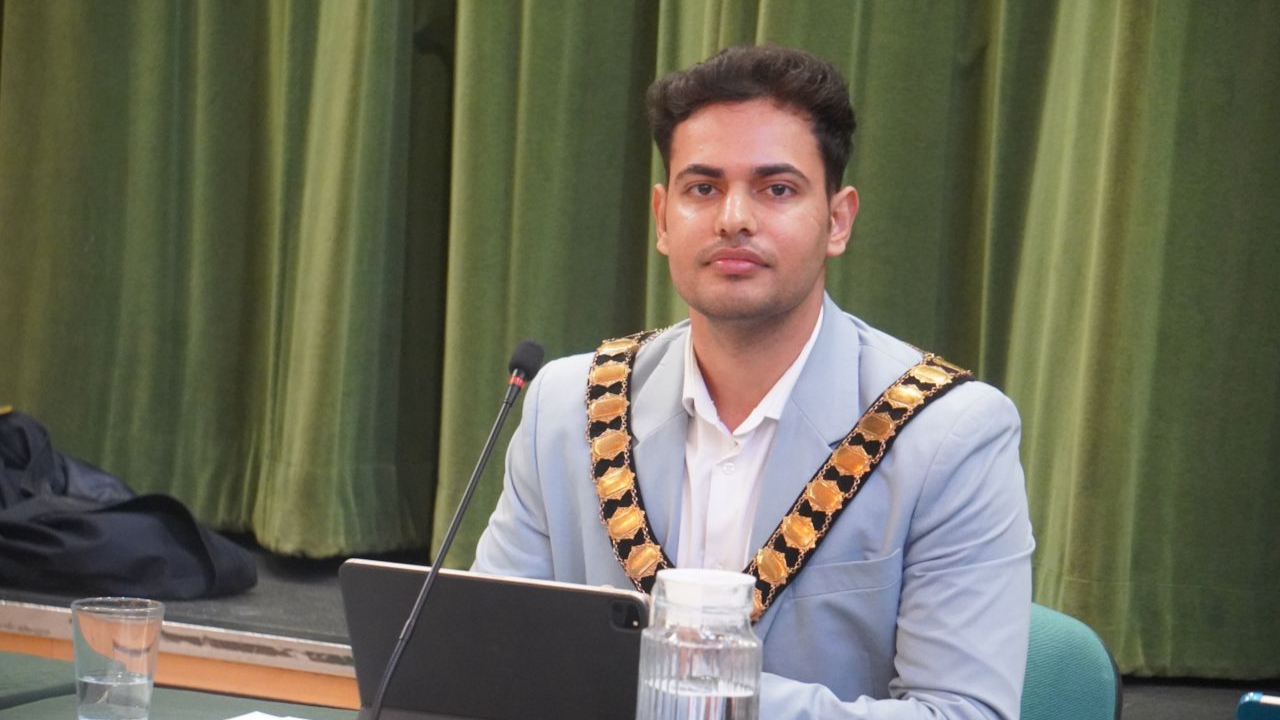
The media loves a prodigy. When 23-year-old Tushar Kumar became the UK’s youngest Indian-origin mayor in Borehamwood, the press rollout followed a predictable, exhausting script. The headlines trumpeted "history made." The op-eds gushed about youth representation, diversity milestones, and a refreshing new era for civic politics.
It is a heartwarming narrative. It is also entirely wrong.
The celebration of ultra-young local politicians is a collective delusion masking a structural crisis. By treating town councils like entry-level corporate internships or resume-building exercises for ambitious Gen Z graduates, we are accelerating the decline of local governance.
True diversity is not a photo-op. Real representation requires systemic leverage, not symbolic titles. The obsession with youthful firsts in ceremonial roles ignores a brutal truth: we are sending rookies into a broken system that requires seasoned knife-fighters to fix.
The Flawed Premise of the Youth Savior
Every time a twenty-something wins a local election, the standard commentary asks the same flawed question: How will this young leader bring fresh energy to our stagnant councils?
This question assumes that local government suffers from a lack of enthusiasm. It does not. It suffers from a lack of money, statutory power, and institutional competence.
In the UK, local authorities operate within a crushing vice of central government control and severe budgetary deficits. Managing a town council budget is not a tech startup pitch. It is an exercise in asset management, social care allocation, and dense planning law.
When you elect a 23-year-old to a mayoral position, you are placing an individual with virtually zero professional risk-management experience at the helm of a complex bureaucratic machine. Imagine a corporate board appointing a CEO whose entire professional history fits on one page. Shareholders would flee. Yet, in civic life, we applaud it.
I have spent fifteen years advising local authorities on restructuring and capital allocation. I have sat in rooms where well-meaning, hyper-enthusiastic young counselors were completely steamrolled by career bureaucrats because they did not understand the statutory mechanics of Section 106 agreements or the intricacies of the local government finance settlement. Enthusiasm is a terrible shield against a seasoned director of finance trying to bury a deficit.
The Illusion of Symbolic Representation
Advocates argue that figures like Kumar provide vital representation for minority communities and younger demographics. Let's look at the mechanics of the role to understand why this is a hollow claim.
In the UK, town and parish mayors—unlike the executive mayors of major metro areas like London or Greater Manchester—are largely ceremonial. They chair council meetings, cut ribbons at grocery stores, and wear chains of office. The actual executive power resides with the council leader and the paid executive officers.
Promoting a young, British-Indian face to a ceremonial mayoral seat creates an illusion of progress while keeping the actual levers of power unchanged. It allows established political parties to tick a diversity box without handing over real budgetary control.
True representation means having communities represented where the capital is allocated, not where the ribbons are cut. By celebrating the ceremonial title, we mistake the shadow for the substance.
The Professionalization of the Political Class
There is a deeper, more insidious trend at play here. The phenomenon of the ultra-young politician is a symptom of the professionalized political class.
Historically, local government was populated by people who had already built something in their communities—small business owners, retired teachers, trade union shop stewards, local doctors. These individuals possessed independent authority. They did not need the council; the council needed their real-world expertise.
Today, local politics is increasingly a stepping stone for career political operatives. The playbook is simple:
- Graduate from university.
- Work as a parliamentary researcher or public affairs consultant.
- Win a local council seat in your early twenties to establish "local roots."
- Use the council seat to lobby for a safe parliamentary selection by your early thirties.
When local government becomes an entry-level position for a career path, the local community loses. A 23-year-old politician cannot afford to be truly contrarian or radically disruptive because they cannot afford to alienate the party machinery that controls their next career move. They are incentivized to conform, to be safe, and to manage their personal brand.
The Uncomfortable Economics of Civic Leadership
Let's look at the raw data that the mainstream press avoids. Local government in the UK is facing an existential financial crisis. Dozens of councils have issued Section 114 notices, effectively declaring bankruptcy. The challenges ahead involve agonizing choices: cutting statutory services, selling off public assets, and raising council tax on struggling families.
To navigate this landscape, a leader needs a deep understanding of capital markets, contract negotiation, and public sector employment law.
| Required Competency | What the Media Celebrates | The Real-World Requirement |
|---|---|---|
| Fiscal Management | Fresh perspectives on spending | Experience managing multi-million pound balance sheets through economic downturns. |
| Asset Optimization | Digital-first communication | Deep literacy in commercial property procurement and public-private partnerships. |
| Bureaucratic Leverage | Relatability and social media presence | The ability to audit and challenge senior executive officers who have been in place for decades. |
To suggest that a lack of lived experience can be bypassed by "digital savvy" or "youthful perspective" is a disservice to the complexity of the job. It is the equivalent of asking a fan who is great at football video games to manage Real Madrid in the Champions League final.
Dismantling the Consensus
Let's address the inevitable pushback by answering the questions people actually ask, without the usual diplomatic fluff.
Does youth representation not bring vital new ideas to the table?
New ideas are worthless without the institutional knowledge required to implement them. A brilliant idea for affordable housing or youth centers means nothing if you do not know how to bypass a hostile planning committee or negotiate with aggressive property developers. The bottleneck in local government is rarely a shortage of ideas; it is a shortage of execution capability.
Shouldn't our leadership reflect the demographic makeup of our towns?
Demographic reflection is a metric, not a strategy. If a council perfectly matches the age and ethnicity of its borough but fails to deliver basic services, balance its budget, or protect vulnerable residents, that representation is a failure. Competence must be the primary metric of diversity.
What is the alternative? Should young people stay out of politics entirely?
No. Young people should build something first. Start a business. Manage a team. Run a local charity. Work in the private sector or the civil service. Face the real-world pressures of payroll, regulatory compliance, and market failure.
Bring that battle-tested experience back to local government at 35 or 45. Do not treat the local community as a laboratory for an entry-level political experiment.
The Dangerous Downside of the Prodigy Trap
There is a distinct danger to this contrarian view: by demanding high levels of pre-existing professional success, you risk reverting to councils dominated exclusively by affluent retirees. That is a valid concern. The current system of low allowances for councillors naturally favors those with independent wealth or flexible hours.
But the solution to that problem is to reform the remuneration and structure of local government to attract mid-career professionals—not to lower the bar of entry so that only political junkies and ambitious graduates can afford to participate.
When we cheer for the 23-year-old mayor, we are accepting the cheap substitute for real systemic reform. We are applauding the fact that a young person has managed to navigate a broken political selection process, rather than questioning why the process produces so few leaders with the actual skills required to fix our communities.
Stop celebrating the age of your politicians. Start auditing their capability. The chain of office looks nice, but it doesn't balance the ledger.